Ch'an Dao Links:
|
The Couplets of the Luling Iron Cross and the Lingyin Temple!
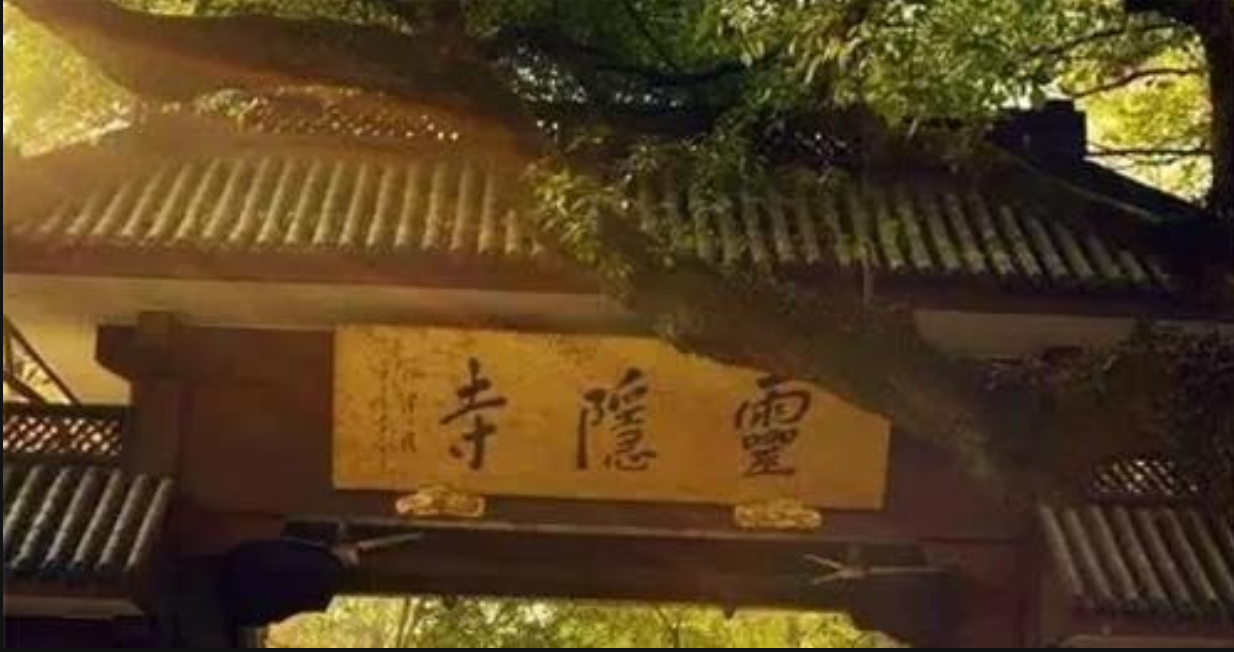
Name Plaque of the Lingyin Temple Reads Right to Left in Traditionally Arranged Chinese Language Script - '寺隐灵'!
Couplet-writing involves a great skill and is one of the traditional arts associated with Chinese culture. Throughout China (and Chinese culture) - couplets can be seen almost everywhere. For example, couplets are often pasted on the doors of every house during festivals - as are birthday signs alluding to those celebrating their birth. The ancient literati also composed couplets – quite often when they were drinking and chatting. In short, couplets have spread to every aspect of Chinese culture – with the construction of couplets forming a unique art.
Couplets originated during the Three Kingdoms Period (238-250 CE). During the Hongwu Period (1368-1399 CE) - a large iron cross was unearthed in Luling, Jiangxi Province. After identification, the cross was found to be from the Three Kingdoms Period. On this iron cross it is recorded that there was a beautifully written Couplet: The Four Seas Generate a Wave of Virtuous Peace -
The Iron Pillar (through the Cross) Emanates a Precious Light! 四海庆安澜,铁柱宝光留十字 - (Sìhǎi qìng ānlán, tiě zhù bǎo guāng liú shízì) Ten Thousand People Embrace (and are embraced) by Jesus – The Golden Furnace Produces the Fragrant Seal Which Emanates Kindness for a Thousand Autumns! 万民怀大泽,金炉香篆蔼千秋 - (Wànmín huái dà zé, jīn lú xiāng zhuàn ǎi qiānqiū) The unearthing of this couplet caused a great sensation – as Zhu Yuanzhang (朱元璋) - the Founding Emperor of the Ming Dynasty, liked couplets very much! He would often reward those officials who were good at composing couplets with huge sums of money. Naturally, couplets have become a very famous and important part of Chinese culture – with various examples travelling beyond the Chinese borders and being well-known throughout the world! Many such couplets can be found at the Ch’an Buddhist Temple described below – which is nearly as old as the ‘cross’ found in Luling – with the main difference being that whereas the ‘cross’ is no longer known to exist, the Temple in question is still well-known and can still be visited.
In Xihu District of Hangzhou City, situated within Zhejiang Province, there is a thousand-year-old Buddhist holy place – known as the ‘Spirit Protected’ (灵隐 - Ling Yin) Temple – and the ‘Cloud Forest’ (云林 - Yun Lin) Temple. Lingyin Temple was built in the first year of the reign of Emperor ‘Xianhe’ (咸和) during the Eastern Jin Dynasty (326 CE). This Buddhist Temple possesses a history of over 1,700 years! When the Indian Buddhist monk known as ‘Huili’ (慧理) first came to China - he saw the beauty of the mountains and rocks in Hangzhou - and so decided to construct Lingyin Temple! There is a couplet on the gate of the main entrance of Lingyin Temple. Although there are only 14 words - each word is full of the vicissitude and helplessness experienced during existence in the physical world! 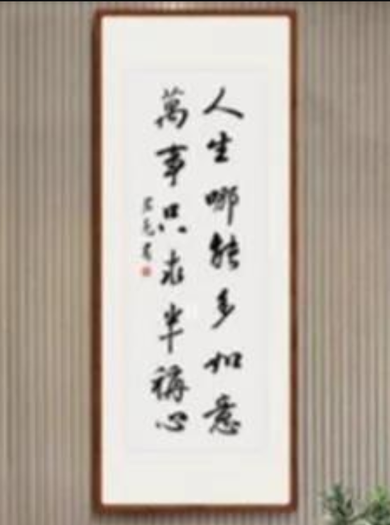
The Famous Couplet of Lingyin Temple!
Human Existence Unfolds According to One’s Intentions -
Ten Thousand Things Are Experienced with Dissatisfaction! 人生哪得多如意 - (Rénshēng nǎ dé duō rúyì) 万事只求半称心 - (Wànshì zhǐ qiú bàn chènxīn) Lingyin Temple, however, gradually declined due to the severe wind and frost experienced in the area at different times of the year. During the Five Dynasties Period (907-960 CE) - Qian Yu (钱镠) - the King of Wuyue, requested that the Great Master Yongming Yanshou (永明延寿) strive to revive and develop the holy site! It was then re-named as the ‘Spirit Protected New Temple’ (灵隐新寺 - Ling Yin Xin Si)! During the ‘Jiading’ (嘉定) Era (1207-1224 CE) of the reign of the Southern Song Dynasty Emperor - Song Ningzong (宋宁宗) - the Lingyin Temple was known as one of the ‘Five Mountains’ (五山 - Wu Shan) associated with Ch’an excellence situated South of the Yangtze River! During the Shunzhi Period of the Qing Dynasty (1644-1661 CE) - The Lingyin Temple was further developed (in reputation and fame) by a number of other famous Ch’an Buddhist Masters who had been appointed (at different times) to the post of ‘Head Monk’. These include ‘Dahui Zonggao’ (大慧宗杲) and ‘Fuhai Huiyuan’ (佛海慧), etc. Indeed, this collective expertise ensured that the Lingyin Temple became the largest and most important Ch’an Temple within the Southeast area of China!
©opyright: Adrian Chan-Wyles (ShiDaDao) 2023. Chinese Language Article: http://www.360doc.com/content/21/1110/09/15307909_1003531330.shtml
四海庆安澜,铁柱宝光留十字;万民怀大泽,金炉香篆蔼千秋。 2021-11-10 四海庆安澜,铁柱宝光留十字; 万民怀大泽,金炉香篆蔼千秋。 对联是中国传统文化之一,作为中国人几乎在那里都能够看见对联的存在,比如说在逢年过节的时候各家的门上要贴对联,老寿星过生日的时候门上也要贴祝寿的对联,在古代文人墨客们喝酒聊天的时候也爱写对联。总之对联几乎已经作为一种独特的艺术,流传到了我们生活中的方方面面。 大图模式 对联最早起源于三国时期,洪武年间(1368-1399年)江西庐陵曾出土过一尊特点大的铁十字架,经过鉴定这座十字架是三国时期的,在这尊铁十字架上面写着一副精美的对联:“四海庆安澜,铁柱宝光留十字;万民怀大泽,金炉香篆蔼千秋。” 这座对联的出土引起了极大的轰动,因为明朝的开国皇帝朱元璋就十分的喜欢对对联,甚至经常用重金赏赐那些对联对的好的官员。很自然对联变成了一种现象级的文化,一批批经典的对联闻世,寥寥数字却往往能够包罗万象。 在浙江省杭州市西湖区,便有一座千年古寺名叫灵隐寺,灵隐寺始建于东晋咸和元年(326年),迄今已经有1700年的历史,为西印度僧人慧理和尚所建,慧理和尚初来中国,见杭州山岩秀丽颇具灵气,于是便修建了灵隐寺。 不过历经风霜后的灵隐寺逐渐没落,五代时期吴越王钱镠命请永明延寿大师重兴开拓,并赐名灵隐新寺,宋宁宗嘉定年间灵隐寺被誉为江南禅宗“五山”之一。清顺治年间,禅宗的著名僧人德和尚住持灵隐,灵隐寺得到进一步开拓,规模已成东南地区最大的寺庙。 |