Adrian
|
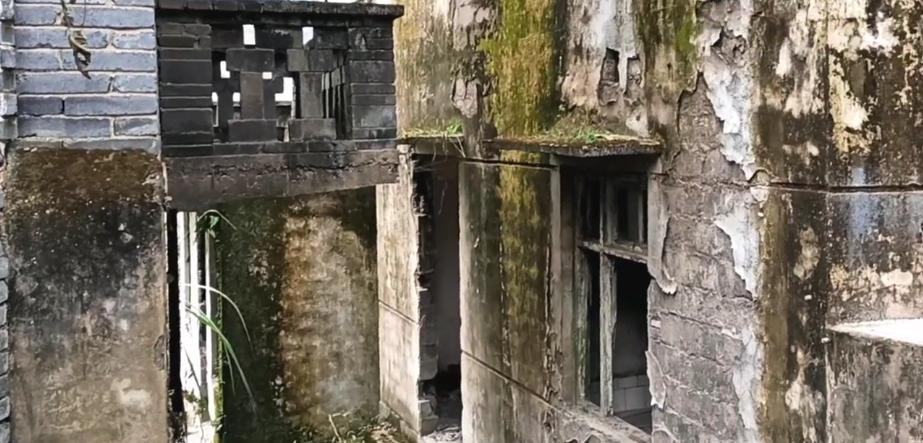
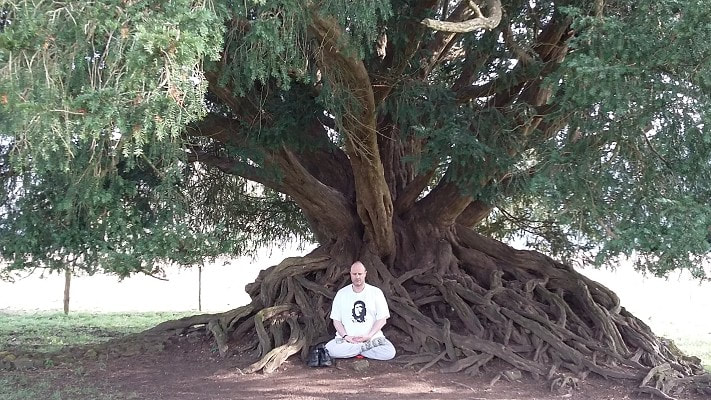
Dear A A story that sometimes comes to mind is something Richard Hunn once told me whilst visiting the UK (from Japan) in the early 2000s. He said that at one time in his life, he was living in a bed-sit - but one where other members in the house used to "walk" through his room during the day or night to access the toilet and kitchen, etc. He said that he used the situation to apply the huatou properly and to a greater depth - outside his comfort zone. He described the people entering, traversing, and leaving his living space as "waves" of phenomena arising, stabilising, and falling apart. He was able to distance himself from his physical surroundings as for most of the time, there was no urgency to "respond" to - or "interact" with - the people or circumstance. He was able to detach from the material circumstances around him - and "look within" - toward the empty mind ground. This is similar to the monastic position where everything is strictly controlled in the monastery - essentially an eternally repeating regimen where all basic needs are met - freeing the mind to move its awareness from the "outside" world to the "interior" of perception. Of course, this changes slightly with the hermit - who might live in a cave, at the foot of a tree, a hut, or some other remote place - free from any external support mechanism. Usually, a young monk trains in a monastery (where everything is provided) and progresses to living alone (with no support mechanisms). Perhaps this is a progression to moving away from predicting or relying on preconceived outcomes. Lay and monastic are two-sides of the same coin with the empty mind ground underlying both manifestations (Vimalakirti). Again, "Neither attached to the void - or hindered by phenomena". The question becomes one of path of access - but the method (returning thoughts to their empty essence) is the same. Within China, the "Dao" (Way) is used interchangeably to refer to the "path" and the "destination". Sometimes, this distinction is subtle and the nuance is lost in translation. Still, Charles Luk, who read copious amounts of Daoist texts, and was of the opinion that the Dao De Jing is the essence of all Daoist teaching. Placing the opening chapters into into a coherent and relevant English-language context is still an ongoing process. Many shuffle the words around - copying one another's translations. The assumption is that what came before is "correct" and that these conventions simply require re-organising. The problem is that these "assumptions" may not be correct, precise, or even relevant. First principles must be re-established time and time again as a better understanding develops. Many are surprised, as they understandably work from a select number of translations - forming an integrative understanding - but when they see the original Chinese text and look at the literal meaning, quite often there is a slippage of meaning. The problem with personal development within Ch'an is the detaching from the external, the penetrating of the empty mind ground within, and then the integration of the two - which is easier said than done. Many ignore this difficulty as its recognition might take away the momentum of developmental purpose. Even after penetrating the empty mind ground - and when living in the material world - "klesa" (defilements) bubble-up in the mid-mind (that is the cognitive space between the empty mind ground and the material world of perception in the fore-mind) as responses to phenomenal reality. These reactions, as you know, are good, bad. and neutral, and the bread and butter of everyday life. In other words, the waves of "change" are incessant, ongoing, and never-ending.As they unfold - we change and mature. Experience equals process. It is interesting that when people meet - they swap stories of "change" - perhaps this is the currency of human communication - and the reason the ancient Chinese people developed an entire Classical Text dedicated to its interpretation. The main text of the Book of Change (Yijing) the oldest parts - do not use the term "Dao" - which begins with the Commentaries associated with Confucius (or his disciples and followers - perhaps even relatives). I suppose everything has an origin. Best Wishes
Adrian
0 Comments
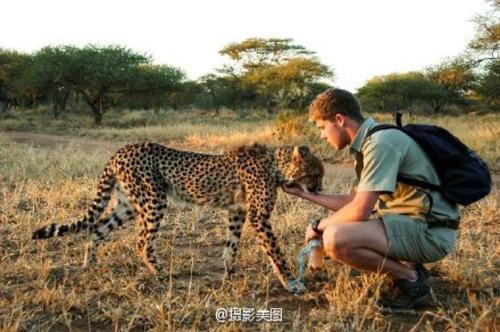
Charles Darwin’s theory of evolution through natural selection is elegant. Sometimes individuals mistakenly assume that evolution moves only in one direction only – as if for change to be valid it must be ‘progressive’ in a non-stop trajectory of development. The reality is something quite different. In fact, evolution occurs just as much by ‘regression’ as it does by ‘progression’ - such is the random nature of its unfolding. The human big-toe, for example, is actually a ‘deformed’ thumb similar that found on the human-hand today. At one time in human development, an early version of ‘us’ could climb trees and hold onto branches with the minimum of effort early in our development – similar to chimpanzees and other extant monkeys. However, when early humans took to pedal walking upright (along the ground), the thumbs on the ‘lower hands’ quite literally ‘devolved’ into a far more rigid ‘toe’ to aid balance and stability whilst standing, walking and running on two legs. This development ‘freed’ the human-hands to develop all kinds of dextrous activities which resulted in tool-making and the beginnings of the transformation of the environment. Positive developments within human evolutionary development, therefore, are not always ‘progressive’, and yet such ‘negative’ changes make way for some quite stunning improvements in human-activity and thought-processing, etc. This observation can be applied to the individual with regards self-cultivation. Not every change in life is ‘positive’ or necessarily ‘conducive’ to well-being or progression, and yet if used in an appropriate manner, can be adapted to advance our psycho-physical developments outside of our perceived safety zones. Sometimes, for human-beings to develop more completely, it is the ‘uncomfortable’ and the ‘unthinkable’ that must be embraced and treated like a long-lost friend. To achieve this, as individuals we must bravely advance into situations that usually we would possess no possible reason to be associated with. Many people, living in the modern world, are trained from birth to prefer those situations that confuse them least. Inherently, this also means that we tend to choose to live in situations that challenge us least. In a very subtle manner, we avoid the very challenges and conditions that would develop us the most, if only we allowed ourselves to manifest within them. Fear of failure, fear of suffering and fear of ridicule often keeps us from bravely exposing us to situations whereby we would not ‘voluntarily’ venture. Perhaps it is helping a homeless person covered in lice, urine and excreta, or assisting a disabled person with no social skills. It could be less obvious than this – such as mingling with those who hold intolerable ideological or political ideas. It could be an atheist mixing with a religionists – or a Socialist with a fascist, etc. My point is that sometimes, we must not artificially shut ourselves off from various realities just because we do not ‘like’ or ‘prefer’ them. Compassion and loving kindness work best when applied in situations and circumstance where neither of these attributes are thought to exist. If we firmly understand whatever spiritual, political or social reality we subscribe to, then our reasoning and logic should be so strong that exposure to contradictory ideas and situations should not ‘weaken’ but only ‘strengthen’ our resolve. Difference, although very real and tangible, should not be considered as an excuse for walling ourselves off from expressing a greater love for humanity whilst cultivating an insight into the spiritual essence of all reality. The Daoist sage Zhuangzi once said that a truly enlightened being must be indifferent to praise or blame – surely the only way to test this is to voluntarily enter into situations where we would usually never choose to enter. We must bring ‘light’ to the darkest corners of the Earth through such undertakings!



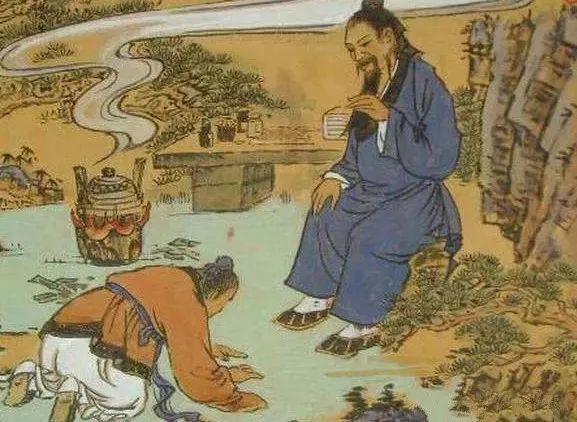
Many people are surprised to learn that Master Xu Yun (1840-1959) was subject to a more or less continuous stream of allegations claiming that he routinely ‘broke’ the Vinaya Discipline and the Bodhisattva Vows. These assertions were usually made by common people with an axe to grind for some reason or other. The fact that no one took these allegations seriously is simply because no one who mattered believed any of it to be true. Master Xu Yun was accused of seducing young girls and women, as well as pursuing homosexual relationships with young monks. When these reports were found to be groundless – Master Xu Yun was accused of amassing money and using it to lead a life of luxury and leisure! Again, no evidence was ever found and so these allegations were ignored like all the others. When he was married (in his late teens) Master Xu Yun never touched his two wives. Years later, this was confirmed by these (now elderly) ladies who had become ordained Buddhist nuns after their husband left to become a monk around 1858. These ladies were virginal when they entered the Buddhist nunnery. My personal experience of Chinese monastic communities, as well as from the memories of other Western people who also lived as a Buddhist monk in China, confirm that homosexuality (as well as any type of sexual expression) was not present. This is because the facility of human desire is ‘turned inward’ and transmutated into pure spiritual light and energy that emanates from the centre of the forehead and from there permeates the entire body and environment. This process detaches sexual energy from the sexual organs and diverts the imagination of the mind away from sexual fulfilment through the sexual organ, focusing on ‘returning’ all this sensation back toward the empty mind ground. There is no outward sexual reaction or perversion within the average Chinese Ch’an monastery because the subject-object dichotomy that drives the sexual drive within delusive society no longer exists. There is a point in this process where the sexual drive is transformed forever regardless of circumstance. Although a conducive environment is beneficially to start with, eventually, once the six senses are permanently ‘purified’ and ‘cleansed’, then a lay-men such as Vimalakirti and Hui Neng (prior to the latter’s eventual ordination) where able to live within ordinary society and yet never break their Vinaya Discipline. Vimalakirti had a number of wives and numerous children – and yet the Buddha stated that he ‘never’ broke the vow of celibacy. Vimalakirti also criticised the Buddha’s ordained disciple Upali (a Master of the Vinaya Disciple) for being attached (in the wrong) way to the ‘letter of the law’. Vimalakirti stated that being ‘attached’ to celibacy in such a one-sided manner was as bad as being mindlessly attached to sexual pleasure! The answer is that ‘pleasure’, ‘pain’ and ‘neutrality’ are all perceived to be equally ‘empty’ of any and all permanent reality. All emerge from the empty mind ground as karmic attributes that simply take the form that is implicitly conditioned within each strand of expression. This Mahayana penetrating of all phenomena is very different to Upali’s Hinayana notion of just avoiding ‘pleasure’, etc. It is the same for ‘praise’ and ‘blame’, as both are equally ‘empty’ of any intrinsic or separate value. A practitioner who has penetrated the empty mind ground exists in a permanent state of divine indifference and are unmoved by either praise or blame. Reacting to the ignorance of others with the same ignorance does not happen because it cannot happen. Once the empty mind ground has been permanently penetrated, understood and integrated with, then there is never any slipping back to a more deficient position of understanding. People who operate through the ego are continuously attempting to make some kind of social gain through manipulating those around them. A Ch’an Master sees this straightaway and reveals the underlying reality of those who approach with ulterior motives. All is wisdom, loving kindness and compassion.
|
Archives
May 2026
Categories
All
|
RSS Feed