|
The point is to realise the empty mind ground – here and now – and not be distracted by other thoughts that would divert the practitioner away from this vital objective. On the one hand, there is the cycle of the external world, which quite often requires a type of timed ritualistic behaviour, and then there is the imminant need to focus the attention firmly within, and directly perceive the all-embracing empty mind ground. Which is it to be, outer convention or inner revolution? For Ch’an, the direction is clear – nothing else matters other than the realisation of the empty mind ground. This is the caee despite all living Ch’an Masters occupying a living body that inhabits the material world. The facilitator of the empty mind ground must live by eating, wearing clothes, living within a building, and earning a living, etc. All these things, which includes social, cultural, and political interactions, turn-out to be vitally important on the one-hand – and completely pointless on the other. And yet some type of anchorage in the material world must be established if Ch’an is to be effectively taught. This is a paradox that possesses no single answer. There is no blue-print or set manner in response to this need. How a Ch’an teacher manifests – is how they manifest – and that all depends on the personal situation of the teacher in question. A homeless monk, for instance, can effectively teach, as can an ordinary person, or a person in a high position. Status does not matter. That is merely a necessary window-dressing. What is important is that those who are searching for the empty mind ground must also understand that the expedient circumstances of an effective teacher are irrelevant – if the student can effectively grasp the huatou and decisively “look within”. The reason externality does not matter at this point is that to be overly concerned with externality is to fall into the trap of “attachment” as taught by the Buddha. Attachment to externality is to be ensnared in the distraction of a sideways thinking that diverts from “looking within”. Non-attachment dissolves part of the habitual power of delusion and assists in the clearing of many barriers to achieving inner awareness and profound insight. Of course, once the empty mind ground is fully realised – and the form and void integrated – then the state and function of the external world can be altered for the better using “wisdom” – if such an alteration is required. By 2004, I was discussing with Richard Hunn about the possibility of him relocating back to the UK and living in Sutton – in the same street as my family. At that time, things were very good in the UK, and this idea was a very real possibility. Richard Hunn had lived in Japan since 1991, and had achieved every one of his primary (academic) research objectives. Furthermore, after 13-years in Japan – Richard was beginning to yearn for a return to his native English culture. Not only this, but he very much appreciated the Anglo-Chinese set-up we had going in the Sutton area. The perfect integration of English and Hong Kong culture. Richard Hunn had been teaching English in Kyoto whilst researching the roots of Chinese Ch’an in Japan. This research had been more or less completed by 2004. Richard wanted a return to tea, fish and chips, and Chinese cooking! The problem was that he started to experience alarming health episodes which started off as apparently minor, but got steadily worse - until the terrible diagnosis of terminal cancer during late 2005. Richard opted to stay in Japan and adjust himself to circumstance. This he did until his final breath - taken during October 1st, 2006, whilst sat-up meditating in a Kyoto hospital bed.
0 Comments
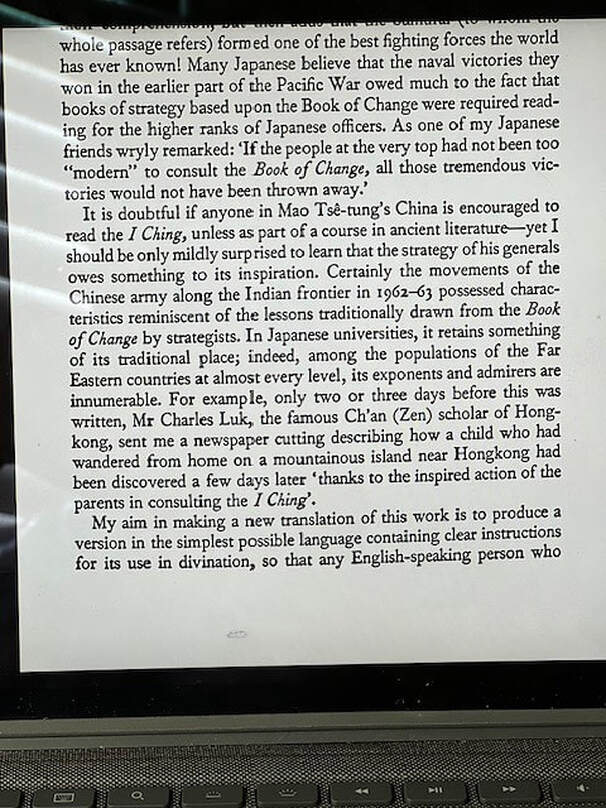
Dear B Douglas Harding used to hold Zen meditation sessions by lying on the floor. He had no time for formal structure - as 'having no head' also apparently meant that 'he had no body' - although most people who encounter his work seem not to realise the latter. Richard Hunn knew John Blofeld and Douglas Harding - although if he knew Terrence Grey - nothing was said to me. Blofeld mentions meeting Xu Yun - but Xu Yun does not mention meeting Blofeld. This need not negate the encounter - as Xu Yun was photographed with numerous Westerners - many of whom are not mentioned in his biography. In the UK - the barbarous treatment meted-out by the Imperial Japanese Army to British POWs and civilians is still remembered with disgust and derision - as is their savage treatment toward tens of millions of Asian victims. Just what Blofeld is talking about does not ring true. Richard told me that Blofeld eventually retired to Thailand - and 'gave-up' Buddhism in the last years of his life - becoming anti-Asian and pro-Christian, so perhaps his wayward attitudes express these changes. I inherited Charles Luk's papers, and having looked through the volumes, I can say that there is no mention of John Blofeld, Douglas Harding or Terrence Grey. Charles Luk was opposed to Japanese religious corruption and actively campaigned against it. He certainly would not have assisted Blofeld if he knew of his pro-Japanese attitudes. As to hilly Hong Kong mountains - he is probably speaking of the Sai Kung area of the New Territories - where our Ancestrial village used to be. As the area is now a 'National Park' - the US social media has extended the so-called '411' mythology to include this area. Whenever I visited the area - I used to make sure I was with Chinese relatives who knew where they were going. Yes - Richard Hunn gave me his copy of John Blofeld's Yijing. It is a peperback to which Richard added a stouter cover. Of course, it is not the full Yijing, but only the Hexagrams, its line commentaries, the Judgements and Images. From what I can see, I believe Blofeld is copying Wilhelm and is not working from the original Chinese language text. It is a re-interpretation of a translation. Of course, I suspect there are hundreds of these re-interprtations in the English language by now - and that a certain selection can grant an overview of the original text. I am told that an astonishing 600,000 Americans go missing each year in well sign-posted National Parks and National Forests - although all but 6,000 are found safe and well - and that this finding is through the application of the scientific method. When people's lives are at stake I doubt superstition can replace logic and reason. In the days that Blofeld is referring to - the New Territories were strewn with hundreds of villages - many of them Hakka (he does not know this because he never went there). The distance between villages was quite often miniscule. I would say that getting truly lost would have been very difficult as there were settlements everywhere. These are the settlements the Imperial Japanese Army raped and pillaged their way through - killing at least 10,000 people in a relatively small area (1941-1945). The Yijing certainly did not assist the ethnic Chinese escape this fate. One last point that Blofeld is missing is that the Imperial Japanese Government 'banned' everything 'Chinese' - and this included the study of the Yijing. Blofeld is, therefore, misinformed and I would say, not to be trusted. With Metta Adrian
Dear Jacques
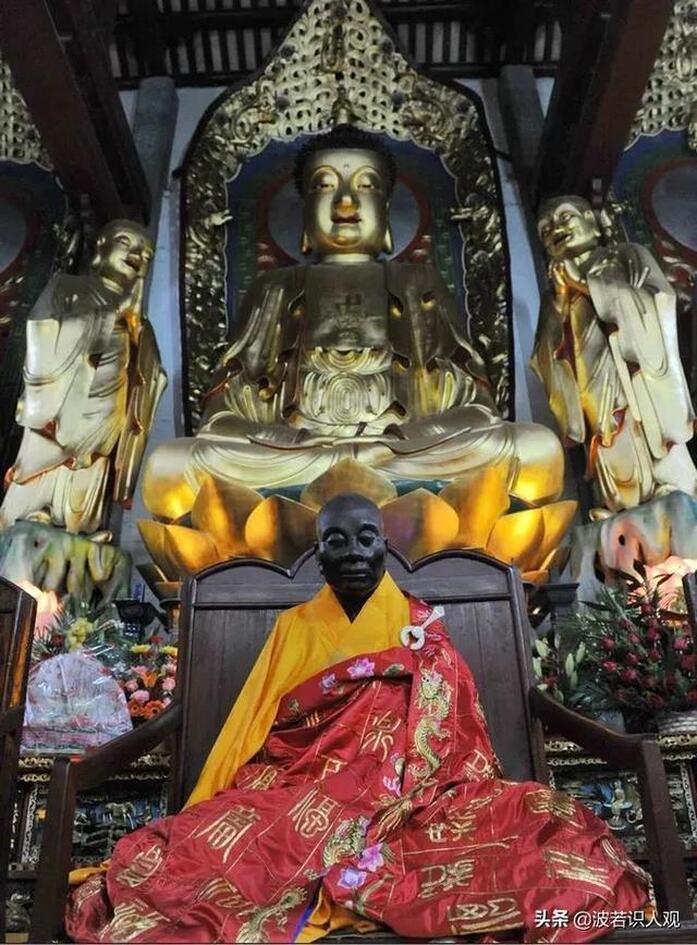
Charles Luk (1898-1978) was born in Guangdong - an area of international interaction. During the pro-Western Nationalist Revolution of 1911/12 - he would have been around 13-14 years of age. Even prior to this, he may well have been exposed to English settlement (and schooling) in the Guangzhou area. He remained very tight-lipped about his education - possibly because it may have been missionary-based and he did not believe in the Western religion. From what I gather, Charles studied under a Mongolian Lama who lived in the Sichuan area of South-West China (where millions of Tibetans also live). He was interested in the Phowa method of consciousness-transformation at the point of death. This had no bearing on his training with Master Xu Yun (1840-1959). Ch'an and Phowa are two independent and different methods - with Phowa being a preparation for the dying procedure - although traditionally Ch'an Master did not require this. Within China, the current biography of Master Xu Yun is much longer than that translated compiled by Cen Xue Lu and translated by Charles Luk - which is now out of date despite being the only blue-print available in the West. Empty Cloud conveys the basic story even though there are some errors, etc. https://icbi.weebly.com/chrsquoan-master-jing-hui---history-of-master-xu-yunrsquos-complete-biographical-text.html One of my Chinese students presented me with a 'new' version and it is very interesting - giving a more all round perspective. Xen Xue Lu also altered the text slightly to give a certain bias toward the reading - as did Charles Luk. Neither were happy with Xu Yun's criticism of Tibetan Buddhism or Christianity! It is also interesting to note the complete absence of the recording of the Nationalist destruction of the Shaolin Temple (in Henan) during 1928 - the traditional home of Ch'an Buddhism in China! Cen Xue Lu admits in his biography that he once worked for the Nationalist government which pursued a policy of clearing land of temples to build housing, schools and hospitals, etc, a policy he later rejected as a 'mistake'. Charles Luk removed Xu Yun's letter to Chiang Kai-Shek criticising his embracing of the foreign religion of Christianity: https://wenshuchan-online.weebly.com/xu-yunrsquos-letter-to-chiang-kai-shek.html Both scholars retained the majority of Xu Yun's text and certainly did not alter his teaching method directly - but through omissions and the strategic placing of details, a certain politic trajectory is established through the editing and translation processes - giving the mistaken impression that such an interpretation was present in Xu Yun's original text - when in fact Xu Yun was very careful to be 'apolitical' whilst dealing directly with what was going on around him. In other words, the political sway of Empty Cloud represents the politics of the era as interpreted by Cen Xue Lu and Charles Luk (both of whom ended-up living in the British Colony of Hong Kong). Best Wishes Adrian |
Archives
June 2025
Categories
All
|
RSS Feed