|
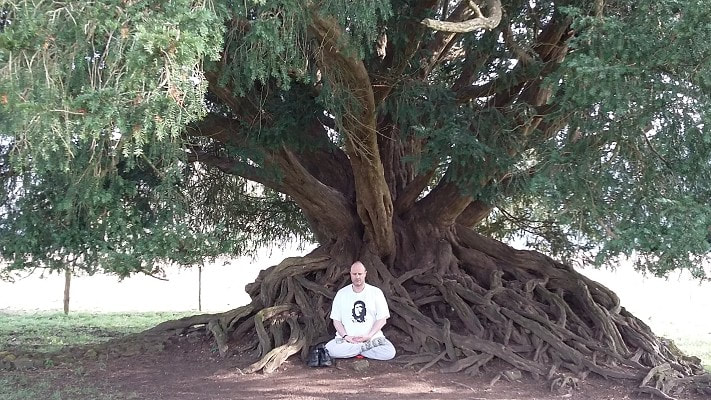
Visiting Tower Bridge yesterday (31.7.2026) - we discovered that the two-towers possessed an area of glass-flooring (situated in the East and West Walkways joining the North and South Tower together) - perhaps twenty-feet long. This does not have the pretend cracking which often terrorises people around the world - but most people were understandably apprehensive about walking on these areas. Underneath each section is a drop of about 213-feet down into the murky depths of the River Thames. Boats go to and fro and the stone concrete supports can be viewed. We had to climb hundreds of steps up the North Tower before reaching the two-walkways (East and West) and the South Tower. It was in the East and West Walkways that we discovered glass-floor. Of course, crowd density decides what can or cannot do on this thoroughfare - and the West Walkway just happened to have fewer people who appeared more relaxed. Even so, every man, woman, and child was tentative - with most carefully stepping around the edges. One or two children were unphased and decided to show-off their gymnastic skills - performing somersaults and tumbles across the glass. I opted for the much more sedate option of "just Sitting" peacefully - and manifesting an empty and expansive mind. Despite about 20-other people being present, everyone was quite civilised and granted one another the appropriate inner and outer freedom to be "present" in whatever way they wished. It was a good group spirit exhibited by people who did not know one another. We then climbed backed down - using the steps of the South Tower.
0 Comments
Jindeng Temple Grottoes is located in Yuxiaguan Town, Pingshun County, Changzhi City , Shanxi Province. Located within the territory of Changzhi City, Shanxi Province, it is a unit included in the Sixth Batch of National Key Cultural Relics Protection Units. Exploring an ancient temple perched on a 1,700-metre-high cliff, where the main hall stands miraculously built within water—the pinnacle of late-period grotto art. The Jindeng Temple Grottoes are located in Beiquan Village, Yuxiaguan Town, Pingshun County, Changzhi City , Shanxi Province . They were initially carved during the Tianbao era (550-557 CE) of the Kingdom of Qi dynasty. The extant grottoes were primarily excavated from the 17th year of the Hongzhi era to the 44th year of the Jiajing era (1504-1565 CE) of the Ming dynasty. In 2006, they were designated as part of the Sixth Batch of National Key Cultural Relics Protection Units. The grotto complex was built by carving into a natural rock recess on a cliff face of the Taihang Mountains at an altitude of 1,700 metres. It stretches 171 metres from east to west. Currently, there are 16 extant caves and over 500 cliff-side statues depicting themes such as Buddhas, bodhisattvas, and guardian deities (Vajrapani), showcasing the sculptural style of the Ming dynasty. The architectural layout is divided into seven successive courtyards. The largest cave is the Water and Land Hall (covering approximately 125 square meters). Inside the hall, a cruciform-shaped stone bridge spans a clear pool, with over 50 Buddha statues arranged around the pool's perimeter. The caisson ceiling is decorated with square relief carvings. To the north of the temple, 46 stone tomb pagodas from the Ming and Qing dynasties survive, including a hexagonal Thousand-Buddha Pagoda (total height 10.3 metres, carved with a thousand Buddha images). The main caves employ a hall-style structure imitating wooden architecture, featuring straight lattice windows, octagonal eave columns, and truncated pyramidal caisson ceilings. The Buddhist altars within the caves often enshrine statues of the Three Great Bodhisattvas along with attendant bodhisattvas. To the north outside the Jindeng Temple complex, there is a forest of stupas. Currently, 46 stone stupas from the Ming and Qing dynasties remain. They come in various shapes such as square, hexagonal, and circular, and in styles like the bowl-shaped and pavilion-style stupas, some being solid and others hollow. Legend has it that the stupa chambers once preserved a seated-tiger statue containing the bones of Chan Master Jingzhen (净真 - Pure Truth), the founding monk of the temple, which was later destroyed during the war period. Chan Master Yu (芋 - Great), a prominent monk of the Northern Zhou dynasty, was a native of Caoma Village in Zhangde Prefecture (present-day Anyang, Henan). He initially became a monk at Xingguo Temple in Shanxi, taking the renowned monk Qingguo (清果 - Clear Attainment) as his master and receiving the Dharma name Jingzhen. He later went to Xuanshan Temple in Shanxi for spiritual cultivation and self-cultivation. Afterwards, he moved to Liangdang Mountain in Shaanxi for rigorous ascetic practice. He then traveled extensively, sleeping in tiger dens at night, keeping tigers as companions, and daily begging for alms along his journey while leading a tiger and carrying his alms bowl. Finally, he settled at Jindeng Temple, becoming its founding patriarch. https://baike.baidu.com/en/item/Jindeng%20Temple%20Grottoes/47560 Perched on cliffs deep in the Taihang Mountains of north China's Shanxi Province, Jindeng Temple is a hidden gem of China's national cultural heritage. For about 30 years, Feng Kaipeng has devoted himself to safeguarding the cultural relics that have endured for centuries. Perched on cliffs deep in the Taihang Mountains of north China's Shanxi Province, Jindeng Temple is a hidden gem of China's national cultural heritage. For about 30 years, a man has devoted himself to safeguarding the cultural relics that have endured for centuries. #FacesofChina
Good work, A!
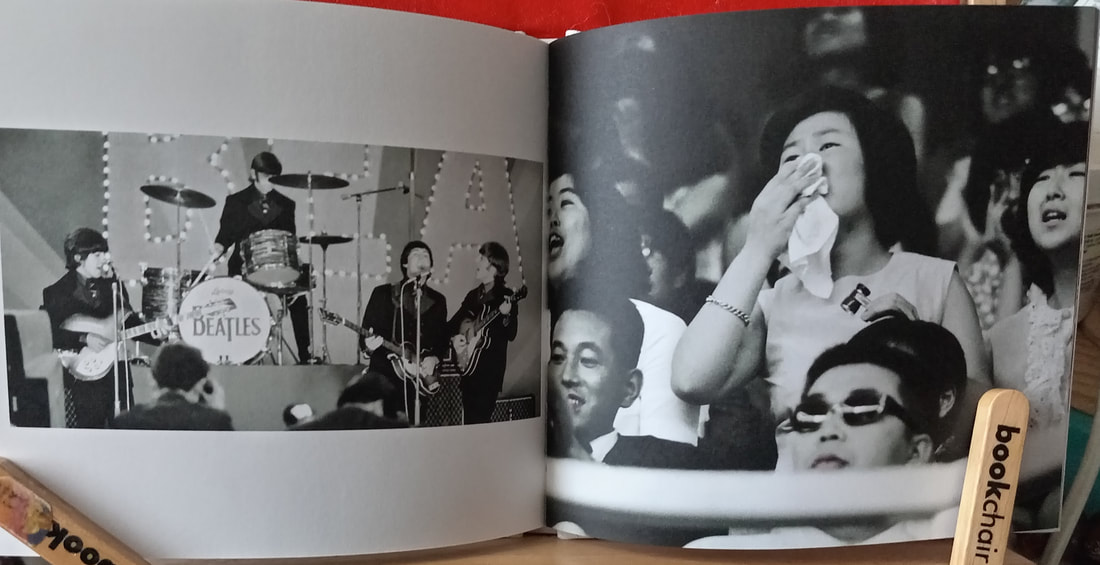
What is important is the revolutionary impetus that drives-on the essence of your research. Be hardened to criticism (there are many liars out there) - but take that which is useful (be adaptive to the truth you discover). Bear in mind, although Chinese culture belongs to the Chinese people - most Chinee people are not "experts" in the minutiae of the reality that defines their DNA, phenotype, and culture, etc. Many Chinese people wonder "why we bother" - when it comes to researching "the very thing that they are" - and "the very thing that we value". When I was young, Richard Hunn was in and out of many different communities that comprise the "Chinese". He even met my Hakka Chinese grandmother in Sutton - who could not speak English - and he conversed with her in Hakka (this was around 2000 - and we both ended-up in Kingston attending an anti-racist meeting in the city-centre which involved a nunchaku demonstration - I think by accident as we were heading to the wonderful Borders bookshop now defunct)! Apparently, he had lived in Burma for a time in a community of Hakka and understood their (our) world-view. What I find interesting is "meaningful coincidences". For instance, why is it that the "Grand Mysterious Classic" (太玄經 - Tai Xuan Jing) contains "81 chapters" - the same number as that found in the Dao De Jing? Is it because the Dao De Jing a) already existed, and b) directly influenced the designed of the Tai Xuan Jing? Is it because there was a direct relationship between the Dao De Jing and the Confucian community? It could be something - it could be nothing. It was penned by the Confucian scholar - Yang Xiong [揚雄] (53 BCE – 18 CE) - born during the end of the Western Han, but who became prominent (intellectually) during the short-lived "Xin Dynasty" (9-23 CE) - that "New Dynasty" which bridged the Western (Earlier) and Eastern (Latter) Han Dynasty. Of course, the "Xin" contributed vigorously to the development of Chinese culture - and then was brutally wiped-out by the followers of the Han. Standard bread and butter for the historical development of Chinese culture. This habitual violence has generated some extraordinary martial arts. Fighting is a normal thing - spiritualised in both essence and practice. This is an important observation - as an ennobled violence is present within ALL the spiritual texts relating to ancient China. In my youth, I (briefly) came across the "Tai Xuan Jing" - but at the time found it difficult to ingest as it departed from the standard Yijing which I was only beginning to penetrate. I could not understand its purpose. My Chinese-side reacted (negatively) in support of the urge "not to change anything" - a huge contradiction to my life-path of embracing Revolutionary thinking. Perhaps it is the tension between the two that empowers my work and seeps-out into the work of others - for whatever that is worth. I think "81" is far to specific to be random - it just does not occur in nature for no reason. It is an awkward and irritating number. Sometimes, it is at the exact point of the greatest resistance that we make our greatest breakthroughs. Bear in mind that 8 + 1 = 9 - with "9" being a fully rounded and spiritualised number in Chinese thinking. Generally speaking, multiples of "3" permeate Chinese thinking in the sense of "good luck" and retaining social order (take the numerical designations applied to the six-lines of the Yijing). Thanks Adrian Dear Taeko I hope you are well! I remember myself and Richard discussing the 'lost' tour of Japan (which took place in the Tokyo 'Budokan') by the masterful British pop group 'The Beatles' - during mid-1966 (June 30th and July 1st)! For reasons unknown, this part of Beatles history renaimed obscure until very recent times. I was born one year later during the Summer of love (May 1967)! I write because recently this tour of Japan has been released again in the UK - and after acquiring a copy - my conversations with Richard came to the fore-front of my mind! There is a an audio CD and a visual DVD all presented in a hand-numbered 'Limited Edition' Box Set. Richard explained to me that he felt the greatness of 'The Beatles' stemmed from a) the mastery they possessed regarding the use of their instruments (like a martial arts 'Master' expertly wielding the 'Weaponry' of the Style), and b) the mastery of the creative aspect of their minds! Together, this interaction created a sublime relationship between the 'surface' mind and the deepest (Empty) aspects of their mind - an interaction which manifested in the physical world through an eternal and Zen-like musical creation that 'transcended' its own mode of existence! All Best Wishes Adrian Reply 1.4.2023 (Email) Taeko Hunn to Adrian Chan-Wyles
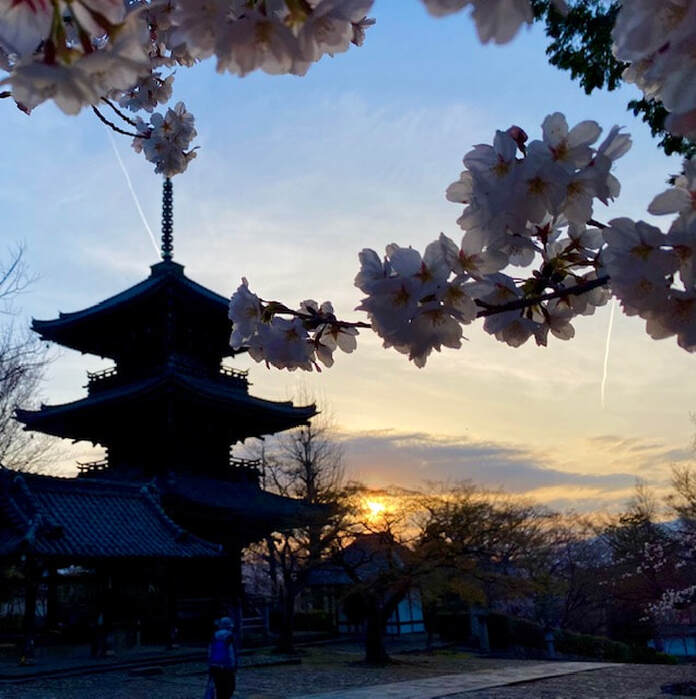
Dear Adrian Thank you for your message. The music and popularity of the Beatles hasn’t been changed. It is fun to know that you and Richard had the conversation about the Beatles that you described. He too loved the music of the Beatles. I remember him playing Beatles numbers on the piano from time to time.😊 Thank you for always remembering to write to me. Please take care of your health. Best wishes Taeko (和谷多恵子) PS: It is a beautiful season in Kyoto right now - with the cherry blossoms in full bloom... Attached is a photograph taken at sunset at Shinnyo-dō (真如堂) - Richard's favourite temple. Dear J
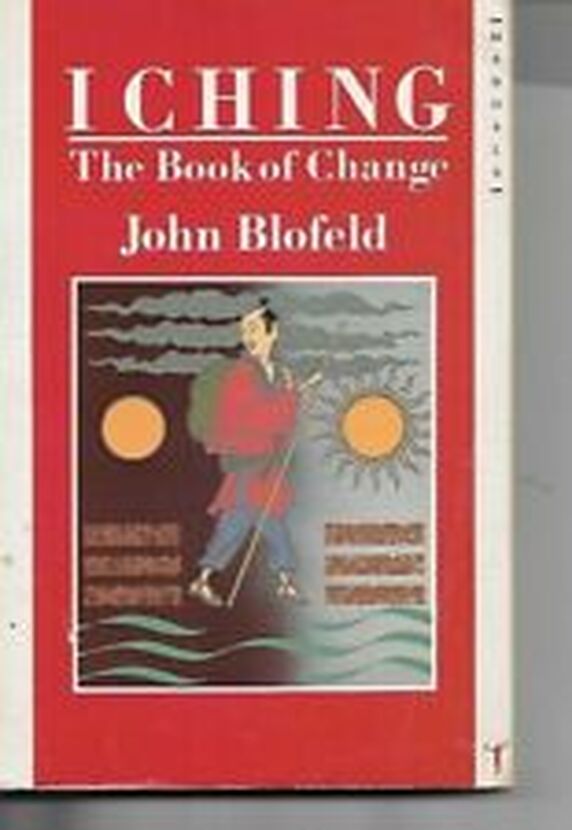
Thank you for your interesting email. Richard Hunn spent much of his mature years working upon a full Chinese-English translation of the Yijing whilst working with a British publisher at a time when such an idea was unheard of in the West. The problem was that this publisher wanted to change many aspects of the translation and Richard Hunn disagreed - as these changes would alter the intended meaning of the translation. Due to these creatiive difference - the Publisher eventually pulled the plug and the project was shelved (in the late 1980s). Nowadays, translations like this are fairly common in the West (many produced by ethnic Chinese scholars) - so perhaps Richard Hunn was ahead of his time! As well as studying the available Richard Wilhelm translation (in its various guises) - Richard Hunn thought highly of the concise (English) translation generated by John Blofeld (not very well-known today). Although Richard Hunn would spend much of his time reading the original Chinese language version of the Yijing presented to him by Charles Luk (1898-1978). John Blofeld translation is only the 64 Hexagrams and the directly related commentary material (together with the 'line' commentaries) excluding the Ten Wings content. This is similar in structure to the various 'Pocket' or 'Concise' editions of Wilhelm (premised upon the 1950 edition translated by Cary F. Baynes from the German into the English language). John Blofeld's rendering of the Yijing, however, is a very different English language translation than that generated by Wilhelm-Baynes (Richard Hunn personally knew John Blofeld - despite Richard being much younger than John). John Blofeld ended his days living in Thailand (I believe with his Asian family). Once a suitable translation of the Yijing is secured - as there are many today - then it is a matter of a) intellectually studying the history and meaning of the text as if it were a typical (narrative) subject similar to academic history or philosophy, etc, and/or b) taking the exactly opposite approach of relating to the Hexagram and related text (including the Ten Wings) - in a direct and existential manner which draws the totality of the 'past' and the 'future' into the 'eternal' present. This replicates today exactly how the original 'Zhouyi' a) developed over time, and b) was used 'directly' by the Diviners of the Zhou Kings! Of course, Chinese language tradition talks of earlier (but similar) divinity manuals existing during the Xia and Shang Dynasty. Best Wishes Adrian I have spent several months translating into English this (Chinese language) academic paper forwarded to me by the Chinese Buddhist Association - with the instruction of providing to the West an authoritative text concerning the history of Chinese Ch'an Buddhism that ALL can benefit from. The Chinese Buddhist Association would like it known that ALL Westerners are welcome to come to China and study in educational or religious institutions and to submit their own thoughts and understandings regarding Chinese Buddhism, Chinese culture, Chinese culture and Chinese philosophy, etc. I am please to fulfil this Bodhisattva task!
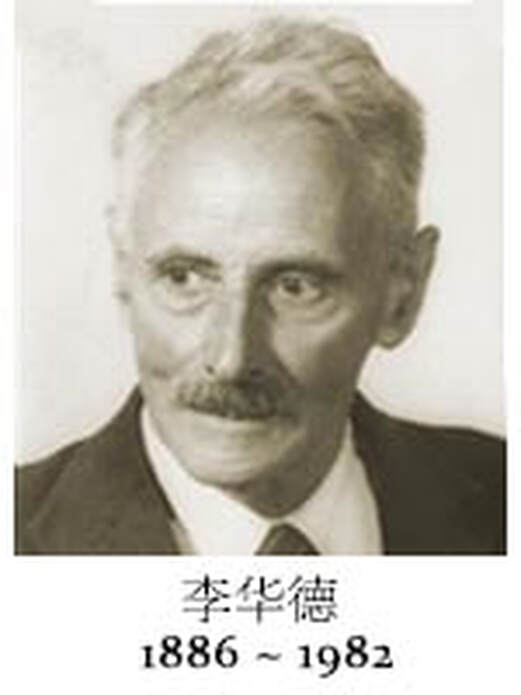
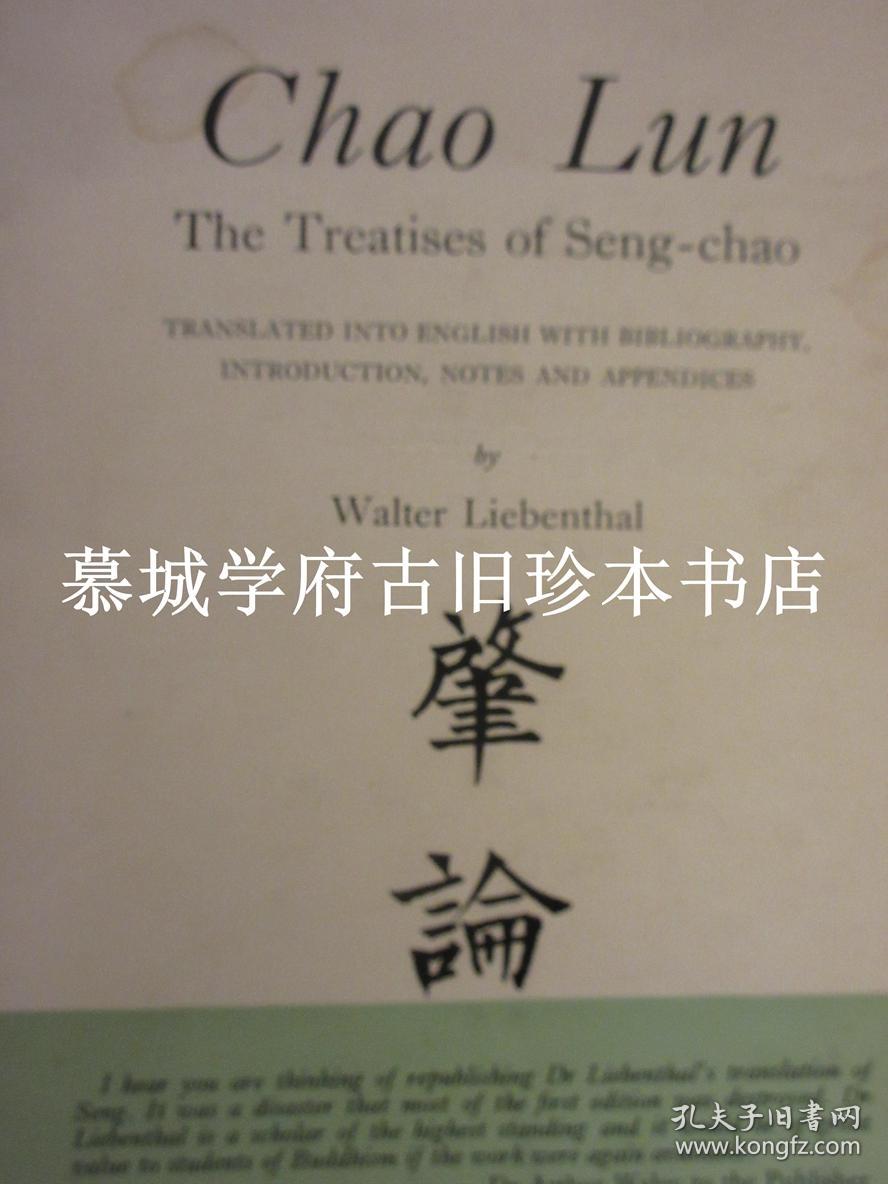
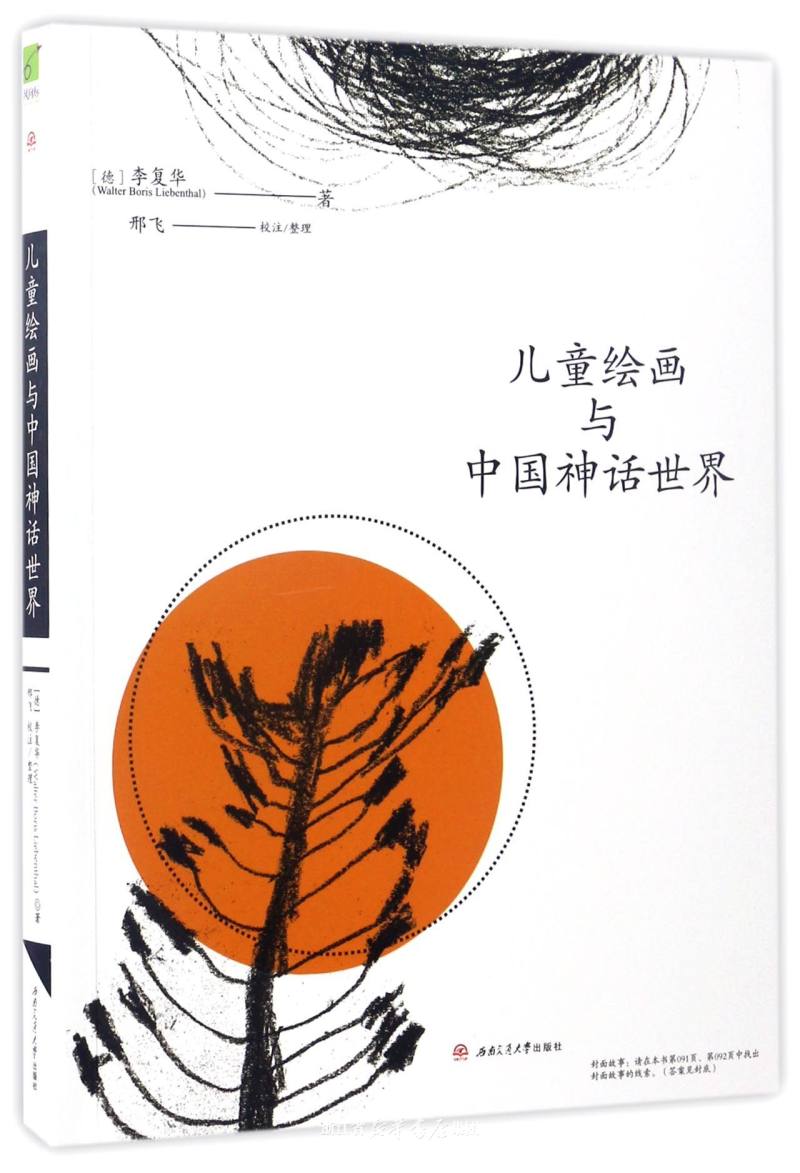
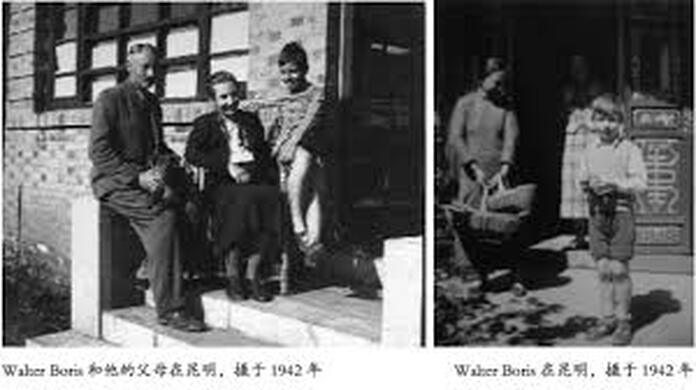
The ICBI seeks to bring together the international community around the subject of Chinese Ch'an Buddhism - and its many strands of development that have spread across the world - often into very different cultural milieus, historical epochs and socio-economic categories! China is the historical and cultural epicentre of this type of Buddhism (which is a form of Indian Buddhism integrated with Confucian and Daoist influences), and due to politics, world history and different views of the destiny of humanity - the 'disconnect' between the academia of China and the West must be a) acknowledged and b) striven to be over-come. In the very interesting Conference on Ch'an Buddhism translated above - no Western scholars attended even though many were invited with all-expenses paid trips and free accommodation provided, etc. This did not stop the Conference from going ahead - as the work of Western scholars was discussed in their absence. A major achievement of this Conference can be seen in the fact that Mainland Chinese scholars sat in the same room as Japanese and Taiwanese scholars and a civilised and highly beneficial debate unfolded. Chinese Ch'an Buddhism never died-put in China (a common myth that still circulates like Halley's Comet), and is thriving today! Furthermore, Chinese Ch'an is a 'living-tradition' that has spread throughout the world and into many different places! I have made the point that suitably qualified Indian scholars need to do more in 'proving' the existence of 'Dhyana' Buddhism within South India - and isolate the strand of this Buddhism that Bodhidharma brought to China. This development would move the debate forward and counter the assumption that Ch'an is a purely Chinese invention that possesses no Indian roots. Peace in the Dharma Dear Ben Walter Liebenthal - Chinese Source https://read01.com/zh-cn/K457R5.html#.YDJpWKsYA2w According to this, it says that: '1937年记载“德国柏林大学哲学博士李华德,拟译《肇论》, 以疑义来访(太虚)大师.' 'In 1937, it was recorded that "Walter Liebenthal (Li Huade - 李华德), a Ph.D originally from the University of Berlin, Germany, intended to translate the "Zhao Lun". However, as he had 'doubts' about its content and meaning, he visited the Great Master Taixu (太虚) to ask for his advice.' Master Taixu (1890-1947) was a forward-thinking Buddhist modernist - although his views do not always 'agree' with those held by the more traditional Chinese Buddhist Masters alive in China today. It is interesting that Walter Liebenthal never thought to approach Master Xu Yun (1840-1959). Walter Liebenthal preferred Chinese Buddhism and developed the idea that the Chinese cultural system 'purged' Buddhism of all its 'Indianness' and imported Confucian and Daoist influences into its place. This seems overly simplistic to me - particularly as so much of the rhetoric of Ch'an, for instance, insists upon an Indian origin (imagined or actual). Buddhism is definitely viewed as 'foreign' within Chinese culture, and certainly not 'Chinese' in origin. It is similar to how Buddhism in the West is often viewed through the lens of the Judeo-Christian tradition simply because this tradition was already here and thoroughly familiar when Buddhism arrived. The use of Judeo-Christian paradigms to interpret Buddhism does not necessarily mean that a 'deliberate' sanitisation of 'Asian' Buddhism occurred in the West - even if the effect may have appeared similar in certain aspects. Just so, the early transmission of Buddhism into China was 'filtered' through the apparatus of an existing State Confucianism and the popular Daoism (practiced amongst the ordinary people)! With Metta
Adrian |
Archives
May 2026
Categories
All
|


RSS Feed