|
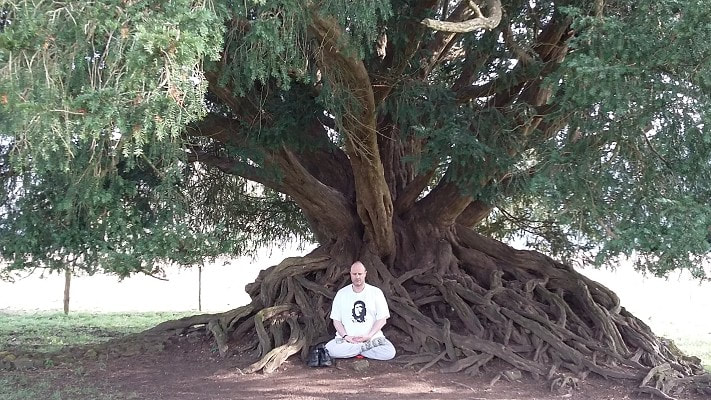
Visiting Tower Bridge yesterday (31.7.2026) - we discovered that the two-towers possessed an area of glass-flooring (situated in the East and West Walkways joining the North and South Tower together) - perhaps twenty-feet long. This does not have the pretend cracking which often terrorises people around the world - but most people were understandably apprehensive about walking on these areas. Underneath each section is a drop of about 213-feet down into the murky depths of the River Thames. Boats go to and fro and the stone concrete supports can be viewed. We had to climb hundreds of steps up the North Tower before reaching the two-walkways (East and West) and the South Tower. It was in the East and West Walkways that we discovered glass-floor. Of course, crowd density decides what can or cannot do on this thoroughfare - and the West Walkway just happened to have fewer people who appeared more relaxed. Even so, every man, woman, and child was tentative - with most carefully stepping around the edges. One or two children were unphased and decided to show-off their gymnastic skills - performing somersaults and tumbles across the glass. I opted for the much more sedate option of "just Sitting" peacefully - and manifesting an empty and expansive mind. Despite about 20-other people being present, everyone was quite civilised and granted one another the appropriate inner and outer freedom to be "present" in whatever way they wished. It was a good group spirit exhibited by people who did not know one another. We then climbed backed down - using the steps of the South Tower.
0 Comments
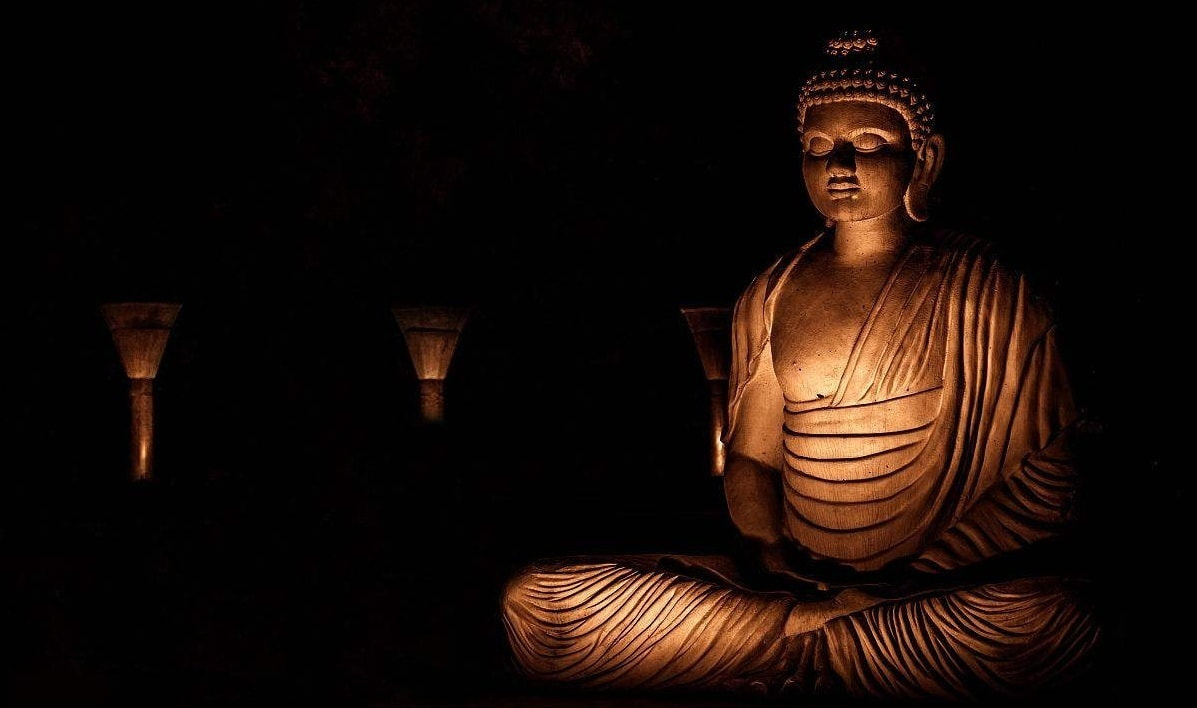
iWe need to sit with an awe-inspiring deportment. This means sitting like an iron-mountain when we are "sitting" - and when moving around - there is an "inner stillness" that is not interrupted. Within movement - there is stillness - within stillness there is movement. How can this be? It is just words all jumbled-up. Words spill-out the mind like running-water out of a tap. Without stillness the body wanders about - like a puppet on strings. The mind must be "stilled", and the emptiness expanded without limit and beyond measure. This emptiness must be three-dimensional and unhindered throughout the ten-directions. Emptiness must be realised - but the peace and tranquillity associated with its realisation - must not be attached to. Many imagine emptiness - but this is no good. Many sit atop the hundred-foot pole - but are afraid to "jump-off". Within false Ch'an - it is the reflection of delusion that is grasped - but with authentic Ch'an - greed, hatred, and delusion is realised in an instant as the surface mind is "stilled" and emptiness is fully realised. When emptiness and form are fully realised and integrated - no external manifestation (or change) can upset or disturb the empty mind ground. Prajna emerges from empty luminosity. Nothing can dislodge the deep love and stability realised by the Ch'an practitioner. Non-greed, non-hatred, and non-delusion dissolve in an instant as greed, hatred, and delusion have no place to manifest. When the mirror is smashed - no reflection is apparent. Yet the empty mind ground embraces all things without exception.
(Translated By Adrian Chan-Wyles PhD) 27.5.2017 – Source: Lineaage Transmission Network “Give-up all attachments and do not give rise to a single thought.” These are the prerequisite for practicing genuine Chinese Ch’an meditation. Now that we know this, how can we achieve this objective? The first example involves the most karmically able - who will immediately cease their thinking-processes forever (achieving a permanent “stillness” of mind) - whilst directly perceiving the empty mind ground. The state of “no-birth” is then entered. Bodhi is attained in an instant (like a finger-snap) - without any hesitation. When all this happens correctly (and in good order) - no further words are required. The second level of karmic-ability involves the cultivation of logic and reason as a means to eliminate the uncontrolled stream of thought, and to modify behavioural-patterns when interacting in the material world. This method possesses many stages that vary according to the character of the practitioner. There is seated meditation, physical discipline, and much additional thought on the subject when not meditating - as a means of building resolve and motivation to practice. It must be understood that the “Original Nature” is pure and clean from the very beginning - and cannot be polluted by any expedient thought or action. By cultivsting this type of “wisdom” (Bodhi) – all “troubles” (klesa) will eventually come to an end. Birth, life, death and nirvana are all false constructs. These things are like insubstantial and non-permanent dust that cannot pollute the “True Nature”. Everything is a dream, and an illusion. The four elements of the body the mountains, the rivers, and the earth, all manifest and pass-away within the “True Nature” without staining the empty essence one iota. Cultivate non-attachment to all phenomena as it arises, manifests, and passes-away. Do not chase after life, death, reward, wealth, or any worldly activity. None of these things exist within the empty mind ground. Give-up right and wrong, like and dislike – and become like a dead tree stump – or a body with no reaction to (internal or) external stimulus. Remain indifferent to all things. This is how rhe root-cause of greed, hatred, and delusion is uprooted and the stream of consciousness “purified”. All troubles and difficulties will automatically disappear. In this way all pain, discomfort, suffering, happiness, hunger, cold, fullness, warmth, honour, disgrace, life, death, misfortune, fortune, good or bad luck, disgrace, gain or loss, safety or danger - are all laid to aside. Only in this way can we say that we have let go of the force of (ignotant) karmic-habit that keeps us trapped in duality – continuously fixating over fleeting externals which produce human suffering. Once you let go - you must let go of everything - forever. This is called “letting go of all attachments”. When all attachments are let go, delusion disappears, discrimination does not arise, and attachment ceases. At this point, non-thought (“stillness”) is achieved, the perceived True Nature is bright - and expands throughout the physical body - and out into the environment without limit. At this point, all the conditions for effective Ch’an meditation are met. If you work hard to truly meditate and study, you will be able to see your empty mind ground and (expansive) True Nature. Chinese Language Text: 虛雲老和尚:禪修入門 參禪的先決條件 萬緣放下
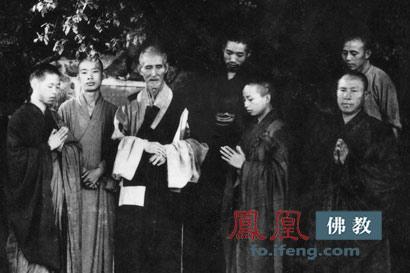
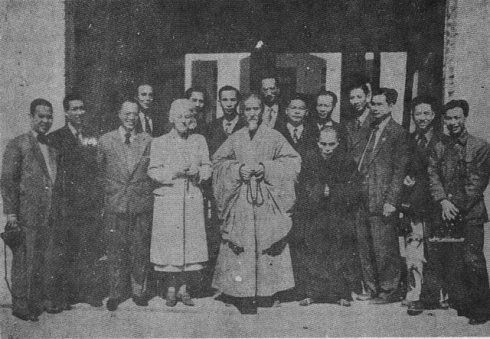
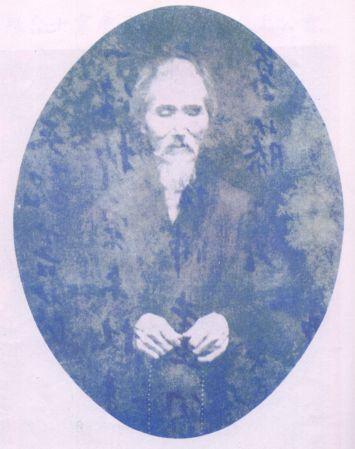
2017/05/27 來源:傳承網 「萬緣放下,一念不生」是參禪的先決條件,我們既然知道了,那麼,如何才能做到呢? 上焉者一念永歇,直至無生,頓證菩提,毫無噦唆。其次則以理除事,了知自性本來清淨,煩惱菩提、生死涅磐皆是假名,原不與我自性相干,事事物物皆是夢幻泡影,我此四大色身與山河大地,在自性中,如海中的浮漚一樣,隨起隨滅,無礙本體,不應隨一切幻事的生住異滅,而起欣厭取捨,通身放下,如死人一樣,自然根塵識心消落,貪嗔痴愛泯滅,所有這身子的痛癢苦樂、饑寒飽暖、榮辱生死、禍福吉凶、毀譽得喪、安危險夷,一概置之度外,這樣才算放下。 一放下,一切放下,永遠放下,叫做萬緣放下。萬緣放下了,妄想自消,分別不起,執著遠離,至此一念不生,自性光明,全體顯露,至是參禪的條件具備了,再用功真參實究,明心見性才有分。 ‘We are here to inquire into the hua-tou which is the way we should follow. Our purpose is to be clear about birth and death and to attain Buddhahood. In order to be clear about birth and death, we must have recourse to this hua-tou which should be used as the Vajra King’s precious sword to cut down demons if demons come and Buddha’s if Buddhas come so that no feelings will remain and not a single thing (Dharma) can be set up. In such a manner, where could there have been wrong thinking about writing poems and gathas and seeing such states as voidness and brightness? If you made your efforts so wrongly. I really do not know where your hua-tou went. Experienced Chan monks do not require further talks about this, but beginners should be very careful.’ Master Xu Yun (113-114 years-old) - Ch’an Week - 1953-1954 – Fourth Day - Jade Buddha Temple (Shanghai) Master Xu Yun never wastes a single word. This is because he is never confused as to the origin of a single thought. Master Xu Yun exists (psychologically and physically) within the permeant realisation of the empty mind ground. According to the historical (Indian) Buddha, ‘life’ as we experience it is unsatisfactory, seldom stable and prone to disappointment and ultimate dissolution. Physical life begins through the chemical explosion of conception, and ends when the body naturally shuts-down (during biological death), or is extinguished early through accident, illness or disaster, etc. Master Xu Yun lived through many such episodes throughout his extraordinarily long life (of two-cycles of the Chinese Zodiac). He lived within the space of the enlightened mind as explained in the Surangama Sutra. This is described as a round, all-embracing mirror that sees everything and rejects nothing. Like the sun – such a realised state shines on everything equally – bringing light and loving kindness to all phenomena whilst clearly distinguishing between this and that. This is why Master Xu Yun described the enlightened state as being ‘this and thus’ in his final years. What many believe to be exalted states experienced when training in methods of self-cultivation, are nothing more than marks of progression and subtle expressions of delusion that must be ruthlessly ‘cut-down’ without hesitation. Buddhas in the mind are only shadows in the imagination, nothing else. Being obsessed with a shadow is not the realisation of ‘enlightenment’ but just more delusion indulged in a more favourable direction. These achievements signify spiritual ‘dead-ends’ that many reach and mistake for the state of ultimate ‘enlightenment’. Practitioners then become satisfied to remain in these dark corners of the imagination and to lead all other into the same cul-de-sac of doom! When attachment mixes with a false attainment, then an individual will not be able to move-on for very long extended periods of time. All is lost as darkness replaces light – and ignorance dominates genuine wisdom. This quagmire can be avoided or escaped simple by applying the hua-tou correctly and effectively. What was once inevitable instantaneously ‘melts’ away as the hua-tou detaches the mind’s faulty awareness from this delusion and turns it toward the empty mind ground. This demonstrates the power of a) delusions to fool and distract the mind, and b) for the hua-tou method to quickly resolve this issue. The hua-tou is a very effective method of self-cultivation now only found in the Chinese Ch’an School of Buddhism (and the various lineages that have spread to other countries). Looking within is a matter of proper view – nothing else. Looking correctly will reveal the empty mind ground – looking incorrectly will reveal the delusion of the mind which cannot be escaped. Settling the body and directing the awareness is more important than all the passing phenomena of the external world (good or bad) - and has nothing to do with existential circumstance. This is why Ch’an is both difficult and easy.
Avoiding the Ten Evil Acts (Dasa Akusala)
A) The Three Evil Acts Associated with the Bodily-Action: 1) Killing 2) Stealing 3) Adultery B) The Four Evil Acts Associated with Speech: 4) Lying 5) Slander 6) Harsh Words 7) Profitless Talk C) The Three Evil Acts Associated with the Mind: 8) Greed 9) Hatred 10) Delusion As Buddhism is a Form of Mental Hygiene – the Following Must Be Uprooted through Meditation: 1) Greed (Abhijjha), 2) Hatred (Vyapada), 3) Ill-Will (Kodha), 4) Enmity (Upanaha), 5) Belittling (Makkha), 6) Pretension (Palasa), 7) Envy (Issa), 8) Jealously (Macchariya), 9) Hypocrisy (Maya), 10) Craftiness (Satheyya), 11) Obduracy (Thambha), 12) Vieing (Sarambha), 13) Conceit (Mana), 14) Haughtiness (Atimana), 15) Infatuation (Mada), and 16) Unheedfulness (Pamada). As these ‘darken the mind’ they must be ‘uprooted’. Ten Moral Acts (Dasa Kusala) 1) Giving (Dana), 2) Moral Conduct (Sila), Meditation (Bhavana), 4) Respecting the Worthy (Apacayana), 5) Ministering to the Worthy (Veyvavacca), 6) Offering Merit (Pattidana), 7) Partakingbof Merit (Pattanumodana), 8) Hearing the Teaching (Dhammasavana), 9) Teaching the Dhamma (Dhamma Desana) and 10) Rectification of False Views (Ditthijjukamma). The reality of living in the material world is entirely a matter of casual circumstance. Most people make their way through life in any way they can, regardless of the inherent conditions (good, neutral or bad, etc). The Ch’an masters in the old days were very strict and did not care whatsoever about casual circumstance. Their main emphasis was only to direct the attention ‘inward’ so that the empty mind ground can be fully cognised and integrated with. There is no gossip or discussion tolerated about the nature of the times, with only ‘looking within’ viewed as a valid approach to existence. The Ch’an masters advised that we must ‘adjust ourselves to circumstance’, whilst the mind is turned inward and the interior of conscious awareness illuminated through continuous concentration. This is the essence of the Buddha’s method. Master Xu Yun (1840-1959) lived an extraordinary life and was involved in very important times in historical development, but he was continuously ‘indifferent’ to what was happening around him, whilst taking every ‘correct’ action that was required at the time. Looking within with strength and purpose is not a denial of material reality, but is the acknowledgement of the Buddha’s method. The Ch’an method is nothing but the direct realisation of the empty mind ground so that it becomes the place of permanent abode – an abode which generates loving-kindness, compassion and wisdom! |
Archives
May 2026
Categories
All
|


RSS Feed