|
Author's Note: Dear reader - I sincerely hope the following causes your mind to be both "socked" and "doubt" infested. After-all, you are not paying me for a service and I am not selling you any wares. Of course, we could dance this dance - as the internet is default set for commercial endeavour - but Ch'an is not that easy. It would be easy for you to give me money (and purchase my compliance) - but it is not so easy to permanently give away your greed, hatred, and delusion, ad clearly show me the empty mind ground. This is why the Ch'an Masters of old resorted to shock-tactics - a shout or a blow - as these actions "halted" the routine thought processes. Today, particularly with regards to writing, the same effect is achieved through the profane treatment of concepts. Fred, for instance, based his entire theory on a defunked (evolutionary) understanding of the development of the foetus in the womb - and when he was told about this - he refused to admit his mistake as his theory had already gained traction in the commercial and academic world. Freud, of course, was Jung's teacher. Becoming entangled in the thing the Buddha advocates becoming untangled from - is not the purpose of Ch'an training. Neither is making you feel "nice" about random words written upon a page. And here we are. ACW (31.10.2025) Having studied with Richard Hunn, I was introduced to Richard Wilhelm’s extraordinary translation of the Book of Changes (I Ching) – which I later learned was originally rendered into Wilhelm’s native German – as the “I Ging”. What were we actually reading? Well, it turned-out that the English translation of Wilhem’s work is in fact a transliteration of his original German version. This might explain why Wilhelm quotes Carl Jung – who was also an ethnic German - although this time born in Switzerland. This is the pathway through which many of us in the West were introduced to Jungian thinking – which I did study for a number of years (although never officially). Richard Hunn had travelled to Zurich as he had been granted permission by Jung’s family to read Jung’s handwritten pages (omitted from his biography) that state he believed that rebirth might be real. His family asked for these pages to be removed as they felt such an idea might negatively impact his more scientific-thinking. Many years later, and after reading Frank J Sulloway’s excellent book entitled “Freud Biologist of the Mind – Beyond the Psychoanalytical Legend” – as well as many similar tomes – I realised just how off the mark this type of (psycho-therapeutic) thinking was - and remains. Yes – such approaches to analysing the mind might assist some people with the negative aspects pertaining to their thought and emotional processes – but such schematics do little more than this. From a Buddhist perspective, it is the “balancing” of the delusional mind-set – or that way of looking at things that aligns greed, hatred, and delusion without ever questioning the presence or validity of these self-defeating entities. Placing aside the scientific issues arising from many of these psychological systems – the fact remains that the “delusional” mind-set as defined by the Buddha is a priori taken as “normal” and beyond any notion of “uprooting” or “transcendence”. Furthermore, linking mind development to commerce adds yet another layer of complication to a process that the Buddha taught free of monetary charge (the cost of training in the authentic Dharma requires a strict self-discipline). Can this type of expedient psychological training be useful? Yes – given that all the conditions are met which produces such an outcome. But here is the massive contradiction to all this. Whereas a Buddhist Master (at least in the Chinese Ch’an tradition) must have attained a confirmed enlightenment before any teaching is undertaken – a psychotherapist can offer counselling when he or she possesses no more or no less mental stability than the next deluded individual. Simply paying for a course of academic training does not guarantee any profound or permanent alteration in the mind of the successful student. This is why many successful academics, even after years of successful teaching (or counselling in the case of psychologists), still retire to isolated Buddhist Temples to eventually get to grips with the greed, hatred, and delusion that continuously plagues their minds. An individual must think for themselves – so that they can permanently “stop” the thought processes on their own and through their own efforts – when given a proper meditative method to work with. This Dharma-process has nothing to do with money or status. Indeed, realising the empty mind ground is perhaps the lonliest undertaking in the world – and so it should be. If Jung had truly realised this understanding, then he would have known that rebirth simultaneously “exists”, “does not exist”, “exists and does not exist”, and “neither exists and does not exist”. There's nothing difficult about that to understand - now is there?
0 Comments
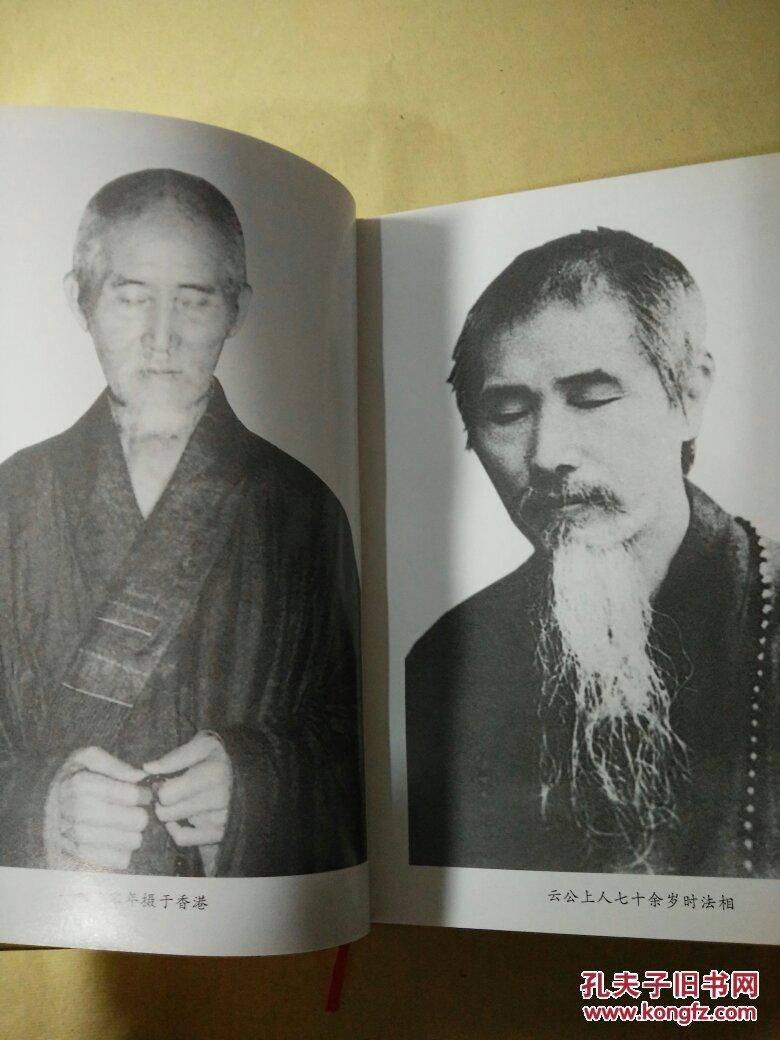
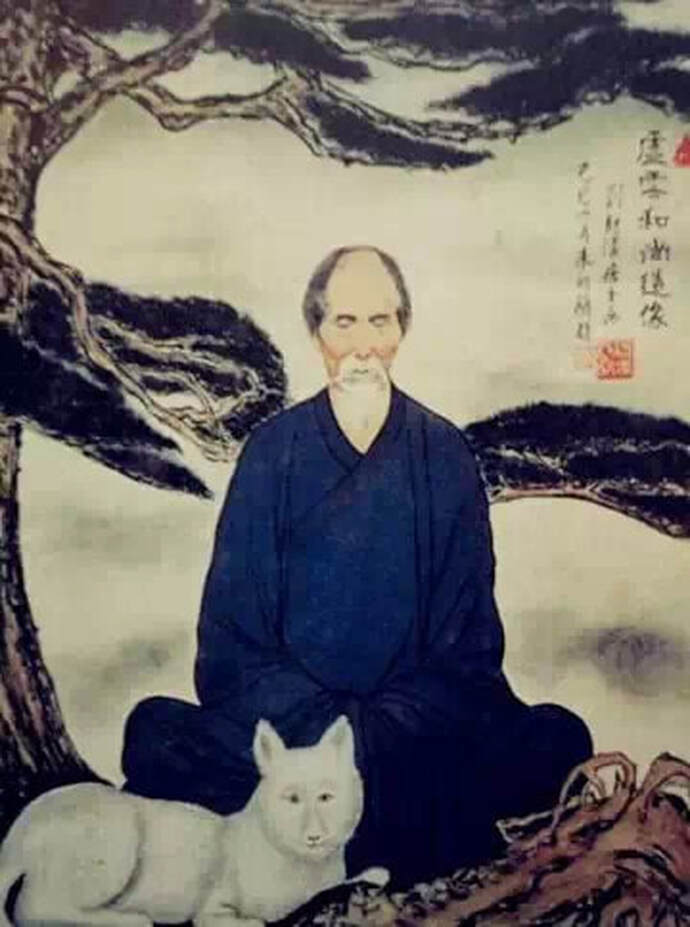
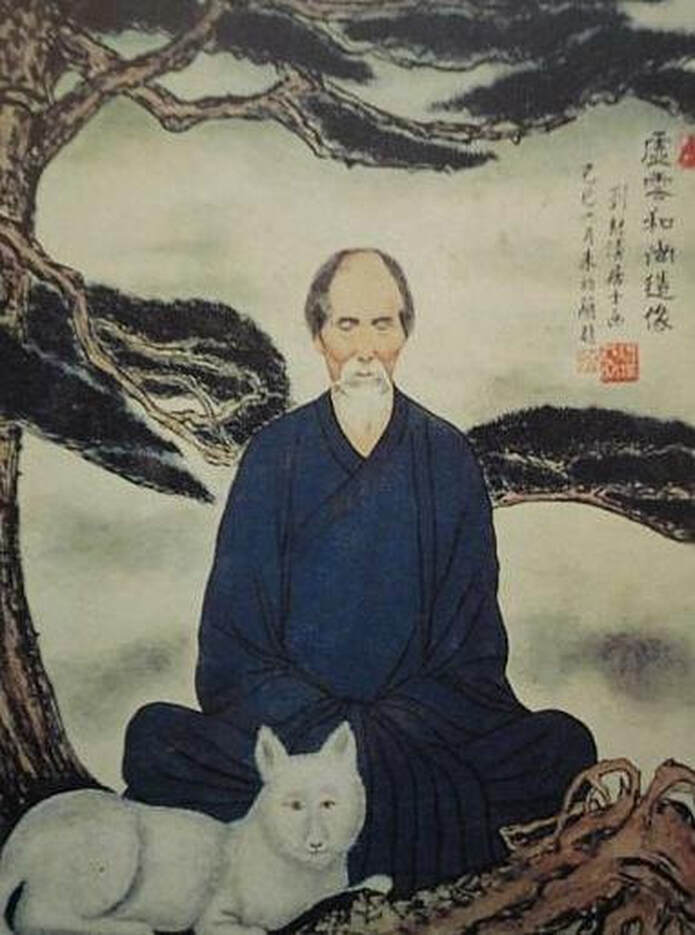
Although eulogised more or less the world over today – Master Xu Yun attracted his fair share of criticism. Although completely indifferent to worldly affairs he was accused of being a ‘rightest’ and a ‘leftist’ at different times in his existence. Those jealous of his spiritual power (and seniority) within the Chinese Buddhist System – accused Master Xu Yun of breaking the very Vinaya Discipline he fervently enforced upon his disciples. Quite often this involved the rules surrounding sexual self-control and celibacy – with Master Xu Yun accused of participating in relations with male acolytes. Of course, there was never any material evidence to substantiate these rumours. At one time a young woman took her clothes-off in front of a meditating Master Xu Yun on a boat packed with witnesses – and he never reacted. It is speculated that this woman was paid to do this in an attempt to secure material evidence regarding Master Xu Yun breaking the Vinaya Discipline.
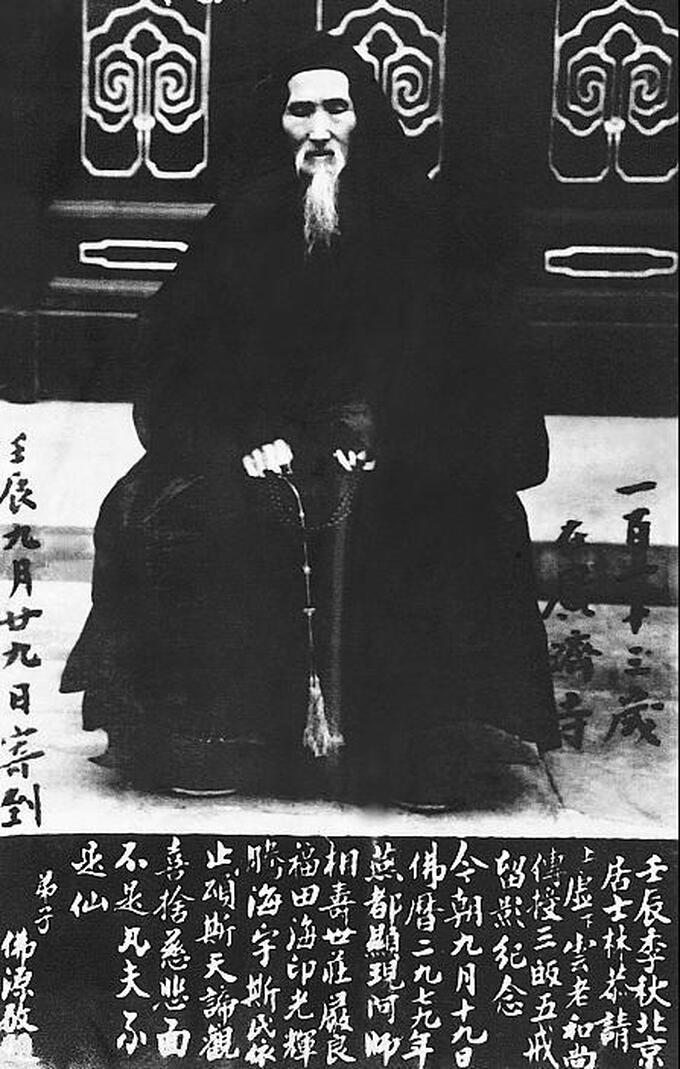
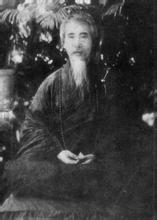
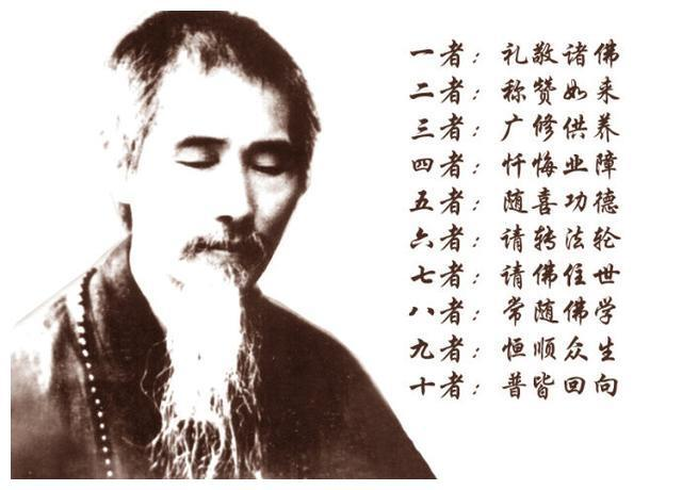
Part of the reason inspiring these baseless attacks involved the Imperial Japanese presence in China between 1931-1945 – which saw an attempt at manipulating the Chinese Sangha into adopting the Japanese Zen practice of NOT following the Vinaya Discipline and allowing Buddhist ‘monks’ to be married, eat meat and drink alcohol. There were some collaborative elements within a rapidly modernising Chinese culture that viewed Master Xu Yun’s attitude as being old fashioned and behind the times. Master Xu Yun, despite this pressure from without and within Chinese culture, nevertheless, refused to buckle and instead reacted with an ever-greater vigour in calling for the upholding of the Vinaya Discipline! When told what others were negatively saying about him, Master Xu Yun would laugh and brush the insult aside. What others said was viewed by Master Xu Yun as being a product of greed, hatred, and delusion – and the very ignorance that following of the Vinaya Discipline sought to uproot and dissolve into the three-dimensional emptiness of the empty mind-ground. Just as following the Vinaya Discipline represented the pure ‘host’ position – the impure ‘guest’ position represented the dirtiness of the ordinary, mundane world and its machinations. Why follow the latter when the former offered safety, sanctuary, and a relief from human suffering? Pretending to be a ‘monk’ when immersed in the filth of the ‘guest’ position of lay-existence is NOT correctly following the Buddha-Dharma as taught by Master Xu Yun. Master Xu Yun shuffled-off his mortal coil 64-years ago (in 1959) – on October 13th (when the Chinese Lunar Callender is converted into the Western Solar equivalent). He was in his 120th-year and had lived nearly two of the 60-years cycles that define the Chinese Zodiac. Although born in the Year of the Rat – and obviously a survivor – Master Xu Yun had no patience for superstition. Indeed, his biography is strewn with accidents, injuries, and the occasional monastic disciplining (involving corporal punishment). None of this bothered him psychologically (as he was ‘detached’ from his feelings) – even if the experience damaged him physically. The question is - how many Buddhist practitioners today are prepared to be like this? All the Tang and Song Dynasty Ch’an Records pursue exactly the same task of clarifying the ‘host’ and defining the ‘guest’. The realisation of the ‘host’ is preferred – whilst the denying of the ‘guest’ is encouraged. Even so – it is clear that even within Chinese-language sources – the mistaking of one for the other is a continuous hazard. If this is true of Chinese culture – how much more difficult must it be for followers of the Dharma in the West? The Ch’an path may be direct – but this fact does NOT make it ‘easy’. Sometimes it is more convenient for individuals to follow simpler paths – even if these paths are harder – and infinitely less likely to achieve results! Ch’an is NOT like this. As Master Xu Yun aged – his body changed dramatically. This is a reality we all face and are facing – and yet despite these profound shifts in physical existence – it is never viewed within the Ch’an tradition as anything more than changes occurring in the ‘guest’ - as the ‘host’ (which must NEVER be departed from) does NOT change one iota regardless of what happens to the physical body or the environment within which it exists. This definition of reality and priority differs significantly from what mainstream society finds interesting or important. This is the entire purpose of the Buddha-Dharma and why the Ch’an Method exists. Sometimes, Master Xu Yun could NOT stand-up due to his very advanced age. This is why he is photographed sat on a chair. He did unduly NOT care about this situation as the ‘host’ position never varies – whilst the ever-changing ‘guest’ position find its place within the accommodating (and three-dimensional) emptiness. This is the eternal lesson that Master Xu Yun teaches humanity. This is the ‘host-in-host’ (that is the integration of the ‘host’ and the ‘guest’) position which transforms the ‘guest’ so that it is correctly viewed as traversing the surface of the mind - whilst remaining entirely ‘empty’ from start to finish! Master Xu Yun (1840-1959) was adamant that everyone follows the Vinaya Discipline. Of course, although the Buddhist monastics have to follow all the hundreds of rules – the laity have to follow fewer (minus the ‘celibacy’) rules – but those that are followed are still ‘Vinaya’ rules. This is as well as the Bodhisattva Vows - which monastics and laity generally follow (as they do not demand ‘celibacy’). Therefore, a firm ‘moral’ (Sila) base is established that limits bodily movements and assist in the ‘stilling’ of the mind. Buddhist morality advocates psychological and moral ‘non-attachment' to worldly sensation. This in-turn prevents a stimulation of the mind that generates and encourages greed, hatred and delusion. With the three-taints ‘cut-off’ - the practitioner can effectively focus all their efforts upon looking within and realising the empty mind ground. Furthermore, there is a belief within Buddhist culture that by following a morally pure existence an individual guarantees a good rebirth either as a human-being or in one of the divine ‘heavens’ reserved for people who have acquired very good karma but who are not yet enlightenment. Taking this model into account, a devout ‘Buddhist’ guarantees a future rebirth free of the suffering generally associated with the lower realms of demi-gods, spirits and hungry ghosts, etc. Simply following moral rules, however, does not guarantee enlightenment even if it does generate a morally pure behaviour and conduct. Unless a Buddhist practitioner ‘looks’ firmly and carefully into the interior of the mind – and perceives the empty mind ground – no mind-development can take place. This means that although following arbitrary rules of conduct creates pure karma – this process in and of itself does not break the practitioner ‘free’ of the ‘samsaric’ cycles within which humanity in trapped. Just as the moral force of good karma eventually runs-out – an individual is then propelled back into the lower realms of existence to start the process all over again. This means that ‘suffering’ is transformed in a number of ways – but is never transcended and overcome. The Buddha’s path requires that the ridge-pole of karmic ignorance is permanently ‘broken’ once and for all, and for this to happen, morally purifying action must be undertaken so that the Buddha’s meditational methods can be fully applied in an efficient manner. If a person immorally behaves in the world and reinforces greed, hatred and delusion, then no amount of meditation will ‘uproot’ the three-taints and ‘clear’ the surface mind. Indeed, in such a situation, meditation in such a situation might well have the effect of strengthening and magnifying the three-taints and making their presence ever more obvious and domineering! Precepts, therefore, only work if the attention of the mind is firmly ‘turned within’ so that the meditator can clearly perceive the underlying reality of the empty mind ground. This is the exercising of the ‘Mind Precept’ as taught by Master Xu Yun and which is part of the Caodong Ch’an tradition. This is clearly explained throughout the Vimalakirti Nirdesa Sutra whilst never being mentioned by name. Unless the Buddhist method is being firmly applied to the mind – then all the precepts are relegated to ‘karma-purifiers’ and lose their enlightening function as ‘mind-realisers’. The hua tou and the gongan, for instance, are Ch’an methods for effectively ‘looking within’ - and it is through ‘looking within’ that the ‘Mind Precept’ is established. The empty mind ground is the essence of a) the mind and b) all phenomena. This means that all the hundreds of precepts of the Vinaya Discipline have the empty mind ground as their origination – with the understanding that this can only be known by ‘looking within’ and realising it as being so. By ‘looking within’ - the surface mind is ‘stilled’ and greed, hatred and delusion is fully and permanently ‘uprooted’. The emptiness of the mind eventually expands and becomes ‘all-embracing’ as it envelops all phenomena. This is how the ‘Mind Precept’ underlies all precepts and should serve as the foundation of genuine Buddhist self-discipline.
Knowing when to ‘assert’ and when to ‘give-way’ are important attributes for any spiritual traveller. As human-beings, we can find ourselves in all kind of circumstance as the day unfolds and our life progresses. Much of this will be mundane, but occasionally reality will take a shocking turn for the worst! No one saw the Covid19 pandemic arriving and virtually everyone was taken by surprise – despite numerous horror films over the years expressing narratives involving dystopic futures on a planet ravished by some type of illness, plague or other torturous device! Usually, such story-lines involve society collapsing back into an armed feudalism where brutality is the order of the day. Only the strong survive by preying on the weak. Of course, due to poverty and asymmetric economic development around the world, many people already live in these hellish conditions. I would add that even within the so-called ‘civilised’ areas of the world – killing and barbarity still exists – although it is hidden to a far greater extent (like a bad dream that people would rather forget). Most people grow-up in the world learning to survive. Indeed, this is a crucial and necessary skill. It is not the skill of the huntsman or gathering skills of the scavenger – but rather the ability to navigate the character and personality of our fellow human-beings. Children can be cruel and adults can be deceptive – for many these observations are facts of life. This imbalance in the inner and outer environment must be dealt with in one way or another. Ch’an is not an easy undertaking because it requires a devoted self-effort to take on our own inner world before we set about attempting to make changes in our outer worlds. Many will attack and ridicule any attempt at self-discipline – but for the world to be a better place – self-discipline is exactly what is required. Looking within with clarity and steadfastness eventually develops to looking without with wisdom and knowledge! Our personal circumstance can vary wildly through our lives. Many will experience poverty, homelessness, abuse and all kinds of deprivations – whilst others will experience only affluence and relative well-being, etc. The point is that regardless of the differences that define our outer existence, the empty mind ground is exactly the same for all beings! Master Xu Yun (1840-1959) lived a life continuously ‘gazing’ at the empty mind ground without any deviation whatsoever! More to the point – Master Xu Yun integrated his expedient self (or that which will eventually fall away) with the permanent and ever-present empty mind ground! Regardless of the situation he found himself in, or the circumstances he had to traverse – Master Xu Yun judged human reality not from the ego infected with greed, hatred and delusion – but rather from the pure and clean empty mind ground which underlies all reality and permeates the universe without end! Knowing where to place oneself in the phenomenal world - so as to maximise compassion, wisdom and loving kindness – is exactly possessing the skill of ‘moving’ and remaining ‘still’ in all situations!
Master Xu Yun (1840-1959) inherited all Five Schools of Ch'an Buddhism. So respected was his spiritual attainments that he was even transmitted lineages that he had not formally trained within - but whose teachers recognised that his depth of insight, humility and compassion fully equalled the divine levels of attainment that their schools demanded! In other words, without going out of his room, he knew all things (to quote the 'Book of Changes'). Chinese culture is very different to that of the modern West - despite the obvious similarities and intersections. Within the schools of Chinese spirituality - individuals can live very long periods time - and lineages can be passed from long-dead Masters to living Teachers and Practitioners! There is no need to justify any of this, it is just how things are - pure and simple. Lineages are like streams that flow into mighty rivers and then the sea! A genuine lineage should have a compelling force all of its own that propels adherents toward the intended spiritual goal! A true lineage is like an ever-moving conveyor-belt that moves everything along - continuously - and in the same direction! We must all set a good example for our colleagues, students and descendants! If we cultivate virtue and set a good example - then by our pure actions we are 'adding' momentum to the lineages we represent!
The Buddha recognised that all physical bodies are born, exist and then die. This logical observation serves as the foundation of the Buddha’s Teaching. It is an inevitable process that every living-being must experience. An individual will be born, will live their life in any number of ways, and will then pass away through natural (old age) or unnatural (illness, injury or accident, etc) causes. According to the Buddha, the state of an individual’s mind is responsible for the ‘willed’ (volitional) actions performed through the body. The frequency of these decisions can be ‘healing’ and ‘compassionate’ or ‘debilitating’ and ‘horrible’ - it all depends upon the past conditioning (karma) of the individual mind (and body). By permanently ‘stilling’ (and ‘expanding’) the mind, all karmic production is eradicated. This is a moment of karmic purification of mind and body. The ‘ridge-pole of ignorance is destroyed forever’ as the Buddha states in the Dhammapada. This is the experience of nirvana whilst still inhabiting a human-body – and when death arrives the body will ‘fall away’ - revealing the state of experiencing ‘nirvana’ without inhabiting a body. Through adhering to the Vinaya Discipline – this strict regulation of the mind and body in the environment has a beneficial effect with regards to health. This is because every rule is designed by the Buddha to ‘remove’ a particular negative (karmic) trait that causes ‘suffering’ in the mind and body of the individual and which permeates out into the environment if not ‘checked’ through the deployment of purposeful discipline. This is how the Buddha strives to reduce suffering in the mind and body of the individual (and in the world). This process is cemented by emptying the mind of greed, hatred and delusion – whilst directly ‘perceiving’ the empty essence of the perceiving (and ‘non-perceiving’) mind. This is how the Buddha strives to eradicate all ‘illnesses’ (and illness generating ‘delusion’) from the mind, body and environment through the application of a strict discipline. This is why Master Xu Yun (1840-1959) was of the opinion that the Vinaya Discipline is a vital (foundational) element of ALL genuine schools of Buddhism – and refused to follow the example of Japan in ‘abolishing’ the Vinaya Discipline as a guide for monks and nuns. If a person wants to live longer and in a healthier manner – then follow the Vinaya Discipline!
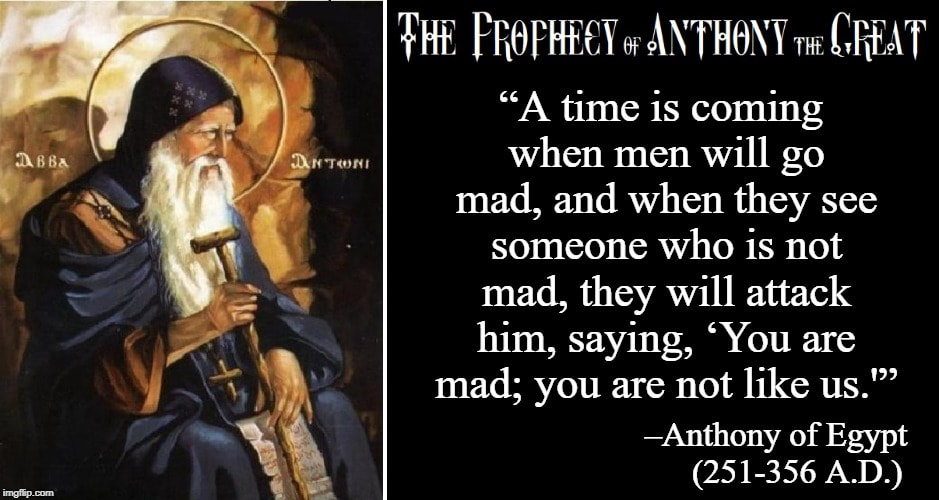
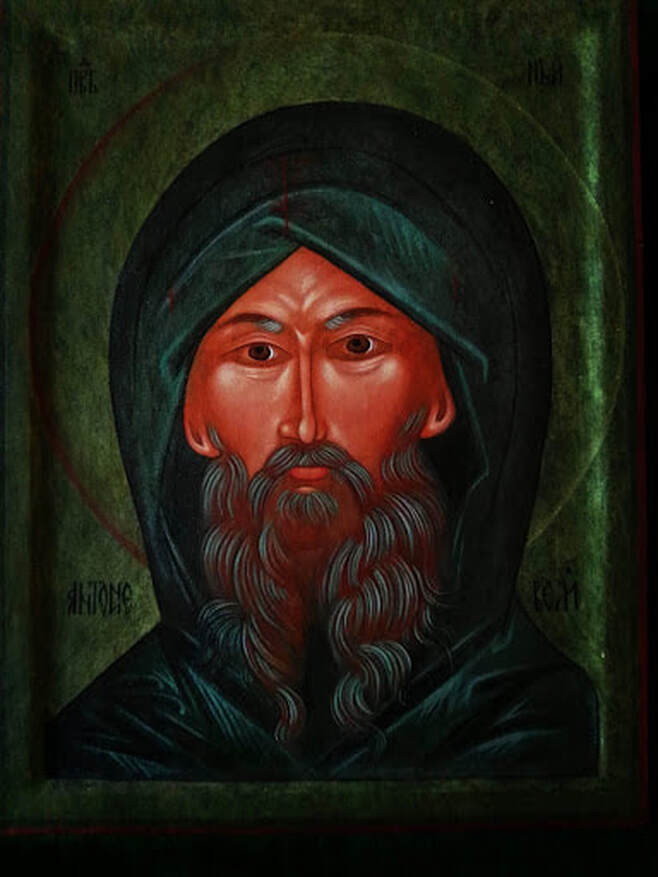
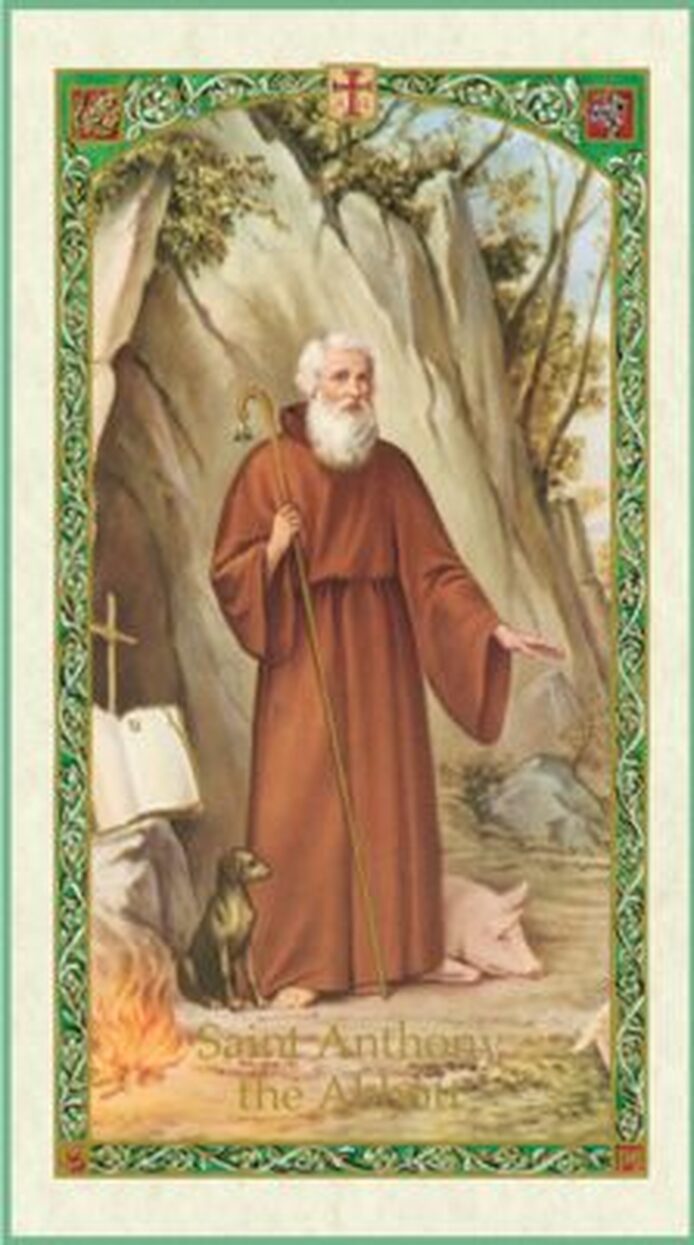
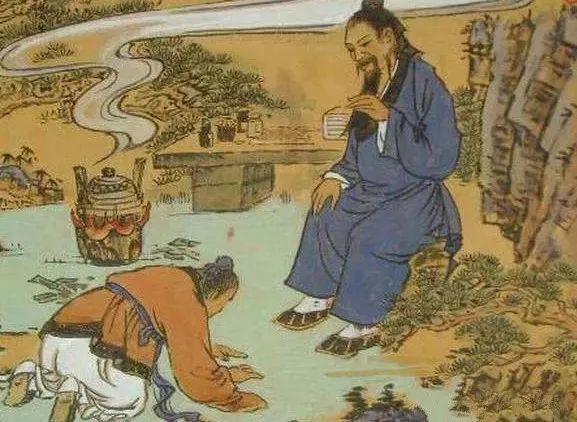
St Anthony (251-356 CE) is considered by many theological commentators as being the founder of Christian monasticism – despite the fact he was not the first Christian hermit – and admits seeking instruction from an old man who lived on the edge of a nearby village. Although being from Egypt – the Catholic Church makes a point of him supposedly being ‘White’ - with ‘Whiteness’ being presented as ‘good’ and ‘Blackness’ (the skin-tone of the average indigenous African) being firmly associated with ‘evil’! (Although to be fair, my Christian colleagues state that ‘Black’ in this context is a ‘figure of speech’ and should not be taken as ‘racial’. My colleague states: ‘See it in the context of Solomon's Song of Songs where bride speaks to her beloved and says "I am black but beautiful''. We are all black before the light of God, God is source of all light, we just reflect to a greater or lesser degree, and it will just be a million shades of black compared to God's light.’ Later, one of the Desert Fathers is described as ‘Black’ and yet considered entirely ‘good’ within Christian texts). Was St Athony the Great ‘European’? He could have been if his parents were the descendants of Greek invaders – and had never mixed with non-Europeans in the six-hundred years since Alexander the Great! St Anthony came from a rich family who seem to have been Christians. After selling all his belongings and giving the money away to the poor, he left mainstream society to live on the periphery of society – rather like a homeless person today – who has been failed by the Bourgeois State and the capitalist system, although in the case of St Antony, the poverty he embraced was a totally voluntary endeavour. It would appear that despite his prosperous background – St Anthony was illiterate and did not read or write (he did not leave any writings of his own – but we know he existed by others writing about his life and teachings). Perhaps his supposed Greek parentage (oddly) did not put too much value in their child learning to read and write – two skills very much at the forefront of Greek civilisation. St Anthony the Great was not a Desert Father in the struct sense, although he is often conflated with these later Christian monastics. He never lived in the desert and so cannot be correctly associated with this practice. Of course, Since around 100 BCE (and perhaps even earlier), the Jewish ‘Essenes’ had been living in the deserts of Palestine and frequenting meditation cells hued from indentations in the rock-face. Living a lifestyle very similar to what the Christian Desert Fathers would adopt – the ‘Essenes’ wrote of their experiences in the ‘Dead Sea Scrolls’. St Anthony makes no mention of the Jewish ‘Essenes’ whilst imitating their behaviour. The Christian narrative is that he developed the Christian hermetic lifestyle following a Revelation from God that nothing to do with local history or religious trends in the area. St Anthony literally believes in daemons as manifesting in the physical environment (often as ‘Black boys’), and within as troublesome thought-patterns and emotional responses. Racism aside – St Anthony views any form of ‘modern’ thinking as being the product of daemonic influence or daemonic possession. He dismisses the entire edifice of Greek philosophical thought and scientific investigation - as being the product of ‘daemonic influence’ that has no intrinsic value for humanity whatsoever! Understand how natural processes function is perceived by St Anthony as the indulgence of ‘evil’ by those who seek answers about how the universe works. Such knowledge, St Anthony tells us, only serves to create a barrier between individual humans and the God who he believes ‘made them’ in the first place. As regards agriculture, St Anthony severely criticises anyone or practices ‘farming’ and growths food to sustain the community! Observing the seasons and how one transitions into another – is a manifestation of ‘pure’ evil according to St Anthony! He believes this because God has a set plan for humanity which involves tremendous suffering, death and persecution – and that if human-beings interfere in this process – then God’s will is either water-down or prevented from functioning altogether in the physical world! Yes – humanity is made to pointlessly suffer by God – but in so doing – God is creating the scenario for some of the more deserving’ humans to be ‘saved’ by his ‘grace’. St Anthony tells his disciples that knowledge of how natural processes work amounts to accumulating a ‘pointless’ knowledge that serves no purpose in assisting God to manifest his presence in the world! St Anthony, therefore, is opposed to scientific knowledge and any form of modernistic progression for humanity. This is because such knowledge ‘empowers’ human-beings as individuals and a species – so that humanity no longer requires any direct contact with the God that created them. This is how the Christian Church explains ‘why’ most people in the West today – no longer possess a literal belief in Christianity – or no longer subscribe to traditional, theological interpretations of the world. In this sense, St Anthony was very good ‘at not learning anything’. It is one thing for an individual to embark on a path of subjective (internal) development that requires the complete ‘emptying’ of mind - of its patterns of historical conditioning (as is common within Buddhist and Daoist self-cultivation) - but it is quite another to insist that the entirety of society (and the progression of humanity as a species) should also be ‘limited’ to this ‘emptying’ in the socio-economic sense – if, indeed, that is what St Anthony is saying. Imagine a modern world without ‘science’, ‘education’ and ‘medicine’! Think also of the ‘good’ these developments have achieved for the benefit of humanity! I would say that the enlightenment that St Anthony is striving for equates with the third position of the Cao Dong (Soto) School of Chinese Ch’an Buddhism. When viewed from this perspective, then even in China it is not uncommon for Ch’an adepts to leave society and ‘reject’ the world and go and live in the remote valleys or isolated hill-tops until they are clear about the ‘empty’ essence of their minds. After a period of further training – such adepts enter the fourth and fifth stages of Cao Dong realisation (which are stages of ‘no stages’) - where they are instructed to (permanently) integrate their (pristine) ‘empty’ inward state with their material surroundings. This is the spiritual interfacing with the material ‘as it is’. Of course, some Ch’an Masters used their enlightened wisdom (like the Buddha) to protest about injustices and to defend the weak and innocent – whilst others lived as unknown beggars under bridges or on river-banks, etc. We do not have to permanently ‘reject’ the outer world to be spiritual – even if on occasion we like to take a break from its nonsense!
Many people are surprised to learn that Master Xu Yun (1840-1959) was subject to a more or less continuous stream of allegations claiming that he routinely ‘broke’ the Vinaya Discipline and the Bodhisattva Vows. These assertions were usually made by common people with an axe to grind for some reason or other. The fact that no one took these allegations seriously is simply because no one who mattered believed any of it to be true. Master Xu Yun was accused of seducing young girls and women, as well as pursuing homosexual relationships with young monks. When these reports were found to be groundless – Master Xu Yun was accused of amassing money and using it to lead a life of luxury and leisure! Again, no evidence was ever found and so these allegations were ignored like all the others. When he was married (in his late teens) Master Xu Yun never touched his two wives. Years later, this was confirmed by these (now elderly) ladies who had become ordained Buddhist nuns after their husband left to become a monk around 1858. These ladies were virginal when they entered the Buddhist nunnery. My personal experience of Chinese monastic communities, as well as from the memories of other Western people who also lived as a Buddhist monk in China, confirm that homosexuality (as well as any type of sexual expression) was not present. This is because the facility of human desire is ‘turned inward’ and transmutated into pure spiritual light and energy that emanates from the centre of the forehead and from there permeates the entire body and environment. This process detaches sexual energy from the sexual organs and diverts the imagination of the mind away from sexual fulfilment through the sexual organ, focusing on ‘returning’ all this sensation back toward the empty mind ground. There is no outward sexual reaction or perversion within the average Chinese Ch’an monastery because the subject-object dichotomy that drives the sexual drive within delusive society no longer exists. There is a point in this process where the sexual drive is transformed forever regardless of circumstance. Although a conducive environment is beneficially to start with, eventually, once the six senses are permanently ‘purified’ and ‘cleansed’, then a lay-men such as Vimalakirti and Hui Neng (prior to the latter’s eventual ordination) where able to live within ordinary society and yet never break their Vinaya Discipline. Vimalakirti had a number of wives and numerous children – and yet the Buddha stated that he ‘never’ broke the vow of celibacy. Vimalakirti also criticised the Buddha’s ordained disciple Upali (a Master of the Vinaya Disciple) for being attached (in the wrong) way to the ‘letter of the law’. Vimalakirti stated that being ‘attached’ to celibacy in such a one-sided manner was as bad as being mindlessly attached to sexual pleasure! The answer is that ‘pleasure’, ‘pain’ and ‘neutrality’ are all perceived to be equally ‘empty’ of any and all permanent reality. All emerge from the empty mind ground as karmic attributes that simply take the form that is implicitly conditioned within each strand of expression. This Mahayana penetrating of all phenomena is very different to Upali’s Hinayana notion of just avoiding ‘pleasure’, etc. It is the same for ‘praise’ and ‘blame’, as both are equally ‘empty’ of any intrinsic or separate value. A practitioner who has penetrated the empty mind ground exists in a permanent state of divine indifference and are unmoved by either praise or blame. Reacting to the ignorance of others with the same ignorance does not happen because it cannot happen. Once the empty mind ground has been permanently penetrated, understood and integrated with, then there is never any slipping back to a more deficient position of understanding. People who operate through the ego are continuously attempting to make some kind of social gain through manipulating those around them. A Ch’an Master sees this straightaway and reveals the underlying reality of those who approach with ulterior motives. All is wisdom, loving kindness and compassion.
Chinese Ch’an is beyond words and sentences. Of this, we can all agree. However, I have just made use of ‘words and sentences’ to convey an entire list of concepts, albeit in an efficient use of language. The point is that each word (spelt correctly) is used like an arrow ‘shooting’ toward the target. Nothing can stop it, and its direct is clear. A Ch’an teacher knows ‘exactly’ where the target is and ‘how’ it must be reached. Enquirers are not clear where the target is, or how they are to reach it. The interaction between ‘teacher’ and ‘enquirer’ is one of directing the arrow toward the target. Or, to explain it another way, the teacher ensures that the target is in the right place when the enquirer releases the arrow toward it! Two people, one arrow and a single target. Depending upon what is required, the Ch’an teacher either adjusts the direction of the arrow, or alters the position of the target. Once the two are ‘connected’ as ‘one’ - then the method for achieving contact immediately becomes irrelevant as the arrow no longer requires adjusting or the target moving. Language is important as a means to convey understanding and context, but the torrent of words create a cascade of meaning that never ends – even though each word contains only a limited over-all meaning. Language is accumulative. Meaning and understanding is accrued over-time – and yet sometimes the deliberate ‘non-use’ of language can be an important lever in the process of re-aligning meaning, reason, logic and understanding. A Ch’an teacher can deploy words and sentences with the thunder of an avalanche – or the gentleness of a quiet cave interior. Both may appear to be a little frightening and intimidating – but both have their developmental purpose. The hua tou deals exclusively with words. Actually, it deals specifically with the ‘origin’, ‘manifestation’ and ‘dissipation’ of each word as it emerges from the empty mind ground, becomes fully ‘established’ in the mind as a thought, and then ‘dissolves’ back into nothing. If a Ch’an practitioner studies the hua tou for years on end, he or she is studying the essence of all literature as it arises in the mind! This worked for the Sixth Patriarch – Hui Neng – who was illiterate when he first realised enlightenment. Although he could not read or write (a common experience for around 90% of Chinese people living within feudal China), nevertheless, if a text was read to him, he could fully explain its deep and profound meaning!
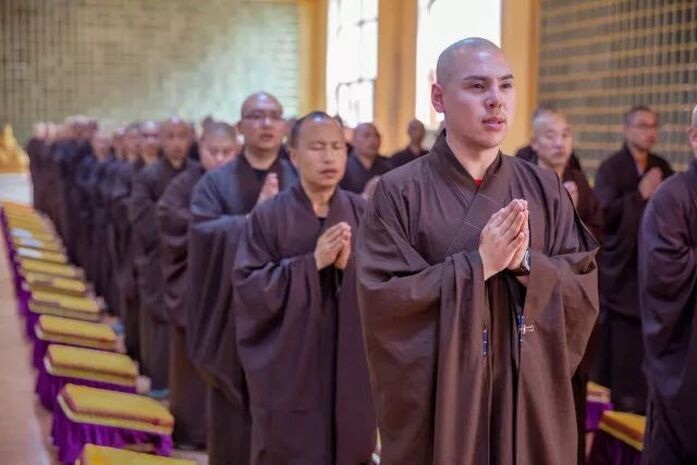
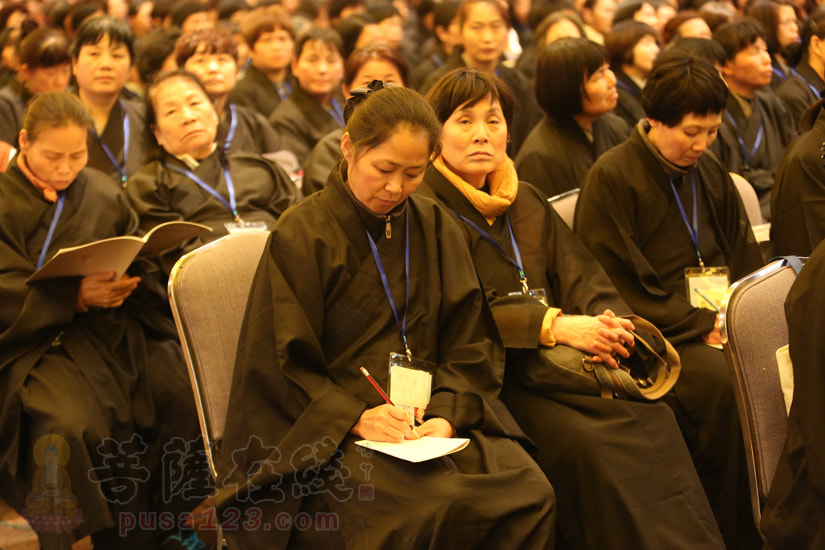
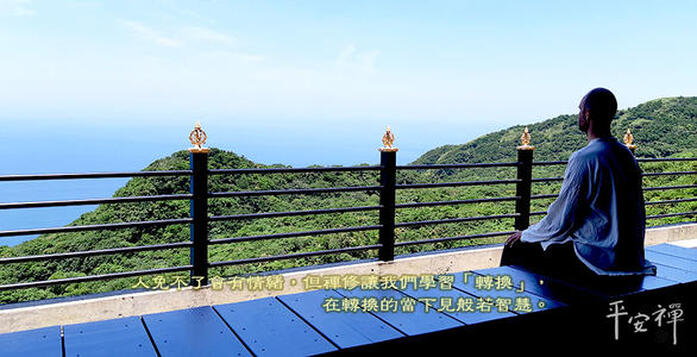
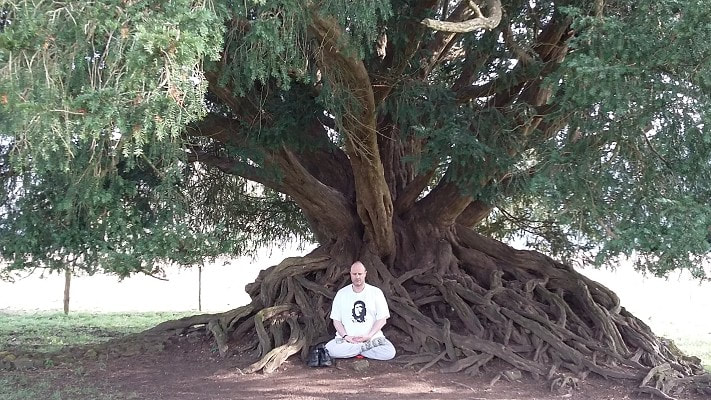
The hermit of Lotus Flower Peak held up his staff and showed it to the assembly saying, “When the ancients got here, why didn’t they consent to stay here?” There was no answer from the assembly, so he himself answered for them, “Because they did not gam strength on the road.” Again he said, “In the end, how is it?” And again he himself answered in their place, “With my staff across my shoulder, I pay no heed to people – I go straight into the myriad peaks.” Blue Cliff Record – Case 25 A Ch’an Week Retreat is an intensive period of focused seated meditation, that extends over a clearly defined time-period. This is a tradition within the Chinese Ch’an School that involves the monastic and lay community practicing together without any distinction. All sit together, and all follow the full Vinaya Discipline for the duration of the Retreat. If a Ch’an practitioner sits properly, (as observed by the Japanese Zen Master – Dogen), then the ‘Mind Precept’ is established. The Mind Precept is a ‘still’ mind (relative enlightenment) that has uprooted all vestiges of greed, hatred and delusion, and which has expanded to include the entire environment (full enlightenment). In this pristine state, all material things arise and pass-away within an all-embracing (and reflective) void. It is an emptiness that contains all things, and which is devoid of any and all delusive thinking premised upon habitual dualism. This bright and still mind manifests boundless wisdom (prajna), compassion (karuna) and loving-kindness (maitri), and is the basis of every rule - not only within the Vinaya Discipline - but also the Bodhisattva Vows. By adopting a clear state of mind and a disciplined mode of bodily behaviour, the Ch’an practitioner generates the conditions to a) realise enlightenment, and b) deepen an already experienced enlightening experience. Those who enter a Ch’an Week Retreat who are already fully enlightened, offer a great Bodhisattva service to humanity (and the universe), as their presence ‘purifies’ the fabric of existence, and generates ‘strength’ for all those still struggling on the Path! Master Xu Yun (1840-1959) always taught that there is no point forcibly adhering to the Vinaya Discipline if the mind of the practitioner is full of confusion (klesa) - and lacks a clarity of insight into the state of ‘stillness’. From a karmic perspective, if a mind is infected with dualistic desire, then negative karma will carry-on being produced (premised upon ‘volitional’ thought), regardless of the behaviour of the body. In such a situation, bodily action may well conform to the outer spirit of the Vinaya Discipline, but as the mind is impure, delusion carries-on being produced as before. This is an ‘inward’ betrayal of the spirit of the Vinaya Discipline. Monks, nuns or lay-people (who live like this), will be exposed sooner or later. Eventually, the sheer weight of this contradiction will eventually lead to an outer abhorrent behaviour that matches the corrupt state of the inner mind. This is why the mind must be ‘cleaned’ through the use of the hua-tou and the gong-an methods. Sitting in disciplined meditation for an extended period of time is an excellent method to begin this training, and to deepen this training once experience has been gained and progress made. Although the mind is impermanent, as declared by the Buddha, it is important that all greed, hatred and delusion is uprooted from its functioning, and that the empty mind ground is penetrated and clearly understood.
|
Archives
June 2025
Categories
All
|
RSS Feed