|
The point is to realise the empty mind ground – here and now – and not be distracted by other thoughts that would divert the practitioner away from this vital objective. On the one hand, there is the cycle of the external world, which quite often requires a type of timed ritualistic behaviour, and then there is the imminant need to focus the attention firmly within, and directly perceive the all-embracing empty mind ground. Which is it to be, outer convention or inner revolution? For Ch’an, the direction is clear – nothing else matters other than the realisation of the empty mind ground. This is the caee despite all living Ch’an Masters occupying a living body that inhabits the material world. The facilitator of the empty mind ground must live by eating, wearing clothes, living within a building, and earning a living, etc. All these things, which includes social, cultural, and political interactions, turn-out to be vitally important on the one-hand – and completely pointless on the other. And yet some type of anchorage in the material world must be established if Ch’an is to be effectively taught. This is a paradox that possesses no single answer. There is no blue-print or set manner in response to this need. How a Ch’an teacher manifests – is how they manifest – and that all depends on the personal situation of the teacher in question. A homeless monk, for instance, can effectively teach, as can an ordinary person, or a person in a high position. Status does not matter. That is merely a necessary window-dressing. What is important is that those who are searching for the empty mind ground must also understand that the expedient circumstances of an effective teacher are irrelevant – if the student can effectively grasp the huatou and decisively “look within”. The reason externality does not matter at this point is that to be overly concerned with externality is to fall into the trap of “attachment” as taught by the Buddha. Attachment to externality is to be ensnared in the distraction of a sideways thinking that diverts from “looking within”. Non-attachment dissolves part of the habitual power of delusion and assists in the clearing of many barriers to achieving inner awareness and profound insight. Of course, once the empty mind ground is fully realised – and the form and void integrated – then the state and function of the external world can be altered for the better using “wisdom” – if such an alteration is required. By 2004, I was discussing with Richard Hunn about the possibility of him relocating back to the UK and living in Sutton – in the same street as my family. At that time, things were very good in the UK, and this idea was a very real possibility. Richard Hunn had lived in Japan since 1991, and had achieved every one of his primary (academic) research objectives. Furthermore, after 13-years in Japan – Richard was beginning to yearn for a return to his native English culture. Not only this, but he very much appreciated the Anglo-Chinese set-up we had going in the Sutton area. The perfect integration of English and Hong Kong culture. Richard Hunn had been teaching English in Kyoto whilst researching the roots of Chinese Ch’an in Japan. This research had been more or less completed by 2004. Richard wanted a return to tea, fish and chips, and Chinese cooking! The problem was that he started to experience alarming health episodes which started off as apparently minor, but got steadily worse - until the terrible diagnosis of terminal cancer during late 2005. Richard opted to stay in Japan and adjust himself to circumstance. This he did until his final breath - taken during October 1st, 2006, whilst sat-up meditating in a Kyoto hospital bed.
0 Comments
Dear A A story that sometimes comes to mind is something Richard Hunn once told me whilst visiting the UK (from Japan) in the early 2000s. He said that at one time in his life, he was living in a bed-sit - but one where other members in the house used to "walk" through his room during the day or night to access the toilet and kitchen, etc. He said that he used the situation to apply the huatou properly and to a greater depth - outside his comfort zone. He described the people entering, traversing, and leaving his living space as "waves" of phenomena arising, stabilising, and falling apart. He was able to distance himself from his physical surroundings as for most of the time, there was no urgency to "respond" to - or "interact" with - the people or circumstance. He was able to detach from the material circumstances around him - and "look within" - toward the empty mind ground. This is similar to the monastic position where everything is strictly controlled in the monastery - essentially an eternally repeating regimen where all basic needs are met - freeing the mind to move its awareness from the "outside" world to the "interior" of perception. Of course, this changes slightly with the hermit - who might live in a cave, at the foot of a tree, a hut, or some other remote place - free from any external support mechanism. Usually, a young monk trains in a monastery (where everything is provided) and progresses to living alone (with no support mechanisms). Perhaps this is a progression to moving away from predicting or relying on preconceived outcomes. Lay and monastic are two-sides of the same coin with the empty mind ground underlying both manifestations (Vimalakirti). Again, "Neither attached to the void - or hindered by phenomena". The question becomes one of path of access - but the method (returning thoughts to their empty essence) is the same. Within China, the "Dao" (Way) is used interchangeably to refer to the "path" and the "destination". Sometimes, this distinction is subtle and the nuance is lost in translation. Still, Charles Luk, who read copious amounts of Daoist texts, and was of the opinion that the Dao De Jing is the essence of all Daoist teaching. Placing the opening chapters into into a coherent and relevant English-language context is still an ongoing process. Many shuffle the words around - copying one another's translations. The assumption is that what came before is "correct" and that these conventions simply require re-organising. The problem is that these "assumptions" may not be correct, precise, or even relevant. First principles must be re-established time and time again as a better understanding develops. Many are surprised, as they understandably work from a select number of translations - forming an integrative understanding - but when they see the original Chinese text and look at the literal meaning, quite often there is a slippage of meaning. The problem with personal development within Ch'an is the detaching from the external, the penetrating of the empty mind ground within, and then the integration of the two - which is easier said than done. Many ignore this difficulty as its recognition might take away the momentum of developmental purpose. Even after penetrating the empty mind ground - and when living in the material world - "klesa" (defilements) bubble-up in the mid-mind (that is the cognitive space between the empty mind ground and the material world of perception in the fore-mind) as responses to phenomenal reality. These reactions, as you know, are good, bad. and neutral, and the bread and butter of everyday life. In other words, the waves of "change" are incessant, ongoing, and never-ending.As they unfold - we change and mature. Experience equals process. It is interesting that when people meet - they swap stories of "change" - perhaps this is the currency of human communication - and the reason the ancient Chinese people developed an entire Classical Text dedicated to its interpretation. The main text of the Book of Change (Yijing) the oldest parts - do not use the term "Dao" - which begins with the Commentaries associated with Confucius (or his disciples and followers - perhaps even relatives). I suppose everything has an origin. Best Wishes
Adrian Dear T
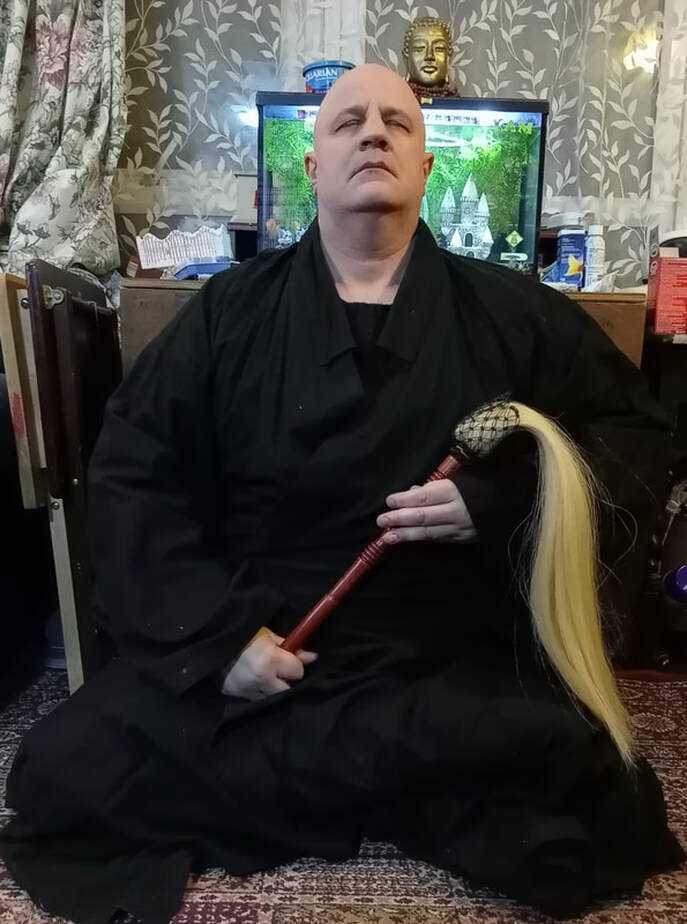
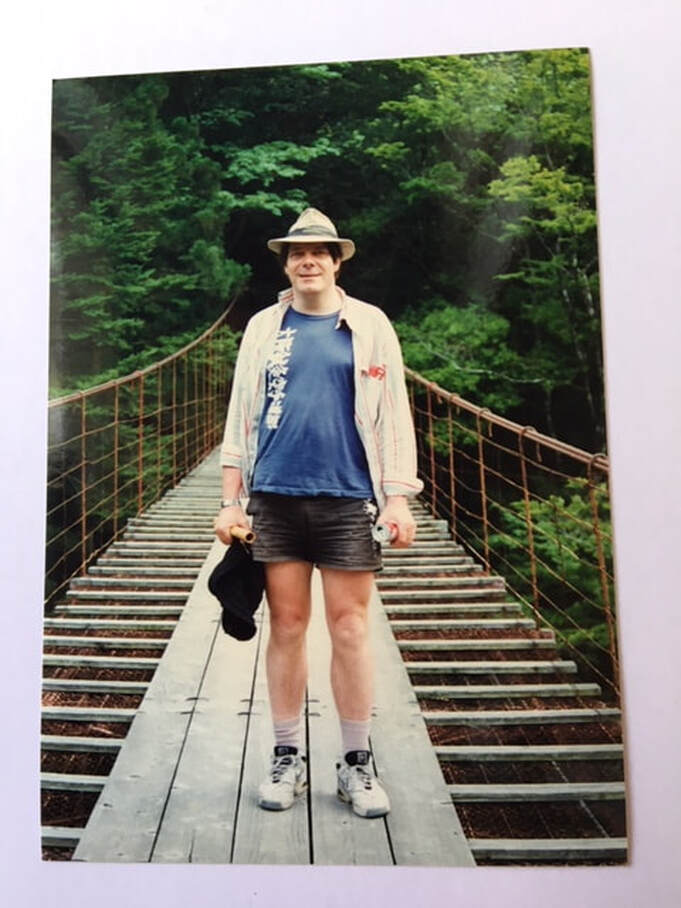
Thank you for your interesting email and much appreciated kind words. If you can see the essence of each letter - then we have no business together. Master Xu Yun (1840-1959) exuded this understanding every moment - just in case. The 'hua tou' (word head) is the method whereby the 'essence' (or 'beginning') of each word-letter is clearly perceived as forming, emerging and presenting from within the empty mind ground. As the enquiry requires a certain investigative power - usually this is provided by the question 'Who?' - deployed in any manner that suits the individual. Master Xu Yun used the hua tou 'Who is dragging this corpse around?' Another effective hua tou is 'Who is hearing?' - the latter arising from the instruction contained within the Surangama Sutra (translated by my grand-teacher - Charles Luk). Hearing in this context is not only everything that is heard with the ears - but all sensual stimulation - as all sensory stimulation arises (and returns) to the empty mind ground. Silent Illumination is nothing more than the empty mind ground - when it is fully realised, stabilised and the mind is fully extended. The hua tou 'stills' the mind (so that 'emptiness' within the head-mind is realised) - then, with further training - this realisation of 'emptiness' expands to penetrate the entire body and the environment. This is the extension of this realised 'emptness' throughout the interaction of the six-senses and the six-sense objects (that comprise the physical environment). The three stages of Ch'an training within the Caodong School are: 1) Surface-mind movement - delusion and confusion (guest). 2) Realised 'stillness' and 'emptiness' of mind (host). 3) Expanded awareness - whereby 'stillness' and 'emptiness' expand to incorporate the 'form' (material world) and 'void' (underlying empty mind ground). (Host-in-Host). These three basic levels of attainment can be further subdivided into five, eight, ten or even more stages - depending upon tradition. Another way of interpreting these three stages is: a) Delusion (the normal everyday mind). b) Relative enlightenment ('still' mind) a sense of 'peace' limited to the individual mind - Hinayana. c) Complete enlightenment (fully 'expanded' and permanently purified mind and senses) - Mahayana. None of this should be of too much concern for you. If the words and letters are not returned to the empty mind ground - then we can exchange words all day long - and nothing much will happen. Recently, I was given a 'dust whisk' - imagine that! Utter madness - and yet I did not refuse it - even more unbelievable! All Best Wishes Adrian Remembering Richard Hunn (1949-2006) - Sixteenth Commemoration of His Passing! (1.10.2022)10/5/2022 At certain times it seems more appropriate to remember particular events - whilst at others it is more in keeping (and more opportune) to just let certain dates and times to quietly go by without making any comment. Ch'an certainly has no interest in the conventions of the world - and Ch'an Masters even less! Bodies come into existence and then pass-away - utilising various time-frames inbetween. Society 'measures' these time-spans for scientific reasons - but all the Ch'an Method is concerned about is that each individual 'realises' the empty mind ground! Remembering the physical existence - and the 'joy' Richard Hunn's presence in the world symbolised - the Ch'an Method insists that we 'remember' to 'look' within so that we can directly perceive the 'empty mind ground' with clarity and without interruption! Richard Hunn lived for fifty-seven years and every one of those years emerged from (and eventually returned to) the empty mind ground. This image above, for instance, is a bridge situated in the remote and surrounding (mountainous) areas outside of the City of Kyoto - the place he lived within from 1991-2006. Richard Hunn was engaged in studying the origins of Chinese Ch'an in Japan - and whilst doing this he visited many and numerous Zen Temples and was introduced to 'old' ethnic Japanese martial arts teachers who lived in seclusion whilst practicing 'Chinese' martial arts systems 'outside' of the official grading system of 'coloured belts' authorised by the Japanese Government (usually possessing only a single disciple whose family possessed the financial means to support this sibling and his or her Master). Such Japanese teachers have to live in a remote and simplistic poverty as a form of 'punishment' - as such individuals are not entitled to the generous financial, material and political support afforded to the so-called 'Japanese' martial arts systems 'preferred' by the Japanese Establishment! The point is that Richard Hunn studied a broad segment of Japanese culture - making his living teaching the English language and English literature at Kyoto University. He travelled widely throughout Japan - lived in an old Samurai Cottage - and made effective attempts to see 'through' the preferences and bias of modern Japanese culture - seeing the Chinese roots of much of Japanese culture that is now denied, ridiculed or even actively negated in Japan! In the material realms of study, science and academia all this data collecting is of vital research importance - but none of it transcends the need for the Ch'an Method and the need to effectively 'look' within! This is why I remember the two sides of Richard Hunn - the academic who traversed the material environment making important notes and observations - and the Ch'an Master who effectively 'looked' within, whilst helping others to do the same!
|
Archives
October 2025
Categories
All
|
RSS Feed