|
The point is to realise the empty mind ground – here and now – and not be distracted by other thoughts that would divert the practitioner away from this vital objective. On the one hand, there is the cycle of the external world, which quite often requires a type of timed ritualistic behaviour, and then there is the imminant need to focus the attention firmly within, and directly perceive the all-embracing empty mind ground. Which is it to be, outer convention or inner revolution? For Ch’an, the direction is clear – nothing else matters other than the realisation of the empty mind ground. This is the caee despite all living Ch’an Masters occupying a living body that inhabits the material world. The facilitator of the empty mind ground must live by eating, wearing clothes, living within a building, and earning a living, etc. All these things, which includes social, cultural, and political interactions, turn-out to be vitally important on the one-hand – and completely pointless on the other. And yet some type of anchorage in the material world must be established if Ch’an is to be effectively taught. This is a paradox that possesses no single answer. There is no blue-print or set manner in response to this need. How a Ch’an teacher manifests – is how they manifest – and that all depends on the personal situation of the teacher in question. A homeless monk, for instance, can effectively teach, as can an ordinary person, or a person in a high position. Status does not matter. That is merely a necessary window-dressing. What is important is that those who are searching for the empty mind ground must also understand that the expedient circumstances of an effective teacher are irrelevant – if the student can effectively grasp the huatou and decisively “look within”. The reason externality does not matter at this point is that to be overly concerned with externality is to fall into the trap of “attachment” as taught by the Buddha. Attachment to externality is to be ensnared in the distraction of a sideways thinking that diverts from “looking within”. Non-attachment dissolves part of the habitual power of delusion and assists in the clearing of many barriers to achieving inner awareness and profound insight. Of course, once the empty mind ground is fully realised – and the form and void integrated – then the state and function of the external world can be altered for the better using “wisdom” – if such an alteration is required. By 2004, I was discussing with Richard Hunn about the possibility of him relocating back to the UK and living in Sutton – in the same street as my family. At that time, things were very good in the UK, and this idea was a very real possibility. Richard Hunn had lived in Japan since 1991, and had achieved every one of his primary (academic) research objectives. Furthermore, after 13-years in Japan – Richard was beginning to yearn for a return to his native English culture. Not only this, but he very much appreciated the Anglo-Chinese set-up we had going in the Sutton area. The perfect integration of English and Hong Kong culture. Richard Hunn had been teaching English in Kyoto whilst researching the roots of Chinese Ch’an in Japan. This research had been more or less completed by 2004. Richard wanted a return to tea, fish and chips, and Chinese cooking! The problem was that he started to experience alarming health episodes which started off as apparently minor, but got steadily worse - until the terrible diagnosis of terminal cancer during late 2005. Richard opted to stay in Japan and adjust himself to circumstance. This he did until his final breath - taken during October 1st, 2006, whilst sat-up meditating in a Kyoto hospital bed.
0 Comments
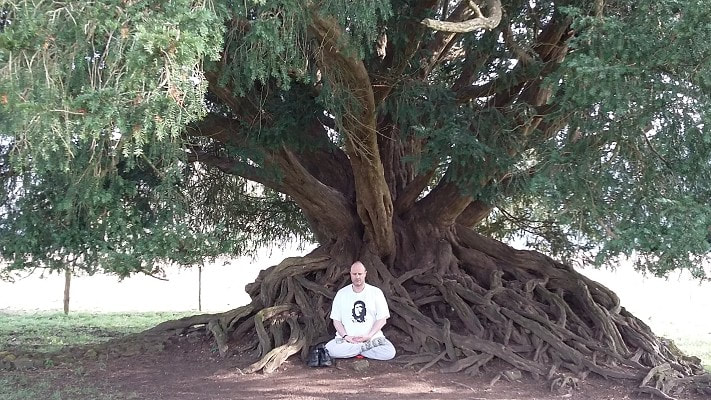
Dear A A story that sometimes comes to mind is something Richard Hunn once told me whilst visiting the UK (from Japan) in the early 2000s. He said that at one time in his life, he was living in a bed-sit - but one where other members in the house used to "walk" through his room during the day or night to access the toilet and kitchen, etc. He said that he used the situation to apply the huatou properly and to a greater depth - outside his comfort zone. He described the people entering, traversing, and leaving his living space as "waves" of phenomena arising, stabilising, and falling apart. He was able to distance himself from his physical surroundings as for most of the time, there was no urgency to "respond" to - or "interact" with - the people or circumstance. He was able to detach from the material circumstances around him - and "look within" - toward the empty mind ground. This is similar to the monastic position where everything is strictly controlled in the monastery - essentially an eternally repeating regimen where all basic needs are met - freeing the mind to move its awareness from the "outside" world to the "interior" of perception. Of course, this changes slightly with the hermit - who might live in a cave, at the foot of a tree, a hut, or some other remote place - free from any external support mechanism. Usually, a young monk trains in a monastery (where everything is provided) and progresses to living alone (with no support mechanisms). Perhaps this is a progression to moving away from predicting or relying on preconceived outcomes. Lay and monastic are two-sides of the same coin with the empty mind ground underlying both manifestations (Vimalakirti). Again, "Neither attached to the void - or hindered by phenomena". The question becomes one of path of access - but the method (returning thoughts to their empty essence) is the same. Within China, the "Dao" (Way) is used interchangeably to refer to the "path" and the "destination". Sometimes, this distinction is subtle and the nuance is lost in translation. Still, Charles Luk, who read copious amounts of Daoist texts, and was of the opinion that the Dao De Jing is the essence of all Daoist teaching. Placing the opening chapters into into a coherent and relevant English-language context is still an ongoing process. Many shuffle the words around - copying one another's translations. The assumption is that what came before is "correct" and that these conventions simply require re-organising. The problem is that these "assumptions" may not be correct, precise, or even relevant. First principles must be re-established time and time again as a better understanding develops. Many are surprised, as they understandably work from a select number of translations - forming an integrative understanding - but when they see the original Chinese text and look at the literal meaning, quite often there is a slippage of meaning. The problem with personal development within Ch'an is the detaching from the external, the penetrating of the empty mind ground within, and then the integration of the two - which is easier said than done. Many ignore this difficulty as its recognition might take away the momentum of developmental purpose. Even after penetrating the empty mind ground - and when living in the material world - "klesa" (defilements) bubble-up in the mid-mind (that is the cognitive space between the empty mind ground and the material world of perception in the fore-mind) as responses to phenomenal reality. These reactions, as you know, are good, bad. and neutral, and the bread and butter of everyday life. In other words, the waves of "change" are incessant, ongoing, and never-ending.As they unfold - we change and mature. Experience equals process. It is interesting that when people meet - they swap stories of "change" - perhaps this is the currency of human communication - and the reason the ancient Chinese people developed an entire Classical Text dedicated to its interpretation. The main text of the Book of Change (Yijing) the oldest parts - do not use the term "Dao" - which begins with the Commentaries associated with Confucius (or his disciples and followers - perhaps even relatives). I suppose everything has an origin. Best Wishes
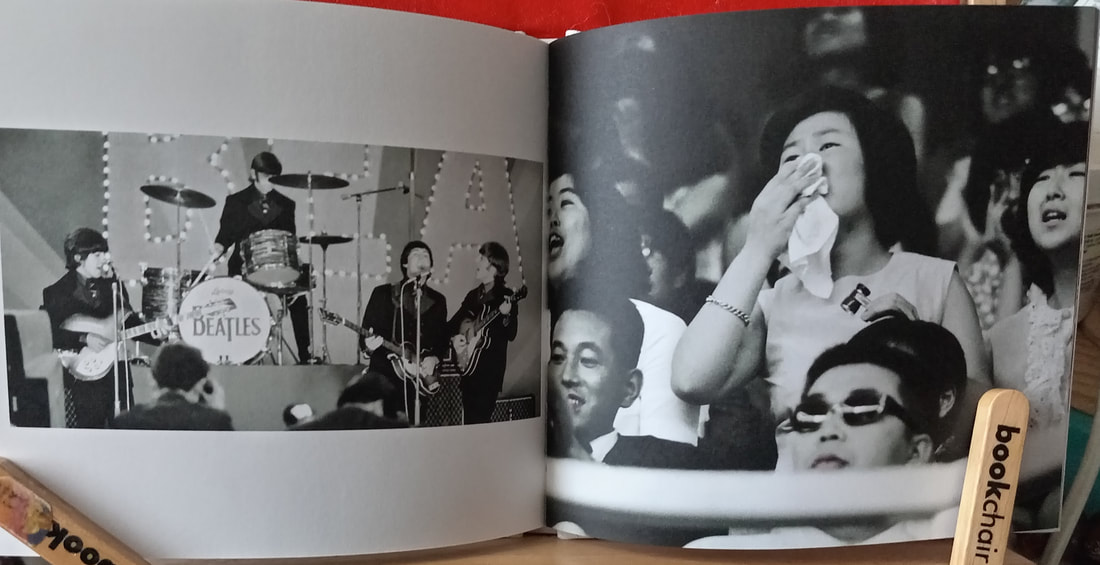
Adrian Dear Taeko I hope you are well! I remember myself and Richard discussing the 'lost' tour of Japan (which took place in the Tokyo 'Budokan') by the masterful British pop group 'The Beatles' - during mid-1966 (June 30th and July 1st)! For reasons unknown, this part of Beatles history renaimed obscure until very recent times. I was born one year later during the Summer of love (May 1967)! I write because recently this tour of Japan has been released again in the UK - and after acquiring a copy - my conversations with Richard came to the fore-front of my mind! There is a an audio CD and a visual DVD all presented in a hand-numbered 'Limited Edition' Box Set. Richard explained to me that he felt the greatness of 'The Beatles' stemmed from a) the mastery they possessed regarding the use of their instruments (like a martial arts 'Master' expertly wielding the 'Weaponry' of the Style), and b) the mastery of the creative aspect of their minds! Together, this interaction created a sublime relationship between the 'surface' mind and the deepest (Empty) aspects of their mind - an interaction which manifested in the physical world through an eternal and Zen-like musical creation that 'transcended' its own mode of existence! All Best Wishes Adrian Reply 1.4.2023 (Email) Taeko Hunn to Adrian Chan-Wyles
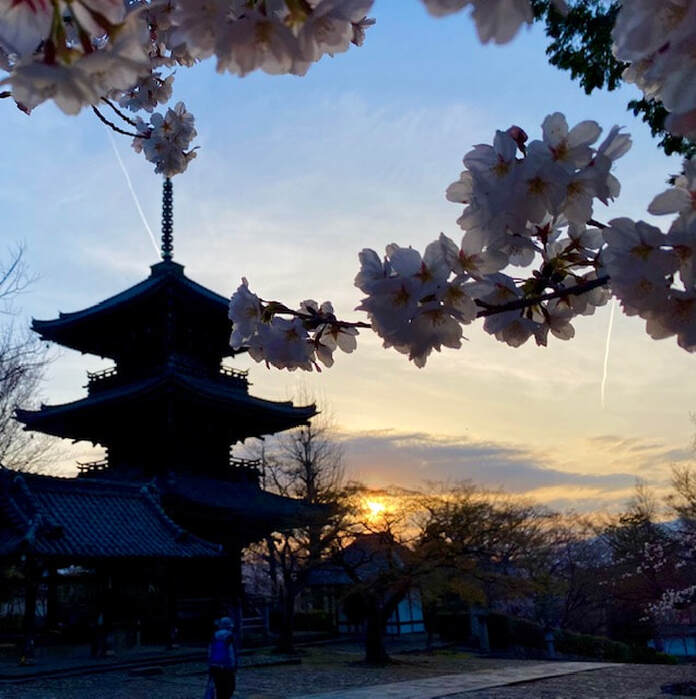
Dear Adrian Thank you for your message. The music and popularity of the Beatles hasn’t been changed. It is fun to know that you and Richard had the conversation about the Beatles that you described. He too loved the music of the Beatles. I remember him playing Beatles numbers on the piano from time to time.😊 Thank you for always remembering to write to me. Please take care of your health. Best wishes Taeko (和谷多恵子) PS: It is a beautiful season in Kyoto right now - with the cherry blossoms in full bloom... Attached is a photograph taken at sunset at Shinnyo-dō (真如堂) - Richard's favourite temple. Dear T
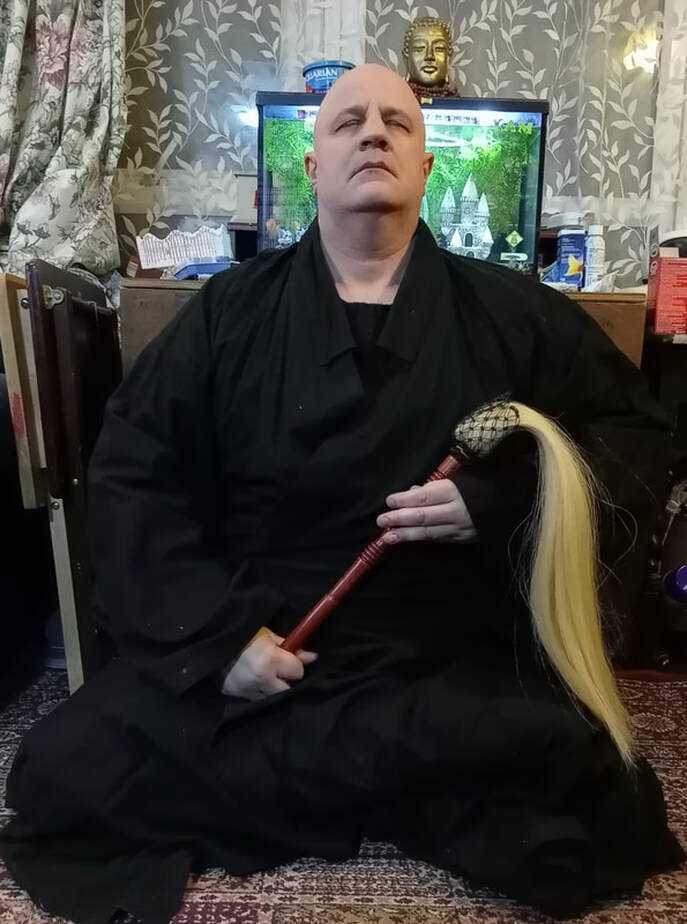
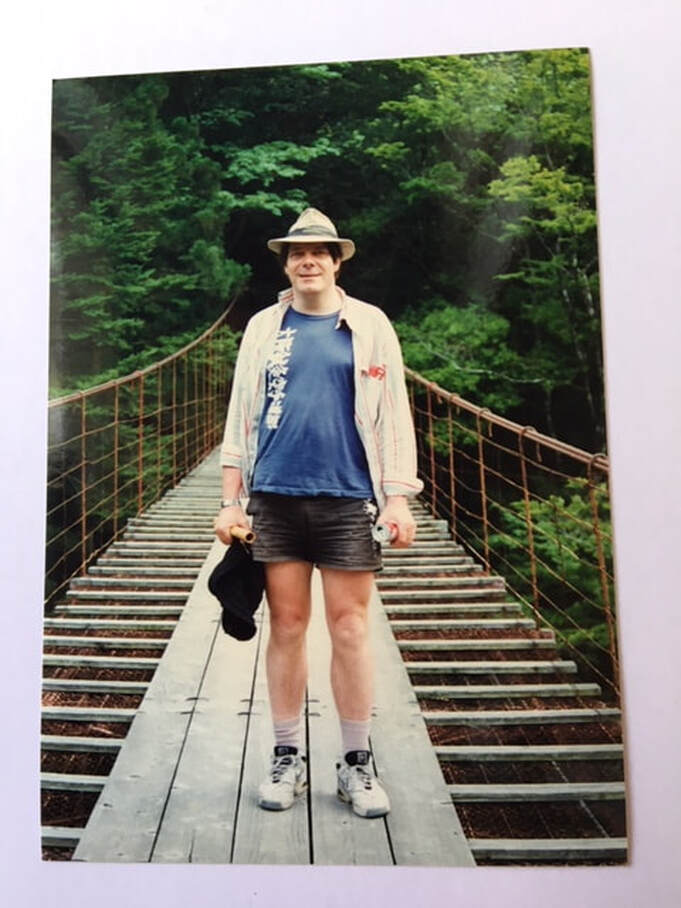
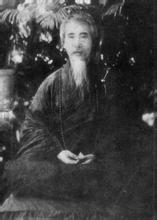
Thank you for your interesting email and much appreciated kind words. If you can see the essence of each letter - then we have no business together. Master Xu Yun (1840-1959) exuded this understanding every moment - just in case. The 'hua tou' (word head) is the method whereby the 'essence' (or 'beginning') of each word-letter is clearly perceived as forming, emerging and presenting from within the empty mind ground. As the enquiry requires a certain investigative power - usually this is provided by the question 'Who?' - deployed in any manner that suits the individual. Master Xu Yun used the hua tou 'Who is dragging this corpse around?' Another effective hua tou is 'Who is hearing?' - the latter arising from the instruction contained within the Surangama Sutra (translated by my grand-teacher - Charles Luk). Hearing in this context is not only everything that is heard with the ears - but all sensual stimulation - as all sensory stimulation arises (and returns) to the empty mind ground. Silent Illumination is nothing more than the empty mind ground - when it is fully realised, stabilised and the mind is fully extended. The hua tou 'stills' the mind (so that 'emptiness' within the head-mind is realised) - then, with further training - this realisation of 'emptiness' expands to penetrate the entire body and the environment. This is the extension of this realised 'emptness' throughout the interaction of the six-senses and the six-sense objects (that comprise the physical environment). The three stages of Ch'an training within the Caodong School are: 1) Surface-mind movement - delusion and confusion (guest). 2) Realised 'stillness' and 'emptiness' of mind (host). 3) Expanded awareness - whereby 'stillness' and 'emptiness' expand to incorporate the 'form' (material world) and 'void' (underlying empty mind ground). (Host-in-Host). These three basic levels of attainment can be further subdivided into five, eight, ten or even more stages - depending upon tradition. Another way of interpreting these three stages is: a) Delusion (the normal everyday mind). b) Relative enlightenment ('still' mind) a sense of 'peace' limited to the individual mind - Hinayana. c) Complete enlightenment (fully 'expanded' and permanently purified mind and senses) - Mahayana. None of this should be of too much concern for you. If the words and letters are not returned to the empty mind ground - then we can exchange words all day long - and nothing much will happen. Recently, I was given a 'dust whisk' - imagine that! Utter madness - and yet I did not refuse it - even more unbelievable! All Best Wishes Adrian Remembering Richard Hunn (1949-2006) - Sixteenth Commemoration of His Passing! (1.10.2022)10/5/2022 At certain times it seems more appropriate to remember particular events - whilst at others it is more in keeping (and more opportune) to just let certain dates and times to quietly go by without making any comment. Ch'an certainly has no interest in the conventions of the world - and Ch'an Masters even less! Bodies come into existence and then pass-away - utilising various time-frames inbetween. Society 'measures' these time-spans for scientific reasons - but all the Ch'an Method is concerned about is that each individual 'realises' the empty mind ground! Remembering the physical existence - and the 'joy' Richard Hunn's presence in the world symbolised - the Ch'an Method insists that we 'remember' to 'look' within so that we can directly perceive the 'empty mind ground' with clarity and without interruption! Richard Hunn lived for fifty-seven years and every one of those years emerged from (and eventually returned to) the empty mind ground. This image above, for instance, is a bridge situated in the remote and surrounding (mountainous) areas outside of the City of Kyoto - the place he lived within from 1991-2006. Richard Hunn was engaged in studying the origins of Chinese Ch'an in Japan - and whilst doing this he visited many and numerous Zen Temples and was introduced to 'old' ethnic Japanese martial arts teachers who lived in seclusion whilst practicing 'Chinese' martial arts systems 'outside' of the official grading system of 'coloured belts' authorised by the Japanese Government (usually possessing only a single disciple whose family possessed the financial means to support this sibling and his or her Master). Such Japanese teachers have to live in a remote and simplistic poverty as a form of 'punishment' - as such individuals are not entitled to the generous financial, material and political support afforded to the so-called 'Japanese' martial arts systems 'preferred' by the Japanese Establishment! The point is that Richard Hunn studied a broad segment of Japanese culture - making his living teaching the English language and English literature at Kyoto University. He travelled widely throughout Japan - lived in an old Samurai Cottage - and made effective attempts to see 'through' the preferences and bias of modern Japanese culture - seeing the Chinese roots of much of Japanese culture that is now denied, ridiculed or even actively negated in Japan! In the material realms of study, science and academia all this data collecting is of vital research importance - but none of it transcends the need for the Ch'an Method and the need to effectively 'look' within! This is why I remember the two sides of Richard Hunn - the academic who traversed the material environment making important notes and observations - and the Ch'an Master who effectively 'looked' within, whilst helping others to do the same!
Many people are surprised to learn that Master Xu Yun (1840-1959) was subject to a more or less continuous stream of allegations claiming that he routinely ‘broke’ the Vinaya Discipline and the Bodhisattva Vows. These assertions were usually made by common people with an axe to grind for some reason or other. The fact that no one took these allegations seriously is simply because no one who mattered believed any of it to be true. Master Xu Yun was accused of seducing young girls and women, as well as pursuing homosexual relationships with young monks. When these reports were found to be groundless – Master Xu Yun was accused of amassing money and using it to lead a life of luxury and leisure! Again, no evidence was ever found and so these allegations were ignored like all the others. When he was married (in his late teens) Master Xu Yun never touched his two wives. Years later, this was confirmed by these (now elderly) ladies who had become ordained Buddhist nuns after their husband left to become a monk around 1858. These ladies were virginal when they entered the Buddhist nunnery. My personal experience of Chinese monastic communities, as well as from the memories of other Western people who also lived as a Buddhist monk in China, confirm that homosexuality (as well as any type of sexual expression) was not present. This is because the facility of human desire is ‘turned inward’ and transmutated into pure spiritual light and energy that emanates from the centre of the forehead and from there permeates the entire body and environment. This process detaches sexual energy from the sexual organs and diverts the imagination of the mind away from sexual fulfilment through the sexual organ, focusing on ‘returning’ all this sensation back toward the empty mind ground. There is no outward sexual reaction or perversion within the average Chinese Ch’an monastery because the subject-object dichotomy that drives the sexual drive within delusive society no longer exists. There is a point in this process where the sexual drive is transformed forever regardless of circumstance. Although a conducive environment is beneficially to start with, eventually, once the six senses are permanently ‘purified’ and ‘cleansed’, then a lay-men such as Vimalakirti and Hui Neng (prior to the latter’s eventual ordination) where able to live within ordinary society and yet never break their Vinaya Discipline. Vimalakirti had a number of wives and numerous children – and yet the Buddha stated that he ‘never’ broke the vow of celibacy. Vimalakirti also criticised the Buddha’s ordained disciple Upali (a Master of the Vinaya Disciple) for being attached (in the wrong) way to the ‘letter of the law’. Vimalakirti stated that being ‘attached’ to celibacy in such a one-sided manner was as bad as being mindlessly attached to sexual pleasure! The answer is that ‘pleasure’, ‘pain’ and ‘neutrality’ are all perceived to be equally ‘empty’ of any and all permanent reality. All emerge from the empty mind ground as karmic attributes that simply take the form that is implicitly conditioned within each strand of expression. This Mahayana penetrating of all phenomena is very different to Upali’s Hinayana notion of just avoiding ‘pleasure’, etc. It is the same for ‘praise’ and ‘blame’, as both are equally ‘empty’ of any intrinsic or separate value. A practitioner who has penetrated the empty mind ground exists in a permanent state of divine indifference and are unmoved by either praise or blame. Reacting to the ignorance of others with the same ignorance does not happen because it cannot happen. Once the empty mind ground has been permanently penetrated, understood and integrated with, then there is never any slipping back to a more deficient position of understanding. People who operate through the ego are continuously attempting to make some kind of social gain through manipulating those around them. A Ch’an Master sees this straightaway and reveals the underlying reality of those who approach with ulterior motives. All is wisdom, loving kindness and compassion.
‘...After my death, if you carry out my instructions and practise them accordingly, my being away from you will make no difference. On the other hand, if you go against my teaching, no benefit would be obtained, even if I continued to stay here.’
Then he uttered another stanza: “Imperturbable and serene the ideal man practises no virtue. Self-possessed and dispassionate, he commits no sin. Calm and silent, he gives up seeing and hearing. Even and upright his mind abides nowhere.” Having uttered this stanza, he sat reverently until the third watch of the night. Then he said abruptly to his disciples, “I am going now,” and in a sudden passed away. A peculiar fragrance pervaded his room, and a lunar rainbow appeared which seemed to join up earth and sky. The trees in the wood turned white, and birds and beasts cried mournfully. ...The Patriarch inherited the robe when he was 24, had his hair shaved (i.e. was ordained) at 39, and died (sat upright) at the age of 76. For thirty-seven years he preached for the benefit of all sentient beings. Forty-three of his disciples inherited the Dharma, and by his express consent, became his successors; while those who attained enlightenment and thereby got out of the rut of the ordinary man were too numerus to be calculated. The Altar Sutra of Hui Neng (Chapter 10 – His Final Instructions) The paradox of the Chinese Ch’an tradition is that it expects lay-people and monastics alike to realise full enlightenment - ‘here and now’. What does this mean? Regardless of the circumstances of an individual’s life, the insight capacity of the mind must be turned inward with such a high degree of focus and precision, that perception is permanently ‘altered’ so to ‘see’ and ‘understand’ more than what was understood before. Being a Buddhist monastic is no guarantee of success in realising enlightenment, just as being a lay-person should be no barrier. Individuals will learn at their own pace and in their own way, with all kinds of psychological and physiological factors coming into play (traditionally referred to as ‘personal karma’). The ‘language of the uncreate’ is unique to Chinese Ch’an Buddhism and uses language in such a way that does not allow the habitual ‘dualism’ of conventional communication to come into play during an ‘enlightening’ interaction or dialogue. The convention of ‘dualism’ preserves delusive states of mind, and prevents clarity of insight from developing. This is why Ch’an masters (in ancient times) developed this mode of non-communication, although when Master Xu Yun (1840-1959) taught during the 19th and 20th centuries, he often used a modern example of logic and reason to describe the history, method and purpose of the Ch’an School. Indeed, whilst encouraging his disciples to fully penetrate (and realise) the empty mind-ground, he would often warn against the cultural habit of many people attending Ch’an Week Retreats to descend into ‘mystical’, or ‘nonsensical’ states of mind, each of which was nowhere near the authentic realisation of the empty mind ground! Uttering nonsense about ancient masters, does go much beyond the nonsense being uttered! However, once the empty mind ground is realised, then every word spoken by the Buddha is understood exactly and clearly, as is every odd action and utterances of the ancient Ch’an masters!
‘Mind is the root of the myriad phenomena. All phenomena are born from mind. If you can completely comprehend mind, the myriad practices can completely comprehend mind, the myriad practices are complete.’ Bodhidharma The Western world is attempting to apply the methods of modern science to each of its societies as a means to prevent the spread of a new type of pneumonia. Ordinary freedoms are suspended, commerce curtailed and politics geared toward controlling the situation. Many of us gravitate around our homes – which is the same for the rich as it is for the ordinary – we are all equal when we film ourselves self-isolating on social media. In the Book of Change (Yijing) it advises that in such times there is a ‘darkening of the light’, and we should adjust ourselves to this new circumstance, look within and work on our own shortcomings. This is a time of true and genuine monasticism in its purest sense. The mind should not be allowed to wander or speculate about the outside world. Whilst not catching or spreading the virus, we must use this situation as a blessing and not a punishment. The empty mind ground is always present and underlies all phenomena equally, good, bad or neutral. We can transform even the worst of situations by directly perceiving the empty mind ground ‘here and now’.
|
Archives
October 2025
Categories
All
|
RSS Feed