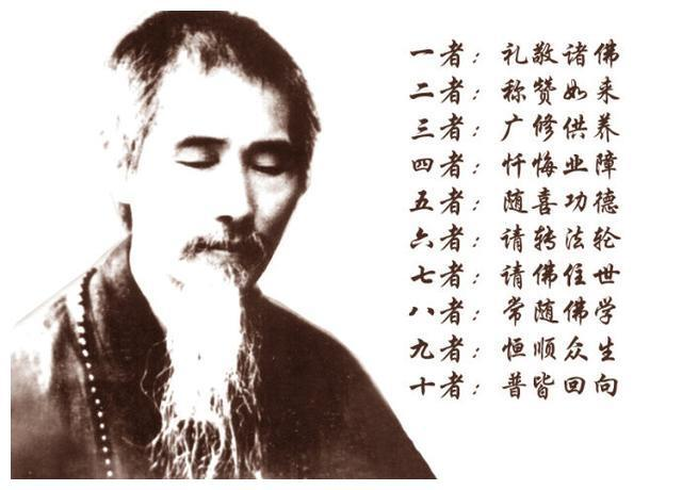
Master Xu Yun Advocated a 'Rules' Based Spirituality!
Although eulogised more or less the world over today – Master Xu Yun attracted his fair share of criticism. Although completely indifferent to worldly affairs he was accused of being a ‘rightest’ and a ‘leftist’ at different times in his existence. Those jealous of his spiritual power (and seniority) within the Chinese Buddhist System – accused Master Xu Yun of breaking the very Vinaya Discipline he fervently enforced upon his disciples. Quite often this involved the rules surrounding sexual self-control and celibacy – with Master Xu Yun accused of participating in relations with male acolytes. Of course, there was never any material evidence to substantiate these rumours. At one time a young woman took her clothes-off in front of a meditating Master Xu Yun on a boat packed with witnesses – and he never reacted. It is speculated that this woman was paid to do this in an attempt to secure material evidence regarding Master Xu Yun breaking the Vinaya Discipline.
Part of the reason inspiring these baseless attacks involved the Imperial Japanese presence in China between 1931-1945 – which saw an attempt at manipulating the Chinese Sangha into adopting the Japanese Zen practice of NOT following the Vinaya Discipline and allowing Buddhist ‘monks’ to be married, eat meat and drink alcohol. There were some collaborative elements within a rapidly modernising Chinese culture that viewed Master Xu Yun’s attitude as being old fashioned and behind the times. Master Xu Yun, despite this pressure from without and within Chinese culture, nevertheless, refused to buckle and instead reacted with an ever-greater vigour in calling for the upholding of the Vinaya Discipline!
When told what others were negatively saying about him, Master Xu Yun would laugh and brush the insult aside. What others said was viewed by Master Xu Yun as being a product of greed, hatred, and delusion – and the very ignorance that following of the Vinaya Discipline sought to uproot and dissolve into the three-dimensional emptiness of the empty mind-ground. Just as following the Vinaya Discipline represented the pure ‘host’ position – the impure ‘guest’ position represented the dirtiness of the ordinary, mundane world and its machinations. Why follow the latter when the former offered safety, sanctuary, and a relief from human suffering? Pretending to be a ‘monk’ when immersed in the filth of the ‘guest’ position of lay-existence is NOT correctly following the Buddha-Dharma as taught by Master Xu Yun.
Master Xu Yun shuffled-off his mortal coil 64-years ago (in 1959) – on October 13th (when the Chinese Lunar Callender is converted into the Western Solar equivalent). He was in his 120th-year and had lived nearly two of the 60-years cycles that define the Chinese Zodiac. Although born in the Year of the Rat – and obviously a survivor – Master Xu Yun had no patience for superstition. Indeed, his biography is strewn with accidents, injuries, and the occasional monastic disciplining (involving corporal punishment). None of this bothered him psychologically (as he was ‘detached’ from his feelings) – even if the experience damaged him physically. The question is - how many Buddhist practitioners today are prepared to be like this?
All the Tang and Song Dynasty Ch’an Records pursue exactly the same task of clarifying the ‘host’ and defining the ‘guest’. The realisation of the ‘host’ is preferred – whilst the denying of the ‘guest’ is encouraged. Even so – it is clear that even within Chinese-language sources – the mistaking of one for the other is a continuous hazard. If this is true of Chinese culture – how much more difficult must it be for followers of the Dharma in the West? The Ch’an path may be direct – but this fact does NOT make it ‘easy’. Sometimes it is more convenient for individuals to follow simpler paths – even if these paths are harder – and infinitely less likely to achieve results!
Ch’an is NOT like this. As Master Xu Yun aged – his body changed dramatically. This is a reality we all face and are facing – and yet despite these profound shifts in physical existence – it is never viewed within the Ch’an tradition as anything more than changes occurring in the ‘guest’ - as the ‘host’ (which must NEVER be departed from) does NOT change one iota regardless of what happens to the physical body or the environment within which it exists. This definition of reality and priority differs significantly from what mainstream society finds interesting or important. This is the entire purpose of the Buddha-Dharma and why the Ch’an Method exists.
Sometimes, Master Xu Yun could NOT stand-up due to his very advanced age. This is why he is photographed sat on a chair. He did unduly NOT care about this situation as the ‘host’ position never varies – whilst the ever-changing ‘guest’ position find its place within the accommodating (and three-dimensional) emptiness. This is the eternal lesson that Master Xu Yun teaches humanity. This is the ‘host-in-host’ (that is the integration of the ‘host’ and the ‘guest’) position which transforms the ‘guest’ so that it is correctly viewed as traversing the surface of the mind - whilst remaining entirely ‘empty’ from start to finish!
Part of the reason inspiring these baseless attacks involved the Imperial Japanese presence in China between 1931-1945 – which saw an attempt at manipulating the Chinese Sangha into adopting the Japanese Zen practice of NOT following the Vinaya Discipline and allowing Buddhist ‘monks’ to be married, eat meat and drink alcohol. There were some collaborative elements within a rapidly modernising Chinese culture that viewed Master Xu Yun’s attitude as being old fashioned and behind the times. Master Xu Yun, despite this pressure from without and within Chinese culture, nevertheless, refused to buckle and instead reacted with an ever-greater vigour in calling for the upholding of the Vinaya Discipline!
When told what others were negatively saying about him, Master Xu Yun would laugh and brush the insult aside. What others said was viewed by Master Xu Yun as being a product of greed, hatred, and delusion – and the very ignorance that following of the Vinaya Discipline sought to uproot and dissolve into the three-dimensional emptiness of the empty mind-ground. Just as following the Vinaya Discipline represented the pure ‘host’ position – the impure ‘guest’ position represented the dirtiness of the ordinary, mundane world and its machinations. Why follow the latter when the former offered safety, sanctuary, and a relief from human suffering? Pretending to be a ‘monk’ when immersed in the filth of the ‘guest’ position of lay-existence is NOT correctly following the Buddha-Dharma as taught by Master Xu Yun.
Master Xu Yun shuffled-off his mortal coil 64-years ago (in 1959) – on October 13th (when the Chinese Lunar Callender is converted into the Western Solar equivalent). He was in his 120th-year and had lived nearly two of the 60-years cycles that define the Chinese Zodiac. Although born in the Year of the Rat – and obviously a survivor – Master Xu Yun had no patience for superstition. Indeed, his biography is strewn with accidents, injuries, and the occasional monastic disciplining (involving corporal punishment). None of this bothered him psychologically (as he was ‘detached’ from his feelings) – even if the experience damaged him physically. The question is - how many Buddhist practitioners today are prepared to be like this?
All the Tang and Song Dynasty Ch’an Records pursue exactly the same task of clarifying the ‘host’ and defining the ‘guest’. The realisation of the ‘host’ is preferred – whilst the denying of the ‘guest’ is encouraged. Even so – it is clear that even within Chinese-language sources – the mistaking of one for the other is a continuous hazard. If this is true of Chinese culture – how much more difficult must it be for followers of the Dharma in the West? The Ch’an path may be direct – but this fact does NOT make it ‘easy’. Sometimes it is more convenient for individuals to follow simpler paths – even if these paths are harder – and infinitely less likely to achieve results!
Ch’an is NOT like this. As Master Xu Yun aged – his body changed dramatically. This is a reality we all face and are facing – and yet despite these profound shifts in physical existence – it is never viewed within the Ch’an tradition as anything more than changes occurring in the ‘guest’ - as the ‘host’ (which must NEVER be departed from) does NOT change one iota regardless of what happens to the physical body or the environment within which it exists. This definition of reality and priority differs significantly from what mainstream society finds interesting or important. This is the entire purpose of the Buddha-Dharma and why the Ch’an Method exists.
Sometimes, Master Xu Yun could NOT stand-up due to his very advanced age. This is why he is photographed sat on a chair. He did unduly NOT care about this situation as the ‘host’ position never varies – whilst the ever-changing ‘guest’ position find its place within the accommodating (and three-dimensional) emptiness. This is the eternal lesson that Master Xu Yun teaches humanity. This is the ‘host-in-host’ (that is the integration of the ‘host’ and the ‘guest’) position which transforms the ‘guest’ so that it is correctly viewed as traversing the surface of the mind - whilst remaining entirely ‘empty’ from start to finish!
 RSS Feed