|
Author's Note: Dear reader - I sincerely hope the following causes your mind to be both "socked" and "doubt" infested. After-all, you are not paying me for a service and I am not selling you any wares. Of course, we could dance this dance - as the internet is default set for commercial endeavour - but Ch'an is not that easy. It would be easy for you to give me money (and purchase my compliance) - but it is not so easy to permanently give away your greed, hatred, and delusion, ad clearly show me the empty mind ground. This is why the Ch'an Masters of old resorted to shock-tactics - a shout or a blow - as these actions "halted" the routine thought processes. Today, particularly with regards to writing, the same effect is achieved through the profane treatment of concepts. Fred, for instance, based his entire theory on a defunked (evolutionary) understanding of the development of the foetus in the womb - and when he was told about this - he refused to admit his mistake as his theory had already gained traction in the commercial and academic world. Freud, of course, was Jung's teacher. Becoming entangled in the thing the Buddha advocates becoming untangled from - is not the purpose of Ch'an training. Neither is making you feel "nice" about random words written upon a page. And here we are. ACW (31.10.2025) Having studied with Richard Hunn, I was introduced to Richard Wilhelm’s extraordinary translation of the Book of Changes (I Ching) – which I later learned was originally rendered into Wilhelm’s native German – as the “I Ging”. What were we actually reading? Well, it turned-out that the English translation of Wilhem’s work is in fact a transliteration of his original German version. This might explain why Wilhelm quotes Carl Jung – who was also an ethnic German - although this time born in Switzerland. This is the pathway through which many of us in the West were introduced to Jungian thinking – which I did study for a number of years (although never officially). Richard Hunn had travelled to Zurich as he had been granted permission by Jung’s family to read Jung’s handwritten pages (omitted from his biography) that state he believed that rebirth might be real. His family asked for these pages to be removed as they felt such an idea might negatively impact his more scientific-thinking. Many years later, and after reading Frank J Sulloway’s excellent book entitled “Freud Biologist of the Mind – Beyond the Psychoanalytical Legend” – as well as many similar tomes – I realised just how off the mark this type of (psycho-therapeutic) thinking was - and remains. Yes – such approaches to analysing the mind might assist some people with the negative aspects pertaining to their thought and emotional processes – but such schematics do little more than this. From a Buddhist perspective, it is the “balancing” of the delusional mind-set – or that way of looking at things that aligns greed, hatred, and delusion without ever questioning the presence or validity of these self-defeating entities. Placing aside the scientific issues arising from many of these psychological systems – the fact remains that the “delusional” mind-set as defined by the Buddha is a priori taken as “normal” and beyond any notion of “uprooting” or “transcendence”. Furthermore, linking mind development to commerce adds yet another layer of complication to a process that the Buddha taught free of monetary charge (the cost of training in the authentic Dharma requires a strict self-discipline). Can this type of expedient psychological training be useful? Yes – given that all the conditions are met which produces such an outcome. But here is the massive contradiction to all this. Whereas a Buddhist Master (at least in the Chinese Ch’an tradition) must have attained a confirmed enlightenment before any teaching is undertaken – a psychotherapist can offer counselling when he or she possesses no more or no less mental stability than the next deluded individual. Simply paying for a course of academic training does not guarantee any profound or permanent alteration in the mind of the successful student. This is why many successful academics, even after years of successful teaching (or counselling in the case of psychologists), still retire to isolated Buddhist Temples to eventually get to grips with the greed, hatred, and delusion that continuously plagues their minds. An individual must think for themselves – so that they can permanently “stop” the thought processes on their own and through their own efforts – when given a proper meditative method to work with. This Dharma-process has nothing to do with money or status. Indeed, realising the empty mind ground is perhaps the lonliest undertaking in the world – and so it should be. If Jung had truly realised this understanding, then he would have known that rebirth simultaneously “exists”, “does not exist”, “exists and does not exist”, and “neither exists and does not exist”. There's nothing difficult about that to understand - now is there?
0 Comments
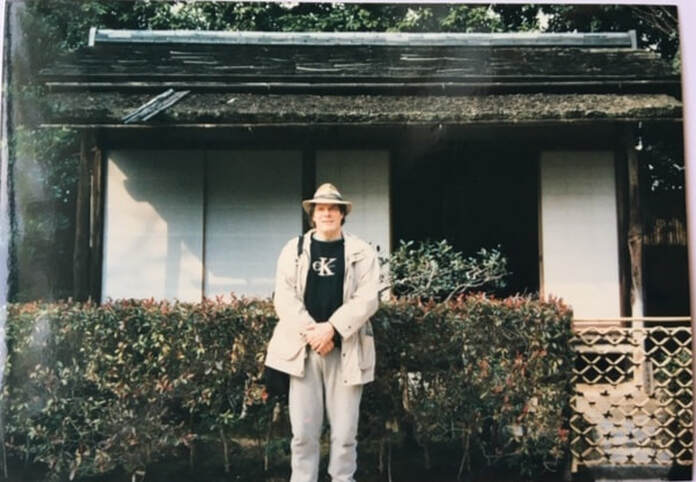
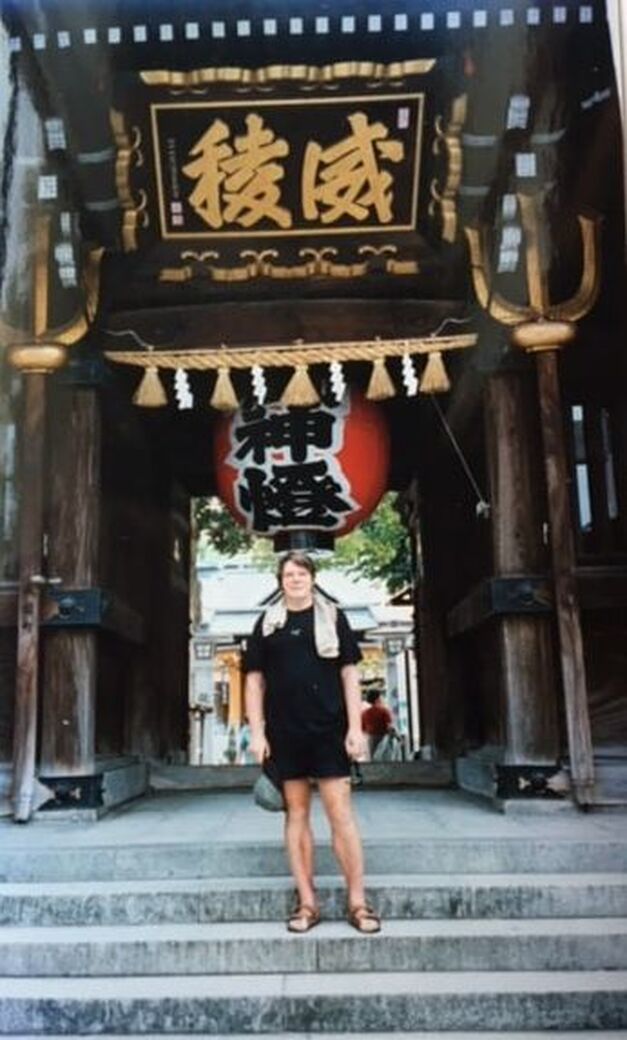
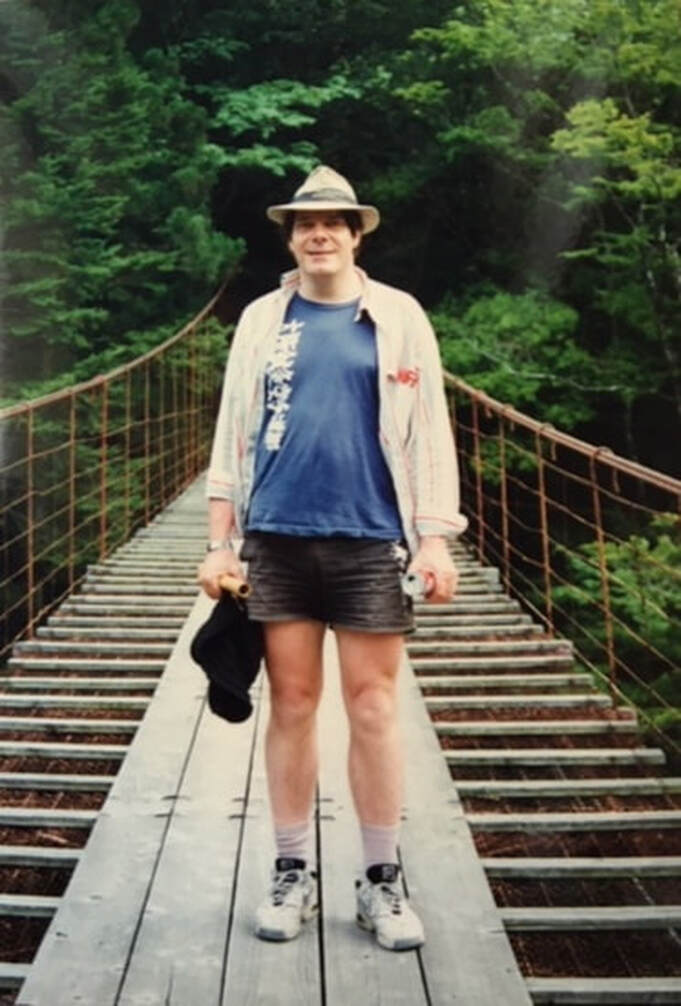
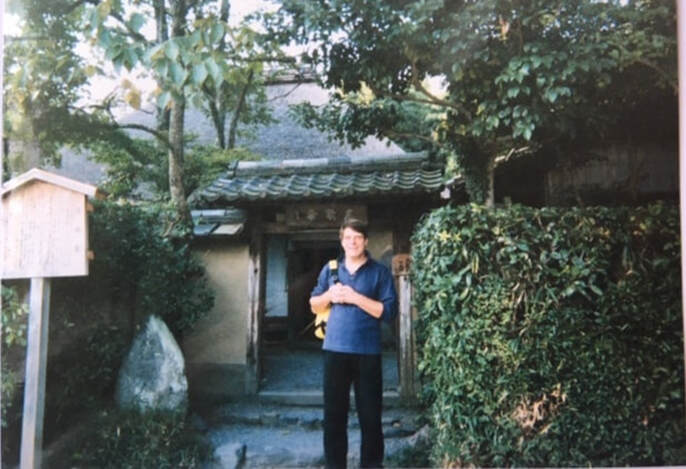
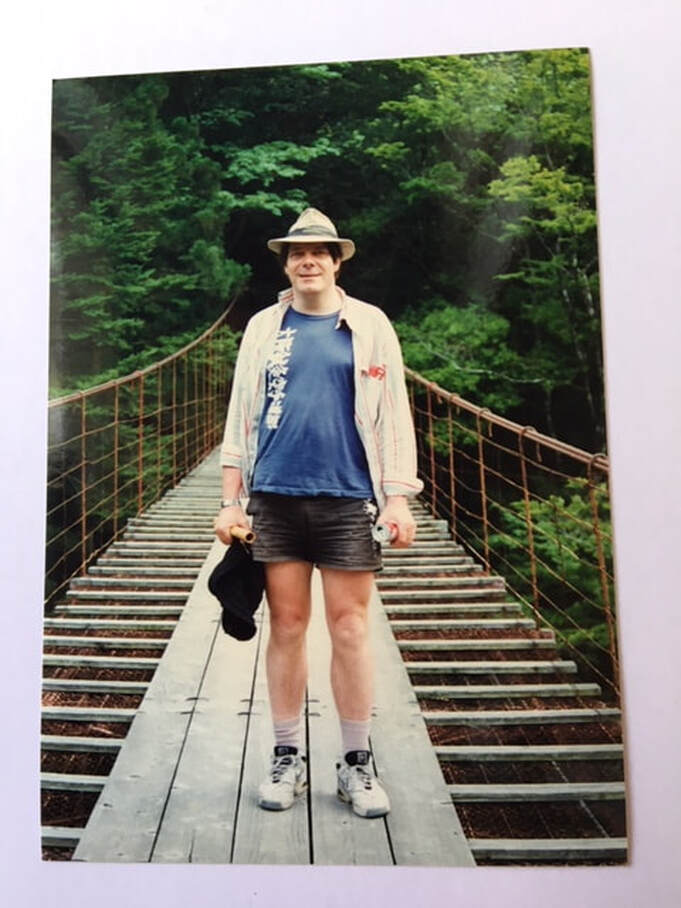
Remembering Richard Hunn (1949-2006) - Sixteenth Commemoration of His Passing! (1.10.2022)10/5/2022 At certain times it seems more appropriate to remember particular events - whilst at others it is more in keeping (and more opportune) to just let certain dates and times to quietly go by without making any comment. Ch'an certainly has no interest in the conventions of the world - and Ch'an Masters even less! Bodies come into existence and then pass-away - utilising various time-frames inbetween. Society 'measures' these time-spans for scientific reasons - but all the Ch'an Method is concerned about is that each individual 'realises' the empty mind ground! Remembering the physical existence - and the 'joy' Richard Hunn's presence in the world symbolised - the Ch'an Method insists that we 'remember' to 'look' within so that we can directly perceive the 'empty mind ground' with clarity and without interruption! Richard Hunn lived for fifty-seven years and every one of those years emerged from (and eventually returned to) the empty mind ground. This image above, for instance, is a bridge situated in the remote and surrounding (mountainous) areas outside of the City of Kyoto - the place he lived within from 1991-2006. Richard Hunn was engaged in studying the origins of Chinese Ch'an in Japan - and whilst doing this he visited many and numerous Zen Temples and was introduced to 'old' ethnic Japanese martial arts teachers who lived in seclusion whilst practicing 'Chinese' martial arts systems 'outside' of the official grading system of 'coloured belts' authorised by the Japanese Government (usually possessing only a single disciple whose family possessed the financial means to support this sibling and his or her Master). Such Japanese teachers have to live in a remote and simplistic poverty as a form of 'punishment' - as such individuals are not entitled to the generous financial, material and political support afforded to the so-called 'Japanese' martial arts systems 'preferred' by the Japanese Establishment! The point is that Richard Hunn studied a broad segment of Japanese culture - making his living teaching the English language and English literature at Kyoto University. He travelled widely throughout Japan - lived in an old Samurai Cottage - and made effective attempts to see 'through' the preferences and bias of modern Japanese culture - seeing the Chinese roots of much of Japanese culture that is now denied, ridiculed or even actively negated in Japan! In the material realms of study, science and academia all this data collecting is of vital research importance - but none of it transcends the need for the Ch'an Method and the need to effectively 'look' within! This is why I remember the two sides of Richard Hunn - the academic who traversed the material environment making important notes and observations - and the Ch'an Master who effectively 'looked' within, whilst helping others to do the same!
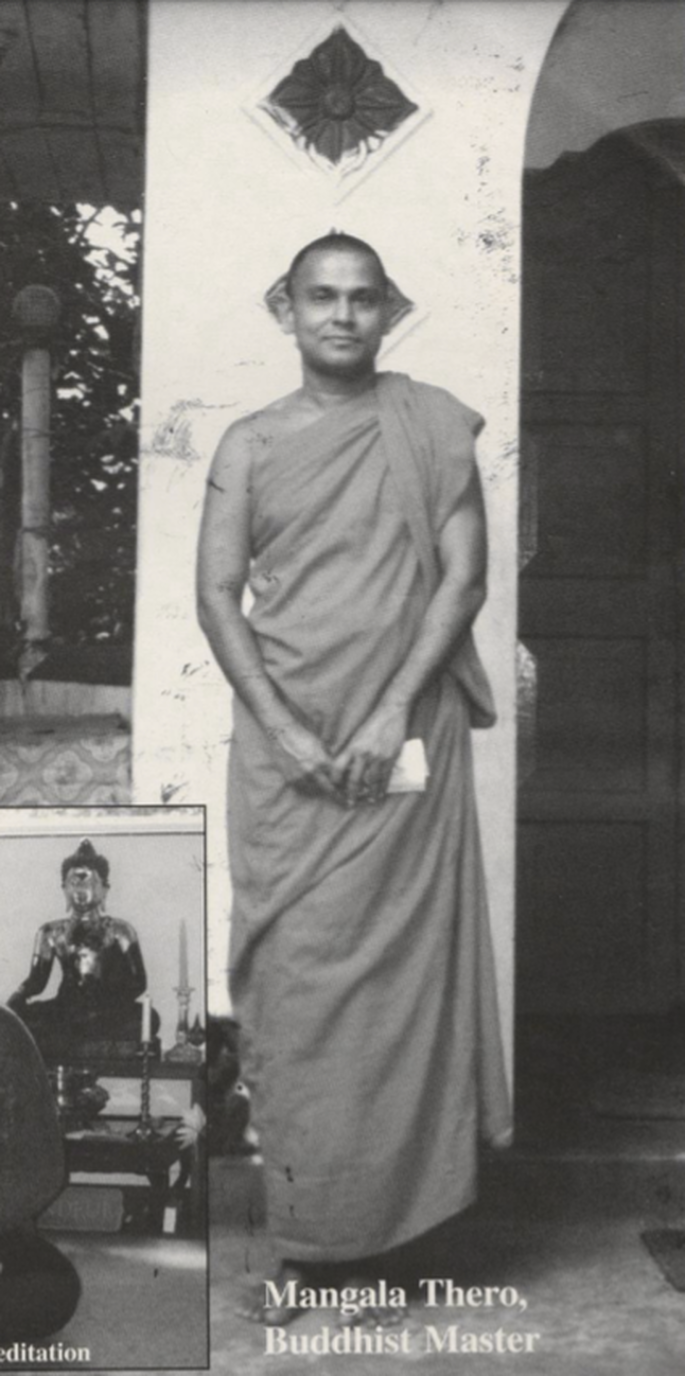
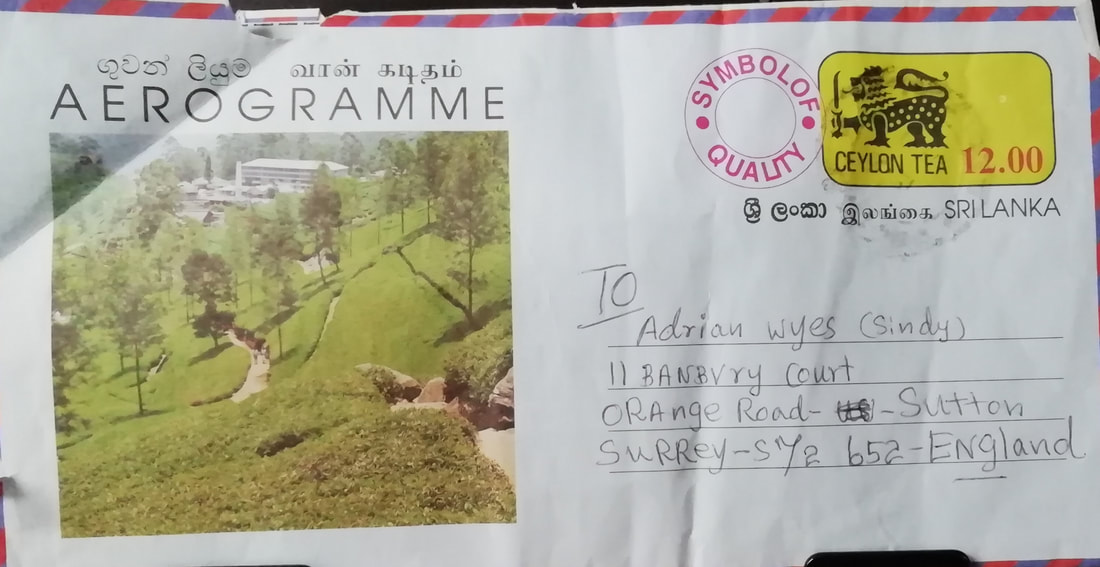
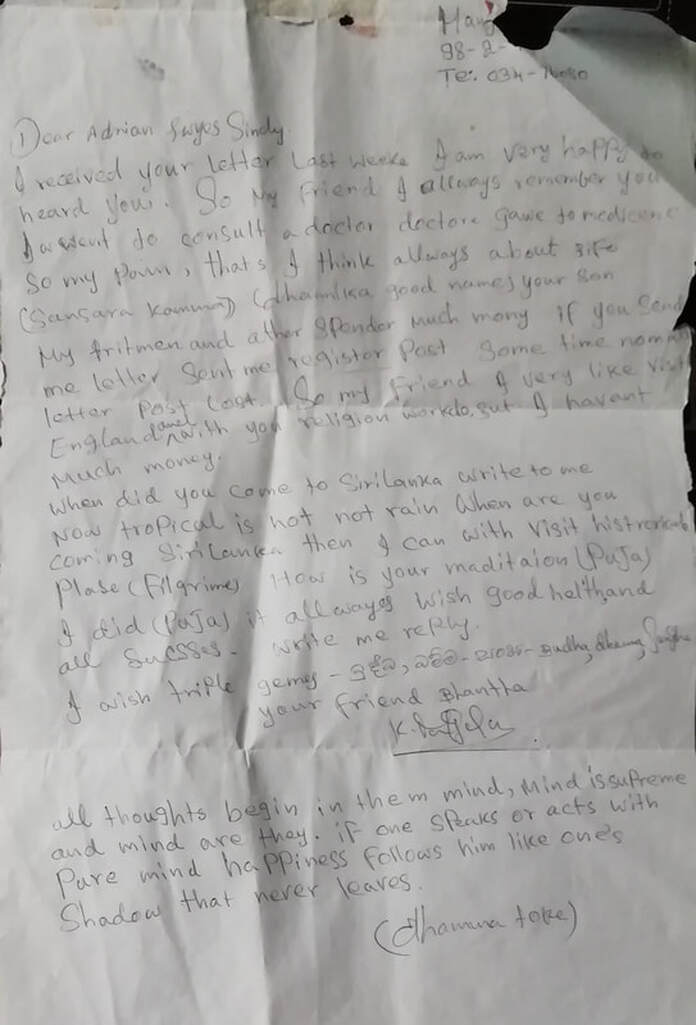
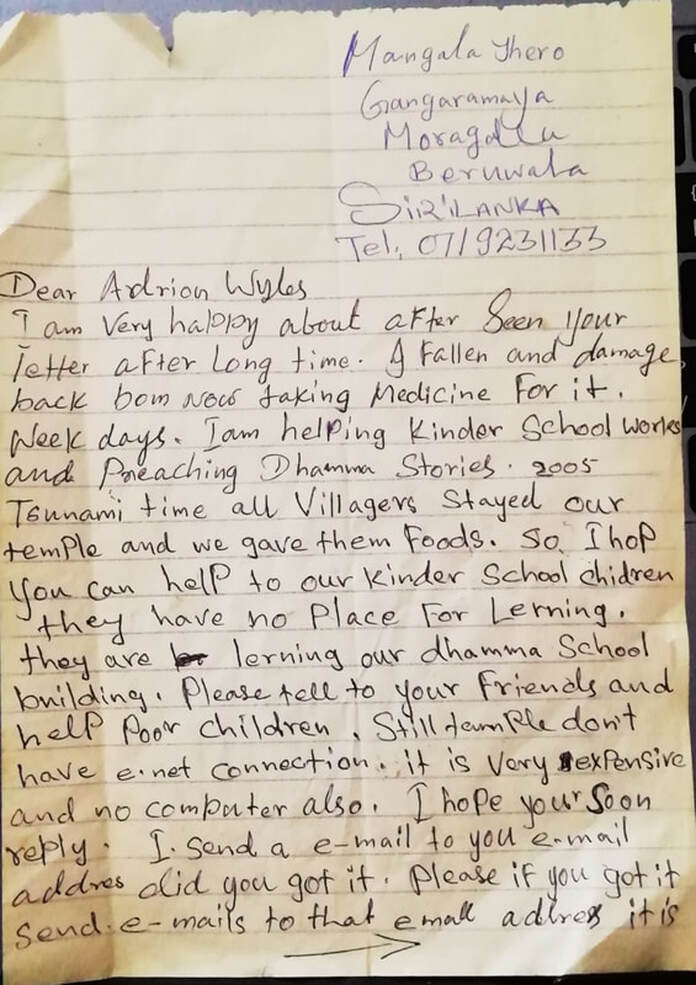
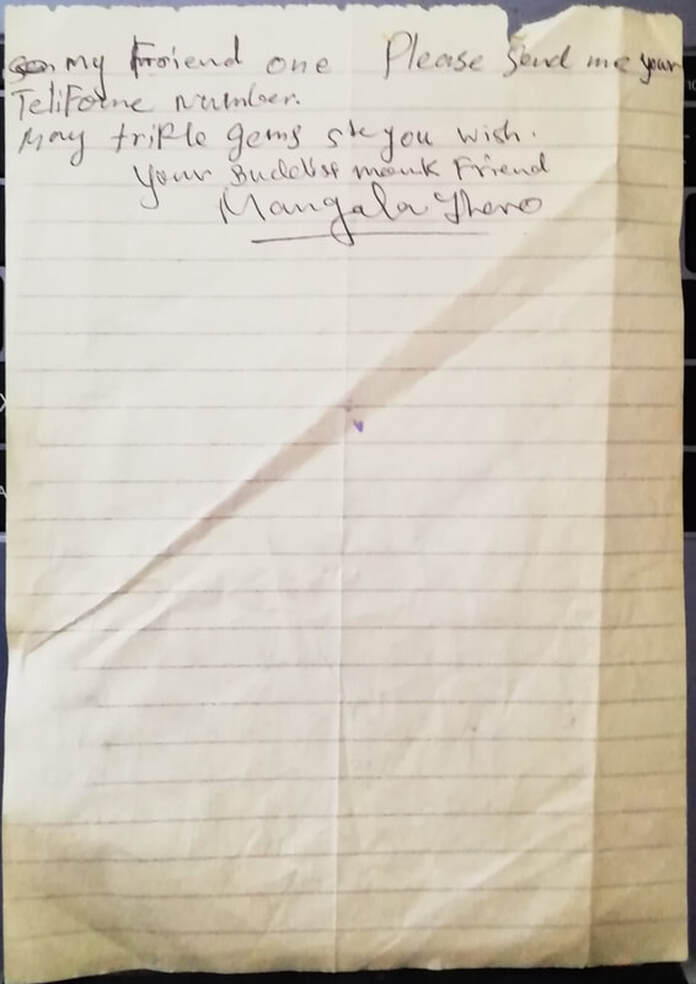
Sri Lanka: Letter (Number 2) from Ven. Mangala Thero - Ganga Ramaya Temple - Beruwela (17.2.1998)10/26/2021 Over a number of weeks, Mangala Thero introduced me to the fundamentals of the Theravada School as taught in Sri Lanka. When returning to the UK - I had him featured in a Taijiquan magazine. However, some years later (around 2005), the Ven. Mangala Thero set me the following letter:
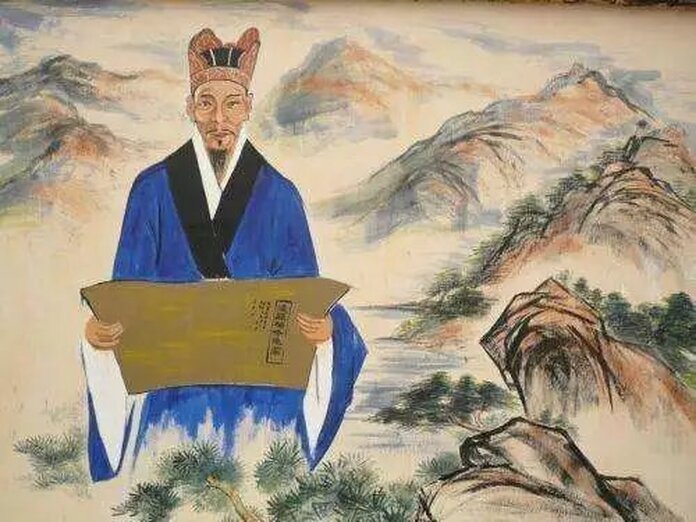
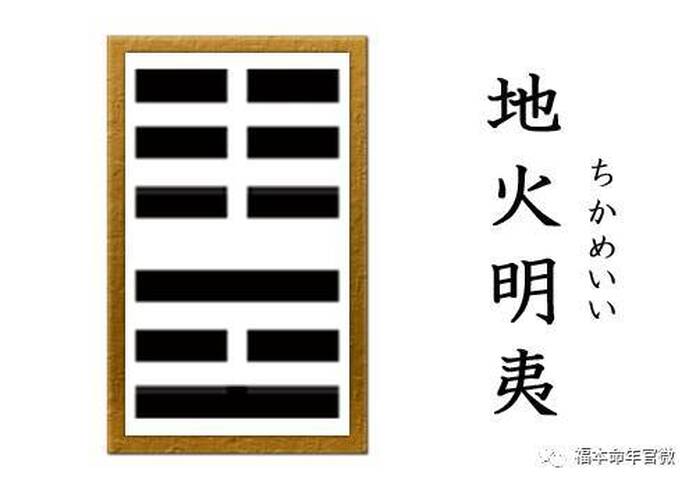
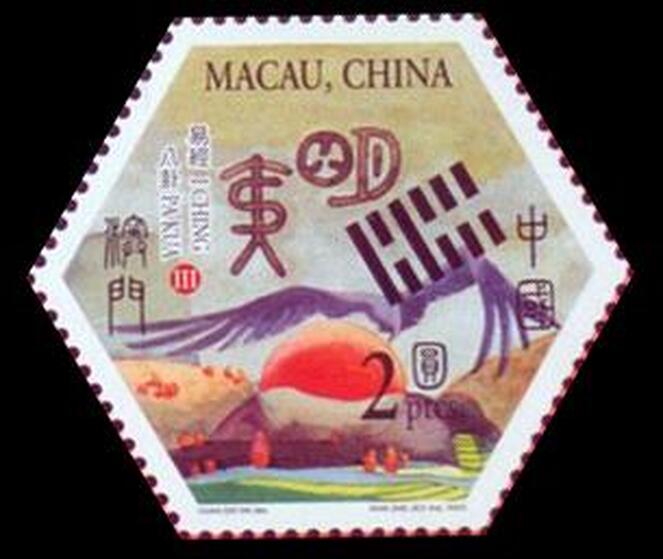
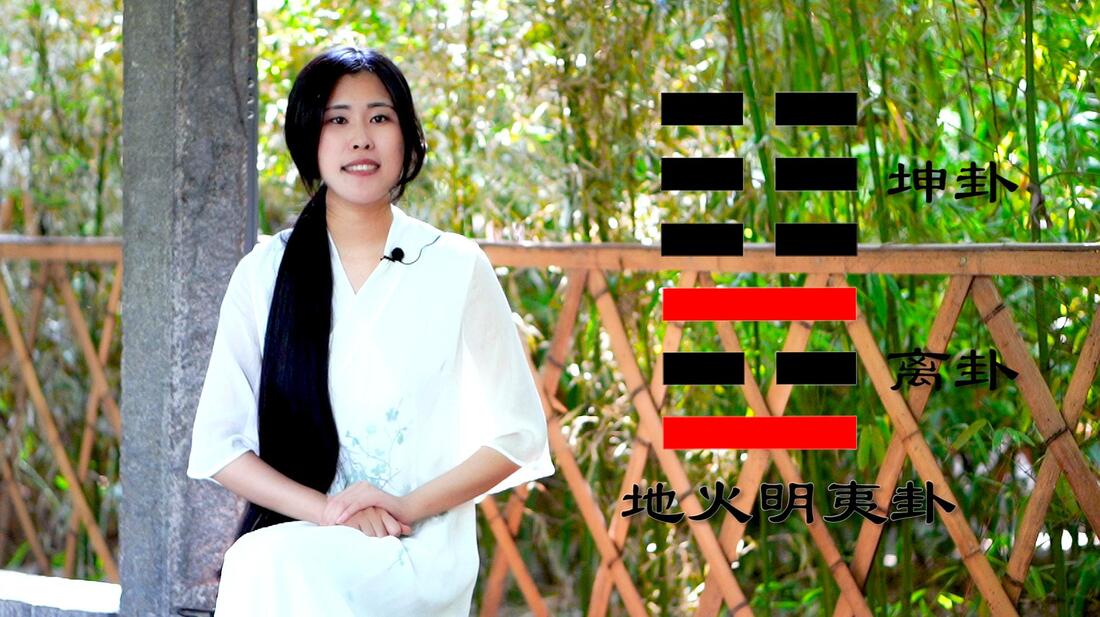
The UK has the highest Covid19 death-rate in the world! To date, over 100,000 men, women and children have died. Covid19 is no respecter of class, gender or age – we are all equally susceptible to its deadly embrace! In the Classic of Change (Yijing) - Hexagram 36 is entitled ‘明夷’ (Ming Yi). This is often translated as ‘Darkening of the Light’ or ‘Brightness Obscured’ with both renderings describing a time when the outside world (literally, figuratively – or both) – is plunged into a natural state of actual perpetual darkness (such as experienced during unusual weather conditions, volcanic activity, earthquake or Tsunami, etc), or is subject to corrupt leaders, debilitating warfare, illness, famine or drought, etc. The ‘brightness’ that denotes a progressive and vibrant society has been compromised so that normal activity in the world has become severely restricted or even non-existent due to the danger that is present. In fact, ‘明夷’ (Ming Yi) can convey a more in-depth explanation of events depicted in the situation. Indeed, ‘明’ (ming2) is constructed using the left-hand particle of ‘日’ (ri4) denoting ‘sun’ - and the right-hand particle ‘月’ (yue4) referring to the ‘Moon’. As both the ‘Sun’ and the ‘Moon’ are shining with full intensity, the Chinese ideogram means a situation of out and out ‘Brightness’. In the ancient Chinese-language texts – this ideogram referred to a time of day when the Sun is rising in the sky and the Moon has not yet disappeared – that is ‘Dawn’ - a time of great hope and inspiration for a new day ahead! This is the ‘ideal’ situation involving human society that is a ‘positive’ and ‘inspiring’ tine of unending clarity and insight – which allows great things to be achieved without end! As the ideogram ‘夷’ (yi2) is entering the situation, however, things have changed for the worse. This change is dramatic, traumatic, and out and out ‘negative’! There is no redeeming features and civilised human society has suffered a terrible set-back! The ideogram ‘夷’ (yi2) is comprised of the inner particle of ‘大’ (da4) which translates as ‘great’, ‘big’, or ‘large’, etc, literally ‘something greater than a person’. The outer ideogram is ‘弓’ (gong1) which refers to the use of a ‘bow’ as a weapon. This ‘bow’ is manufactured from a suitably ‘curved’ tree-branch which is strong and yet flexible. Due to this association, this particle can also carry the meaning of ‘bend’, ‘arch’, or ‘curve’, etc. That is, ‘something that is not straight’, or ‘departs from the norm’, etc. When placed together, ‘夷’ (yi2) can refer to a ‘great’ non-Han people who were experts in the use of the bow and arrow - and who lived to the ‘East’ of the Central Plane. In later times, this ideogram was used to refer to any disruptive population, group or tribe that continuously attacked and disruptive the everyday cultural activity of the Han people. As the ‘明夷’ (Ming Yi) Hexagram (36) uses the latter meaning of ‘interference from barbarians’ - this gives a clue when this Hexagram’s commentary was formulated (or at least ‘settled’) - which would have been after the life of Confucius (probably around 300 BCE). Confucius tends to see this tribe as ‘ancient’ rather than ‘disruptive’ - but in later times, this concept took-on the meaning of ‘obliterate’, ‘eradicate’ and ‘destroy’ through ‘violence’. As something bad has happened in society – the ‘wise-person’ turns-away from all forms of social interaction and intently ‘looks within’ to perfect his or her character. This is achieved through silent and seated meditation, interspersed with periods of study deep and profound philosophical texts that assist this process. This fits-in with the current Covid19 Crisis which involves a withdrawal from interacting within normal society to prevent the spread of the illness and keep one another (and the entirety of society) safe! Master Xu Yun (1840-1959) would have told us all to behave ourselves and behave with civility and discipline!
|
Archives
February 2026
Categories
All
|
RSS Feed