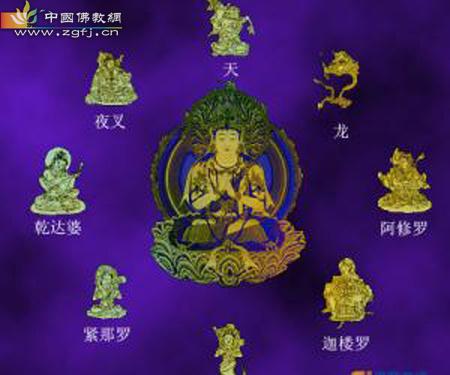
‘Drdhamati, even while dwelling in Surangama Samadhi, I am in the trissahasramahasahasralokadhatu and, eventually, in Jambudvipa, I practice, as the case may be, the perfection of (paramita) of giving (dana), morality (sila), patience (ksanti), vigour (virya), absorptive meditation (dhyana) or wisdom (prajna), /In Jambudvipa I am, as the case may be, a recluse with the five superknowledges (pancabhijnarsi), or again, a layman householder (grhastha) or a monk (pravrajita).’
Buddha - Surangama Samadhi Sutra (Lamotte – 1998 – Page 197)
Buddha - Surangama Samadhi Sutra (Lamotte – 1998 – Page 197)
We all experience birth and we all experience death. These are two guaranteed events in our lives that apply equally to everyone regardless of our genetic inheritance or the life circumstance we are born into. Death can be further subdivided into a) natural and b) unnatural. Natural death to that shutting-down of the biological life-sustaining processes at the end of a long life, or at anytime on life's journey that does not originate from accident, illness or violence, etc. A 27-year-old, for instance, can pass away quite peacefully in their sleep simply because their particular genetic clock decides to 'switch' their heart off. This may be to do with the past evolution of human-beings when our distant ancestors did not live much past twenty. An 'unnatural' death is a demise due accident, illness or violence.
This is when an individual's life-span is cut-short due to a malfunctioning body (as in any number of genetic illnesses), or suffers the destruction of organs due to an accident. Violence committed by other humans can often account for many such deaths such as through pointless attacks within civil society, murder, acts of terrorism and acts of war. This category can be extended to include economic violence where people are deprived of work, income, food, clothing, education and medical assistance, etc, due to an ideology that privileges a few over the many. This also includes the the concept of 'psychological' violence which can serve as the base cause of all types of mental illnesses and later aberrant actions premised upon their numerous cognitive dysfunctions. Buddhist philosophy adds another layer to all this in the form of individual and collective karma.
The Buddha stated that not everything we personally experience and suffer has a root cause in volitional karma. Cancer, for instance, can be the product of a poor lifestyle and deficient choices in diet, activity and social setting, etc, but it can also be the product of the simple misfunctioning of a body cell with no input whatsoever from volitional karma. In the latter case, Cancer is a 'naturally' unfolding process. This is like the changing of the seasons or the rising of the sun, not much can be done about it at the individual level other than to 'observe'. Furthermore, at the point of full enlightenment, the Buddha states that the ridge pole of ignorance is forever broken and that the concept of karma (and notion of rebirth) comes to an end. Following all the quarantine and cleanliness rules in this current climate will help increase the chances of us as individuals not contracting, passing on or possibly dying from Covid19. From a Buddhist perspective, it is that simple.
 RSS Feed