Richard Hunn Association for Ch'an Study (UK)
  • Home
  • About
    • Aims & Objectives
    • Ch'an Blog (釋大道)
    • Remembering Norwich Ch’an Association
    • Biography: Master Xu Yun (1840-1959)
  • Translations
    • YiJing (易經) Studies
  • Articles
  • Membership of RHACS
  • Ch'an Retreats
  • International Wisdom Society
  • Qianfeng Daoism
  • Contact
  • Moving beyond the Distortions of Modern Japanese Zen

Bodhidharma’s Ch’an - What is the “Wall-View” [壁觀] Practice? (20.5.2025)

5/20/2025

0 Comments

 
Picture
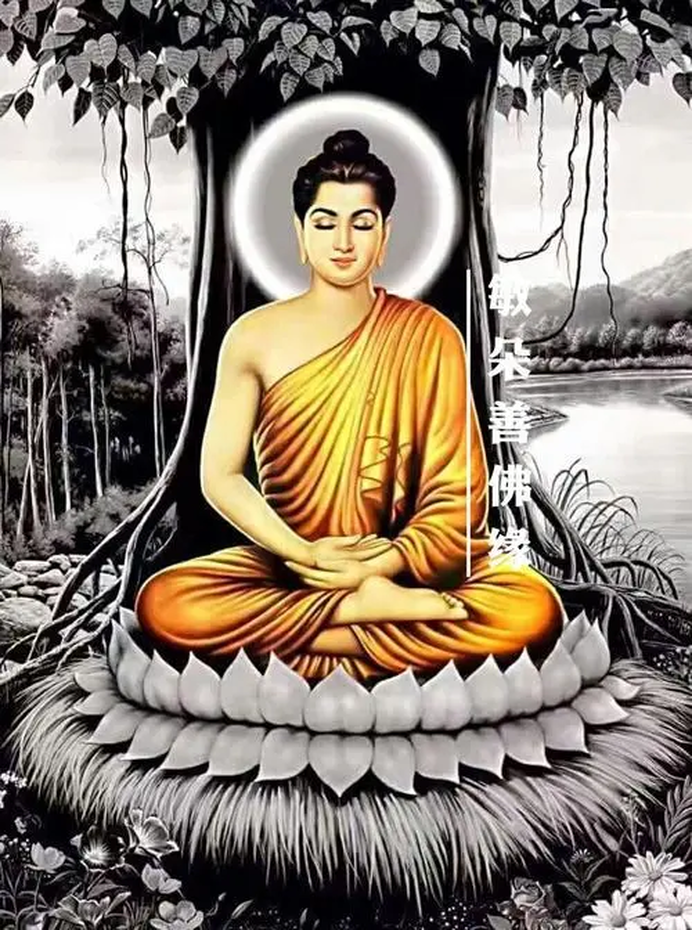
The “Wall-View” [壁觀] practice is simultaneously a pre-enlightenment (outer) meditative technique – and a description of a post-enlightenment (inner) state of being. To outwardly “gaze at a wall” - is to inwardly realise the all-embracing empty mind ground (and gaze like a wall). What does the 28th Patriarch of the Indian Dhyana tradition have to say on this matter? The following extract is typical Chinese-language encyclopaedia entry regarding the life of the Bodhidharma:

‘傳統上認為,達摩自海路來到中國後,聞說梁武帝信奉佛法,於是至金陵(今江蘇南京)與其談法。梁武帝是篤信佛教的帝王,他即位以後建寺、抄經、度僧、造像甚多,是以詢問達摩:「我做了這些事有多少功德?」達摩卻說:「無功德」。武帝又問:「何以無功德?」達摩說:「此是有為之事,不是實在的功德。」武帝不能理解。因雙方理念不合,達摩即渡江入魏(「一葦渡江」之傳說來源),止於嵩山少林寺,於寺中面壁九年,稱「壁觀婆羅門」。[民間則相信達摩在石洞留下至高無上武學《易筋經》和《洗髓經》。’

India to South China by sea (there are competing stories that he travelled by land into North China via Tibet). As he heard that Emperor Wu [武] of the Southern Liang Dynasty believed in the Dharma and was a devout Buddhist - Bodhidharma went to Jinling (now Nanjing, in Jiangsu province) to discuss this matter with him. After he ascended the throne, Emperor Wu built many temples, order endless Buddhist Sutras to be copied and spread, ordained uncountable monastics, and sponsored the making and distributing of many Buddha-statues. Emperor Wu asked Bodhidharma, "How much work of virtue (karmic-merit) have I accumulated by doing these things?" Bodhidharma replied, "No work of virtue” [無功德 – Wu Gong De]. A surprised Emperor Wu asked once again, "Really? Why no work of virtue?" Bodhidharma answered, "These are wilful acts - not genuine acts of virtue (free of egotistical ‘intent’)." Emperor Wu was astonished and confused by this exchange. Due to this difference of opinion regarding the interpretation of the Dharma - Bodhidharma crossed the Yangzi River into the land of the Northern Wei Dynasty (hence the story of Bodhidharma "gliding across the surface of the water whilst standing on a floating reed"). Bodhidharma then made his way to the Shaolin Temple [少林寺 – Shao Lin Si] situated on Song Mountain [嵩山 – Song Shan] – in Henan province. Here, Bodhidharma sat “facing the wall” in a cave for nine years - and was known as the "wall-viewing Brahman" [壁觀婆羅門 – Bi Guan Po Luo Men]. It is believed that whilst sat in this cave – Bodhidharma compiled two important (external and internal) self-cultivation (martial arts) manuals entitled “Change Muscle-Tendon Classic-Sutra” [易筋經 – Yi Jin Jing] and the ”Bone-Marrow Cleanse Classic-Sutra” [洗髓經 – Xi Sui Jing].’

Bodhidharma is associated with a number of unique texts associated within his own “Dhyana” (Ch’an - 禪) tradition. Although certain historical commentators have stated that Ch’an was unknown in India – in fact Ch’an’s insistence upon the achievement of a sudden flash of insight (yugapad) is similar to that position held by the “Sthaviravada School” – one of the original eighteen schools that developed following the death of the Buddha (see AK Warder, Indian Buddhism, Motilal, Page 454). This is the “Believers in the Teachings of the Elders” School linked to the eventual development of the well-known Theravada. The Pali Suttas possess far more doctrinal latitude than the Theravada School likes to admit or acknowledge. The highly conservative approach of the Theravada focusses on a certain strand of doctrine within the Pali Suttas and ignores or plays-down other equally important teachings. For instance, the Buddha clearly states that lay-men and women can achieve enlightenment and that there is no difference in quality between an enlightened lay-person and an enlightened monastic (Ch’an takes this ideal further – stating children, animals and even inanimate objects can all be enlightened on the grounds that all things are reflected in the great mirror samadhi and arise and pass-away within the empty mind ground). Furthermore, the Pali Suttas clearly state that an “instantaneous” enlightenment is available for all beings by simply being in the “physical presence” of the Buddha (darshan) – without having studied the Dharma, the Vinaya, or the Abhidhamma.

Within the Ch’an School, therefore, an individual may (or may not) study the gradual teachings – and may (or may not) realise instantaneous enlightenment. Studying the scriptures does not necessarily culminate in the realisation of enlightenment – whereas realising instantaneous enlightenment means that an individual (such as Hui Neng) may be illiterate and not know the teachings – but if a scripture is read to them – then the full and complete meaning (prajna) will instantly manifest in their mind - which can be verbally expressed. Remember, the Buddha was also illiterate, as when he lived there was no direct connection between being literate and possessing wisdom within general society. Spiritual teachings were passed on via the agency of memory and the vehicle of word of mouth (only later being written-down). Reading and writing was known in ancient India – but it was a practice reserved for use only amongst governments which possessed specially educated ministers who would “write-down” the laws passed (or repealed) by the king or leader – thus maintaiing a coherent record that could be objectively referenced when needed.

Altough the modern Chinese Ch’an School prides itself on the very high literacy rate of its practitioners – this tradition also maintains the original reality which saw the Buddha, his disciples, and many of his Chinese comverts being “illiterate”. This means that although the Ch’an practitioner may study words and letters – the enlightenment that such teachings represent – must be “beyond” words and letters. It is as if literate Ch’an practitioners must remember what it is like to be illiterate. The empty mind ground exists BEFORE any words are conceived in the mind, or expressed through the mouth. Words may or may not be used – but the empty mind ground is pure, clean, and all-embracing (like a pristine wall that expands in all directions). It is also the case that the Indian Bodhidharma could not speak the Chinese-language – and the Chinese students could not speak the Indian-language. It may be that as this was the case, seated meditation and unexpected actions were used to convey - or reveal - the empty mind ground. Only later did words start to be used in an oblique manner – building the entire edifice of Ch’an literature in China (although the literary structure of this work adopts a distinct Confucian structure – such as that found in the “Analects” or the “論語 – Lun Yu”). The text ascribed to Bodhidharma that introduces the practice of “Wall-Viewing” is known by a number of titles:

Great Master Bodhidharma – Brief Discussion on the Four Practices of Entering the Mahayana Path – (菩提達磨大師略辨大乘入道四行觀論 - Pútí dámó dàshī lüè biàn dàchéng rùdào sì háng guān lùn)

Mahayana Path Entry - Four-Contemplative Practices – (大乘入道四行觀論 - Dàchéng rùdào sì háng guān lùn)

Bodhidharma’s Two Methods of Entering the Four Stages of Contemplation – (達摩二種入四行觀論 - Dámó èr zhǒng rù sì háng guān lùn)

Two Entrances - Four Practices Treatise – (二入四行論 - Èr rù sì háng lùn)

Two Entrances - Four Practices Sutra – (二入四行經 - Èr rù sì háng jīng)

Four Contemplations Treatise – (四行論 - Sì háng lùn)

Four Contemplations Sutra – (四行經 - Sì háng jīng)

Two Methods Entry Treatise – (二種入論 - Èr zhǒng rù lùn)

Two Entrances Treatise – (二入論 - Èr rù lùn)

Mind Entry – Body Entry – (理入行入 – Li Ru Xing Ru)

Although every word spoken by the Buddha is considered a “Sutra” (經 – Jing) – usually only Vimalakirti and Hui Neng are the two other Buddhist practitioners whose teachings are also considered “sutras” or “enlightened” sayings. However, as can be seen from the above list, sometimes Bodhidharma’s teachings are referred to as a “Treatise” (論 – Lun) – whilst at other times they are referred to as a “Sutra” (經 – Jing). This suggests some confusion on the matter, but the changing of designation may be symbolic of the increase in popularity of the Ch’an School throughout the history of China. Whatever the case, it would seem that Bodhidharma can be added to the very short list of enlightened beings whose teachings are considered “Sutras”. JC Cleary explained Bodhidharma’s method in his (1986) “Zen Dawn” through the following translation:

‘This is the Great Vehicle Teaching for pacifying the mind – let there be no error. Those who pacify mind like this do wall-gazing. Those who accord with beings like this prevent slander and dislike. Those who have skill in means like this dispense with what does not apply.’ (Page 35)

‘Bodhidharma taught: There are many roads for entering the Path, but in essence they do not go beyond two kinds; one is entering through inner truth, and the other is entering through practice.

Entering through inner truth means:

1) All living beings (ordinary or sage) share the (underlying) reality-nature which is obscured by a false-covering of alien dust. If you abandon the false and return to the real, concentrate your attention and gaze like a wall, then there is no self and others, and ordinary and sage are equal. Firmly abiding and unmoving, you no longer fall into the verbal teachings. This is tacit accord with the real inner truth: without discrimination, it is still and nameless. This is called “entering through inner truth.”

2) Entering through practice refers to the Four Practices (which envelop all practices):

a) Repaying wrongs – or making amends for countless eons of deluded behaviour as a means of purifying this present life.

b) Going along with the casual nexus – or adjusting to external circumstances (good, bad or neutral) as they manifest. No attachment to good experiences – no rejection of bad experiences, and no slumbering in neutral experiences. There is no permanent self – merely the endless cycle of (contrived) cause and effect.

c) Do not seek anything – or do not allow greed, hatred, and delusion to define your life. Nothing the world desires is real or true and must be laid-down and abandoned. Find the empty essence within all suffering and abide there.

d) Always accord within the Dharma – or abide within the reality of the empty mind ground. Uproot greed, hatred, and delusion, cultivate all good deeds (Sila), and help all beings without end or limit.’ (Pages 33-36)

It is believed that Bodhidharma extracted these teachings from the Lankavatara Sutra (indeed, JC Cleary appears to be quoting from a text discovered in Dun Huang entitled “The Record of the Teachers and Students of the Lanka”), although he is also linked to the Vimalakirti and Prajnaparamita Sutras. (I believe that DT Suzuki’s interpretation of the Lankavatara Sutra as being a later and wholly “introverted” and “idealistic” teaching - is incorrect – as it appear to contain Early Buddhist ideology that recognises that the external world exists – even if its structures are forever changing and suffering-inducing). Vimalakirti, of course, represents the fact that lay-people can realise perfect enlightenment – here and now – whilst living within the world of red dust. The emptiness of the Prajna Sutras underlies and unites this entire vision of human existence and spiritual transcendence. Jeffrey l Broughton, in his book entitled “The Bodhidharma Anthoology – The Earliest Records of Zen” (1999) states in the Introduction:

‘For decades discussion of the Long Scroll or Bodhidharma Anthology, both Japanese and Western, has concentrated on the second section, the Two Entrances, and has come to the consensus that only this text can be attributed to Bodhidharma. Eminent monks of medieval China and modern scholars from around the world have produced many exegeses of the two entrances and the baffling term “wall-examining” (pi-kuan) mentioned in the Biography of Two Entrances; in the traditional story Bodhidharma is usually said to have practiced wall-examining for nine years. Though much exegetical ingenuity has obscured the importance of the Records. In fact, the Records have been so eclipsed that they pass unnoticed in most treatments of early Zen.’ (Page 7) And again:

‘The elusive term of wall-examining has been the subject of countless exegeses, from the most imaginative and metaphysical to the suggestion that it refers to the simple physical act of facing a wall in cross-legged sitting posture. Tibetan Ch’an, a new and exciting subfield of early Ch’an studies, offers us one more. Various Ch’an texts were translated into Tibetan, one of the most important being the Bodhidharma Anthology, which in Tibetan is usually referred to as the Great Chinese Injunctions (Rgya lung chen po). The recently discovered ninth-century Tibetan treatise Dhyana of the Enlightened Eye (Bsam gtan mig sgron) contains translations of some of the Two Entrances, some material from Record I, and the whole of Record III. Early on the Dhyana of the Enlightened Eye gives summaries of four teachings known in early Tibet: the gradualist gate; the all-at once gate (Chinese Ch’an); Mahayoga, and Atiyoga (Rdzogs-chen)

The summary of Ch’an ends with a series of quotations from Ch’an masters, the first of whom is Bodhidharmatara, the version of the name that is encountered in Tibetan sources: “From the sayings of the Great Master Bodhidharmatara, ‘If one reverts to the real, rejects discrimination, and abides in brightness, then there is neither self nor other. The common man and sage are equal. If without shifting you abide in firmness, after that you will not follow after the written teachings. This is the quiet of the principle of the real. It is non-discriminative, quiescent, and inactive. It is entrance principle.’” A Tibetan Tun-huang manuscript gives a virtually identical rendering. This understanding of wall-examining must have been widespread in early Tibet.

The Tibetah closely follows T’an-lin’s Chinese with one exception, the line “in a coagulated state abides in wall-examining” (ning chu pi-kuan), for which the Tibetan reads: “rejects discrimination and abides in brightness” (rtogs pa spangs te / lham mer gnas na). This is a curious and consistent divergence.” (Page 67)
The term “Wall-View”, Wall-Gaze”, or “Wall-examining” are all English language attempts at translating (and transliterating) the Chinese-language term “壁觀” (bi guan). I must say that when I “think” in the Chinese-language – this term appears succinct and straightforward. It is only when this terms transmigrates into a different (and unfamiliar) language culture that uncertainty of meaning creeps in. Bi Guan is to “end” all discursive thought in the surface and deep mind. Bi Guan is to realise the all-embracing empty mind within which all things manifest and pass-away. Bi Guan is like broad and high wall immediately present in-front of the human vision. The wall is too high to climb – and broad to go around. Human vision cannot see above, beyond, or around it. Bi Guan is the end of all deluded vision. Assessing the two-ideograms we have:

壁 (bi4) = Lower particle is “土” (tu3) which means “stamped earth”. The upper particle is “辟” (bi4) which means “law”, “control” and “develop” – a physical structure (such as a “wall”) which defines, controls and orders society.

觀 (guan1) = Left-hand particle is “雚” (Guan4) which means “stork”, “heron”, or “small cup”. The right-hand particle is “見” (jian4) which means “to see”, “to consider”, and “to recognise”.

When combined as “壁觀” (bi guan) - there is the meaning of a developed vision which is broad, expansive, and all-inclusive - like that of a bird’s-eye view when flying high in the sky. This is a special type of all-encompassing vision that excludes nothing, includes everything, and like the structure of a physical wall, generates order and security throughout society. One looks at the wall – and one looks out onto the world – as if one were the wall. These concepts are not necessarily contradictory when viewed from the perspective of a Chinese philosophical use of language, ideas, and symbols. Therefore, “Wall-View” represents the permanent “turning-about” at the deepest levels of human consciousness experienced during successful Ch’an training – a process explained within the Lankavatara Sutra – but which implicit within all legitimate Buddhist texts.

Chinese Languae Text:

https://baike.baidu.com/item/二入四行/3987794

Further Reading (English Language):

Broughton, Jeffrey L, The Bodhidharma Anthoology – The Earliest Records of Zen, University of California Press, (1999)

Cleary, JC, Zen Dawn – Early Zen Texts from Tun Huang, Shambhala, (1986)

Warder, AK, Indian Buddhism, Motilal, (2000)
0 Comments

Email: Master Xu Yun - Burned-Finger - and "Self-Immolation"! (26.1.2025)

1/25/2025

0 Comments

 
Dear J
Thank you for your interesting email.

Please find attached a photograph clearing showing the missing digit. According to Xu Yun, he was sad and regretful for the fact his mother died soon after giving birth to him (he probably later witnessed what women experience during pregnancy and birth) - and for the distress he caused his father by leaving home to become a Buddhist monk (without permission). This had all kinds of knock-on effects as although he was forced into marrying two young women (sisters) - he did not consummate the bond - or produce a son to carry-on the family name. Not producing a son was one of the worst things a dutiful son could NOT do with regard to his father (and by extension - his mother). In reality, it was a Confucian duty for an older son to produce an heir to inherit the family name and family wealth-business. 
​I believe there is a section in the Surangama Sutra describing various types of (similar) self-mortifications (usually linked to the selfless lives of Bodhisattvas). Furthermore, such ideas recur in various other (usually Mahayana) texts (the Mahasiddhi stories of the Tantrayana also contain all kinds of unusual activity). The usual argument is that such descriptions (which are either not found - or if they are present - are criticised by the Buddha in the Pali Suttas) are purely figurative and not intended to be taken literally (due to their negative and destructive tendency).
​Given this is the case, what is Xu Yun doing? He is putting into practice the idea of "self-mortification" from a Buddhist point of view. Not all Buddhists accept this interpretation and I advocate freedom of thought and self-determination. Think for yourself. Xu Yun believed that by voluntarily inflicting "pain" upon his person (by copying the sutras) - he could "burn-off" bad karma AND transfer this credit-making exercise to provide for the well-being of another person (or persons) in the after-life. Of course, there is much to philosophically work-through - but this is similar to Medieval (monastic) Christian beliefs within certain traditions. This type of self-harm is open to interpretation and it should not be lightly treated or literally advocated. Remember, the Classical Greeks (Apollonius of Tyre and others) - recorded that an Indian Buddhist sat atop a pile of wood and "self-immolated" in-front of a crowd in Athens (I believe in the 1st century CE). Wapola Rahula also discusses "self-immolation" (see attached).
Picture
Peace in the Dharma
Adrian Chan-Wyles
0 Comments

The Realisation of Emptiness Underlies the Lay and Monastic States of Being! (12.4.2024)

4/12/2024

0 Comments

 
Picture
The Laity Should Respect the Ordained Sangha - Whilst Understanding that the Realisation of "Emptiness" - is the Key to Radical Transformation!
​Buddhist monasticism is flexible. Although it is correct to assume that it is usually necessary for an individual to undergo a period of isolatory training (to establish and stabilise the realisation of the void) - it is also true that compassionate (Bodhisattva) activity must also be pursued throughout the myriad conditions that define worldly existence. This is true of all Buddhist traditions - as even the Bhikkhus of the Theravada School must "walk" (in a self-aware manner) through the surrounding (lay) villages - begging for food on a daily basis.
Living a hermitic or cloistered existence is a means to an end and not an end in itself. Of course, this period may be repeated more than once and last any length of time. When entering different situations - the Bodhisattva does not lose sight of the realised void regardless of the external conditions experienced. The Sixth Patriarch (Hui Neng) spent around 15 years living with bandits and barbarians in the hills - retaining a vegetarian diet - even though he was not yet formally ordained in the Sangha.
Within China, the Mahayana Bhikshu must take the hundreds of Vinaya Discipline Vows as well as the parallel Bodhisattva Vows (the former requires complete celibacy whilst the latter requires moral discipline but not celibacy). Anyone can be a "Bodhisattva" - whilst a formal Buddhist monastic must adhere to the discipline of the Vinaya Discipline. A lay Buddhist person also adheres to the Vinaya Discipline - but only upholds the first Five, Eight or Ten vows, etc. Vimalakirti is an example of an Enlightened Layperson whose wisdom was complete and superior to those who were still wrapped in robes and sat at the foot of a tree. In the Mahasiddhi stories preserved within the Tanrayana tradition - the realisation of the empty mind ground (or all-embracing void) renders the dichotomy between "ordained" and "laity" redundant.
The Chinese-language Vinaya Discipline contains a clause which allows, under certain conditions, for an individual to self-perform an "Emergency" ordination. This is the case if the individual lives in isolation and has no access to the ordained Sangha or any other Buddhist Masters, etc. The idea is that should such expertise become available - then the ordination should be made official. However, the Vinaya Disciple in China states that a member of the ordained Sangha is defined in two-ways:
​1) An individual who has taken both the Vinaya and Bodhisattva Vows - and has successfully completed all the required training therein.
2) Anyone who has realised "emptiness".
Of course, in China all Buddhists - whether lay or ordained - are members of the (general) Sangha. The (general) Sangha, however, is led by the "ordained" Sangha. As lay-people (men, women, and children) can realise "emptiness" (enlightenment) - such an acommplished individual transitions (regardless of circustance) into the "ordained" Sangha. This is true even if such a person has never taken the Vinaya or Bodhisattva Vows - regardless of their lifestyle or position within society. Such an individual can be given a special permission to wear a robe in their daily lives - but these individuals do not have to agree with this.
Realising "emptiness" is the key to this transformative process. Emptiness can be realised during seated meditation, during physical labour (or exercise), or during an enlightened dialogue with a Master. The first level is the "emptiness" realised when the mind is first "stilled". This "emptiness" is limited to just the interior of the head - but the ridge-pole of habitual ignorance has been permanently broken (this is the enlightenment of the Hinayana) - and is accompanied by a sense of tranquillity and bliss. This situstion (sat atop the hundred-foot pole) must be left behind. Through further training, the "bottom drops out the barrel" - and the perception of the mind expands throughout the ten directions. Emptiness embraces the mind, body, the surrounding environment - and all things within it. 
0 Comments

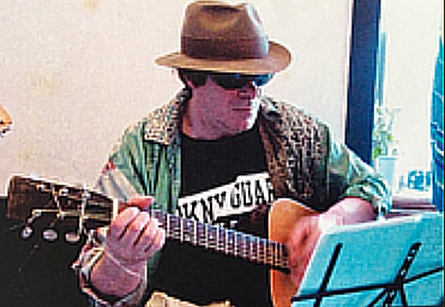
Richard Hunn - the Southpaw Guitar Player! (14.10.2023)

10/14/2023

0 Comments

 
Picture
Reminds Me of the Blues Brothers!
Richard Hunn (1949-2006) passed away 17-years ago (as of October 1st, 2023). He was just 57-years old - having suffered from a short but devastating illness (Pancreatic Cancer). As with any good Ch'an Master - Rixhard Hunn tended to refuse any formal titles or awards - as he felt such baubles weighed-down a practitioner diverting the awareness away from the 'host' and toward the 'guest'! Besides, Charles Luk bestowed upon him the Dharma-Name of 'Wen Shu' - the name of the Bodhisattva Manjushri who appears all the way throughout the Buddhist Sutras - spreading his 'wisdom' and 'compassion' to all and sundry! After emigrating to Japan in 1991, Richard Hunn decided to carry-out a pilgrimage to Mount Fuji! For reasons only known to himself - this journey was carried-out in the depths of Winter - when the wind blew and the snow fell! When things were looking bleak - a person appeared out of nowhere and helped Richard Hunn seek-out assistance! A passing Senior Police Officer decided to take Richard into Custody whilst he investigated his background and motives. He was surprised when Richard started to converse with him in the Japanese language. When the Officer had sat and discussed Zen for an hour in a comfortable Police Station (whilst Richard was given a warm meal and drink) - The Officer ordered that Richard be driven to the peak of Mount Fuji and given a hotel room usually reserved for the Police! This was apparently out of respect for Richard's understanding of Zen - and his mastery of the Japanese language!
Interestingly, around 2002 Richard visited my family home in Sutton (South London). I eventually introduced him to my Hakka Chinese grandmother - and to my astonishment he started talking to her in the Hakka language! She was taken by as much surprise as was I! Apparently, he had known a number of Hakka Chinese people at Essex University (I believe from Malaysia) who were members of the University's Chinese Buddhist Association. This ethnic Chinese group actually voted Richard to be the 'President' - the only non-Chinese person to have held that post up to that point! I believe this was during the late 1970s - when he also participated in the Multicultural Department of BBC's Pebble Mill (a general education and entertainment programme). Richard often arranged for British Buddhist content to be filmed and broadcast. He was personally responsible for a documentary covering the Thai Buddhist Temple (Buddhapadipa) situated in Wimbledon! Richard Hunn had spent an extended time sat meditating in that temple - with the Thai Head Monk suggesting that he became a Theravada Buddhist monastic! I watched this programme as a child - and only many years later would I meet Richard Hunn - and eventually take my place in the Meditation Hall of Buddhapadipa! Charles Luk had said that the empty mind ground underlies ALL circumstances an that it does not matter where we train just as long as we effectively 'look within' with a proper intensity and direction!
Whilst Richard Hunn was establishing himself in Japan - he suggested that I travel to a Theravada country and train 'at the source', so-to-speak. This is how I ended-up training under Mangala Thero (in 1996) at the Ganga Ramaya Temple (in Beruwela) - situated in Sri Lanka. I have subsequently discovered that Mangala Mahathero has passed away after spending the last decade of his life living and meditating in isolation. I am told that Richard Hunn would sit 'still' for hours on end in various Zen Temples throughout the Kyoto area. Although outwardly he was practicing 'Zen' - inwardly he was practicing 'Caodong' Ch'an - the preferred lineage of Master Xu Yun (1840-1959). Although none of us know how long we will be on this Earth - we must remain vigilant and use our time effectively and productively! Not a single second must be wasted when it comes to self-cultivation! Instead of reading this board - look within! At this time of year I usually contact Richard's widow - Taeko - and offer my respects!
0 Comments

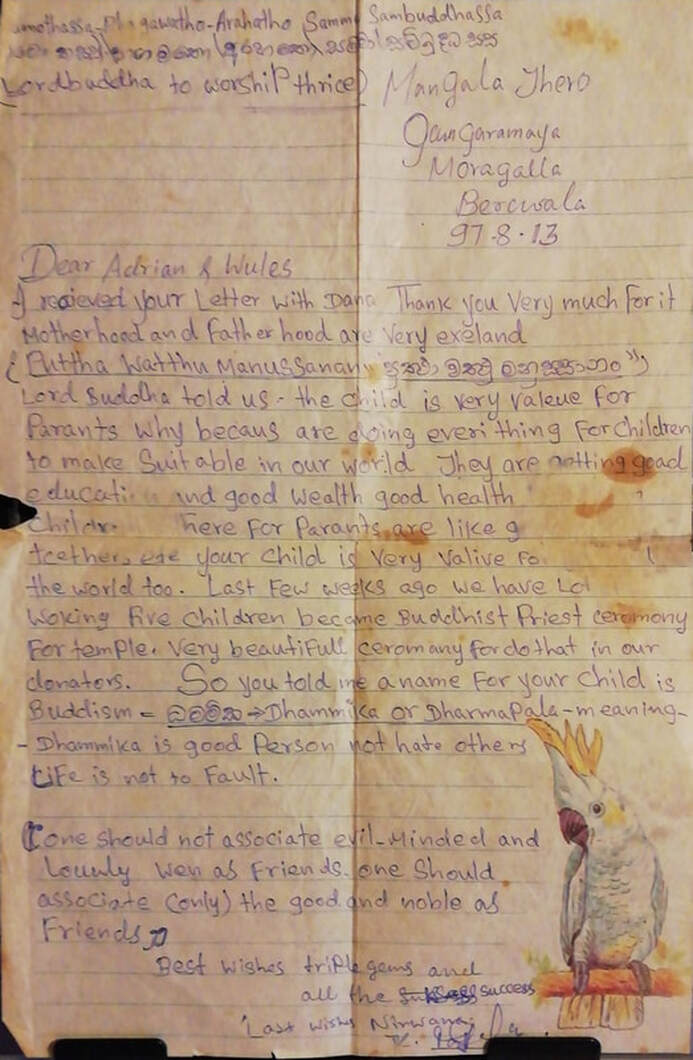
Sri Lanka: Letter (Number 1)  From Buddhist Monk Mangala Thero [Regarding My Eldest Daughter Sue-Ling-Chan-Wykes] (13.8.1997)

10/23/2021

0 Comments

 
Picture
My oldest daughter - Sue-Ling-Chan-Wyles - was born on August 8th, 1997. I was married to her mother - Cindy Chan - in Beruwela, (Sri Lanka) on December 13th, 1996. The Venerable Mangala Thero (a very learned Theravada Buddhist Monk now deceased) gave Sue-Ling the Dharma-Name 'Dhammika' - or 'She Who Diligently and devotedly Adheres to the Dhamma'. The Buddha advised a follow of His Dhamma to 'avoid' mixing with evil or negative persons - as their psychological and physical 'taints' (kilesa) or negative karma generated by excessive greed, hatred and delusion. Such people must help themselves - with those already possessing a pure mind (that is beyond corrupt) assisting them in this task. Those still attempting to purify and stabilise their minds must - for a time - separate themselves from the masses until their minds are strong enough to truly help and assist others. Sue-Ling is a grown woman now finding her own way in the world - and she is engaged in a number of ongoing projects designed to help and assist many different people. This is the ;essence' of Dhamma!
Picture
Greece: Me (Left), Sue-Ling (Top) and Por Por (Right) - Late 2001
0 Comments

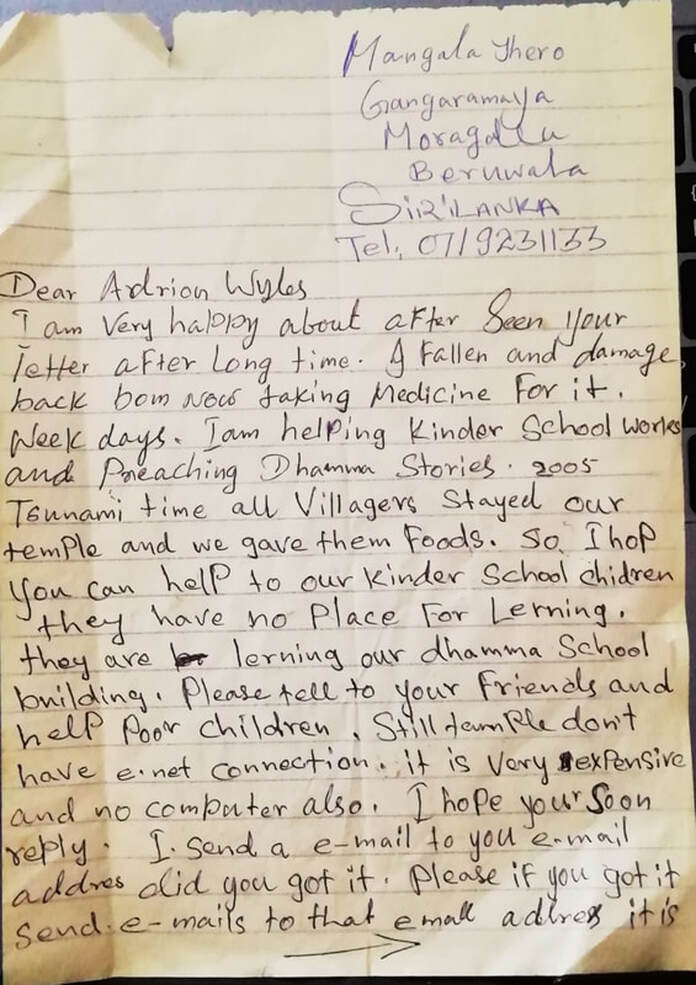
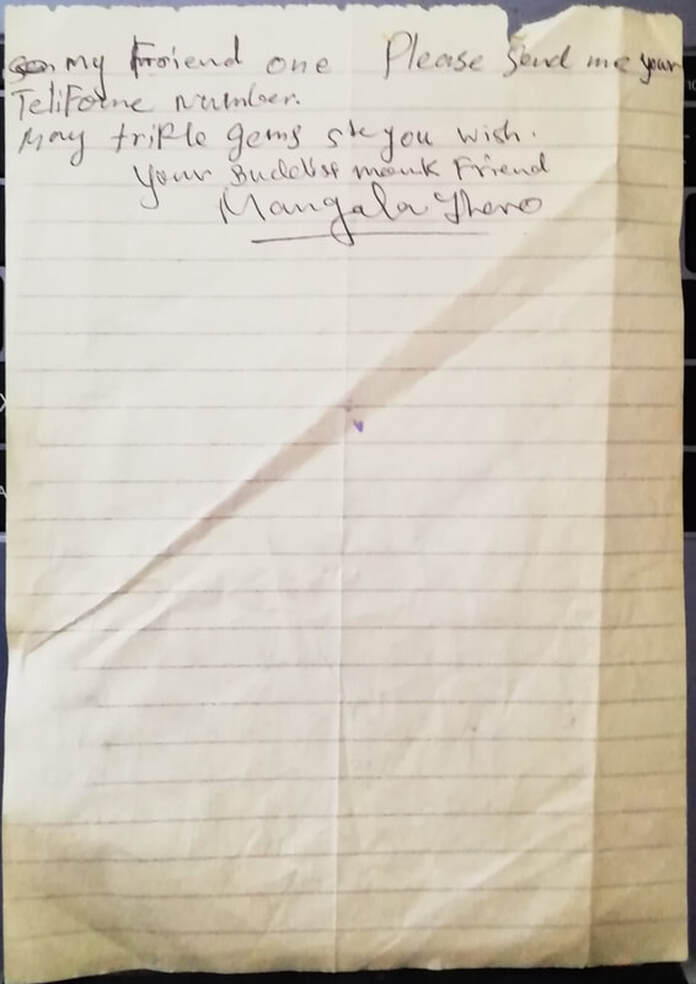
Sri Lanka: Letter (Number 3) Ven. Mangala Thero - Gangaramaya Buddhist Temple - Moragolla - Beruwela - Sri Lanka (c. 2005)

9/24/2021

0 Comments

 
Picture
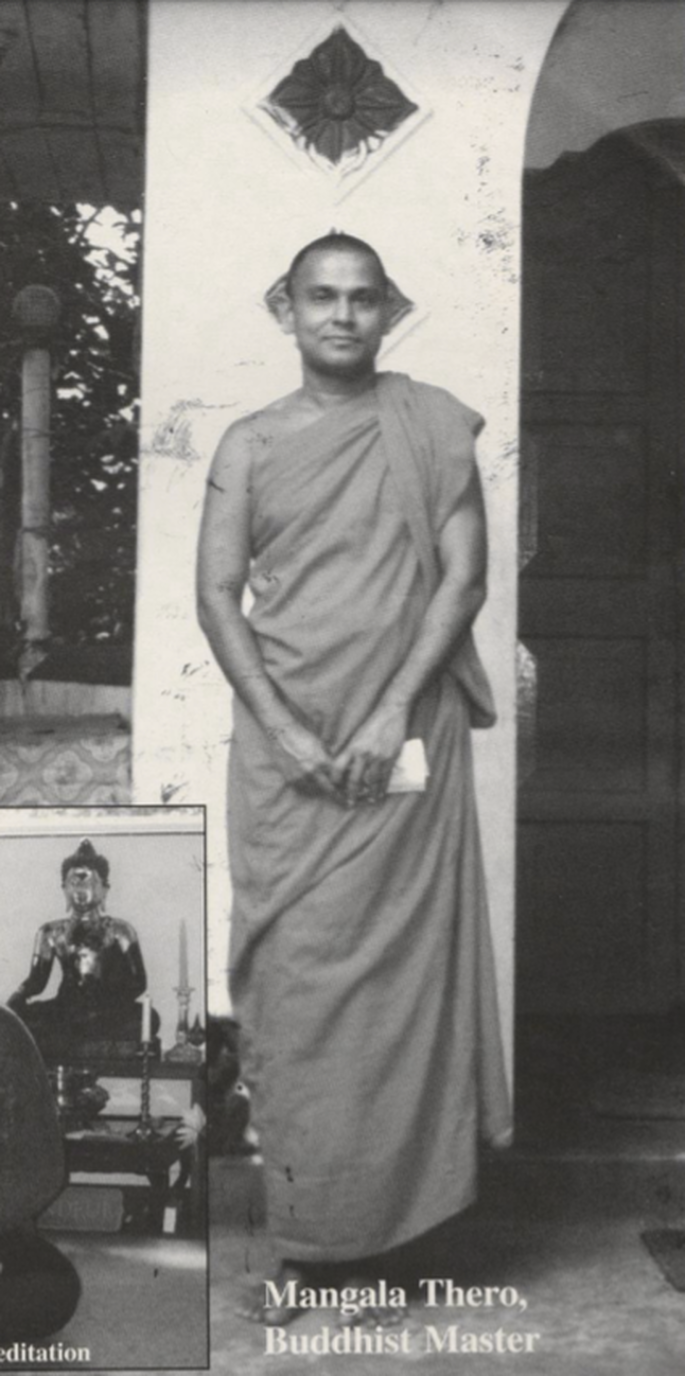
Ven. Mangala Thero - Head Monk of the Gangaramaya Temple (1996)
Over a number of weeks, Mangala Thero introduced me to the fundamentals of the Theravada School as taught in Sri Lanka. When returning to the UK - I had him featured in a Taijiquan magazine. However, some years later (around 2005), the Ven. Mangala Thero set me the following letter:
Picture
Picture
0 Comments

The Comparative ‘Speeds’ of the Mind and Body

9/22/2021

0 Comments

 
Picture
133. He converts his body to accord with his mind: he takes the body and mounts it on the mind. He makes its going swift to coincide with that of the mind; for the mind’s mode of going is swift. 

He arrives at blissful perception and light perception: he arrives at perception of bliss and perception of lightness that are canascent with the supernatural-power consciousness whose object is the material body. The rest should be understood in the way already described. But here there is only the going of consciousness. (21) 

21. “’There is only the going of consciousness’: there is only the going that is the same as that of the mind. But how does the body whose going [being that of matter] is slow, come to have the same going as the mind, which quickly passes? Its going is not the same in all respects, for in the case of converting the mind to conform with the body, the mind does not come to have the same going as the body in all aspects. For it is not that the mind then occurs with the moment of a material state, which passes slowly instead of passing with its own kind of moment, which is what establishes its individual essence. But rather the mind is called ‘converted to accord with the going of the body’ as long as it goes on occurring in a continuity that conforms with the body until the desired place is arrived at. This is because its passing occurs parallel with that of the body whose going is slow, owing to the resolution. ‘Let the mind be like this body.’ And likewise, it is while the body keeps occurring in such wise that its arrival at the desired place comes about in only a few quick passes of the mind instead of passing slowly, as in those who have not developed the roads to power – and this mode of occurrence is due to the possession of the perception of lightness, to say nothing of the resolve, ‘Let this body be like the mind,’ not because it arrives at the desired place in a single consciousness moment. And when taken thus the simile, ‘just as a strong man might stretch out his bent arm, or bend his outstretched arm’ (Vin 1 5) can be taken literally. And this must be accepted in this way without reserve, otherwise there is conflict with the Suttas, the Abhidhamma and the Commentary as well as contradiction of natural law (dhammata). Bhikkhus, I see no other one thing that is so quickly transformed as the mind’ (A 1 10) - here it is material states that are referred to by the word ‘other’ because they do not pass quickly. And in the Abhidhamma only matter is called pre-nascence condition and only consciousness post-nascence condition. And wherever states (dhamma) arise, there they dissolve. There is no transmigration of dhammas by force of the roads to power. But it is possible to affect alteration of the mode in which they are present (bhava)” (Vism-mht 397) 
​
Visuddhimagga – The Path of Perfection – The Classic Manual of Buddhist Doctrine and Meditation – Part 2: Concentration (Samadhi) - Chapter XII – The Supernatural Powers - Translated from the Pali by Bhikkhu Nanamoli, BPS, (2010), Page 397 
0 Comments

Buddhist Meditation: The Pali-Sanskrit Term ‘Bhavana’

9/17/2021

2 Comments

 
Picture
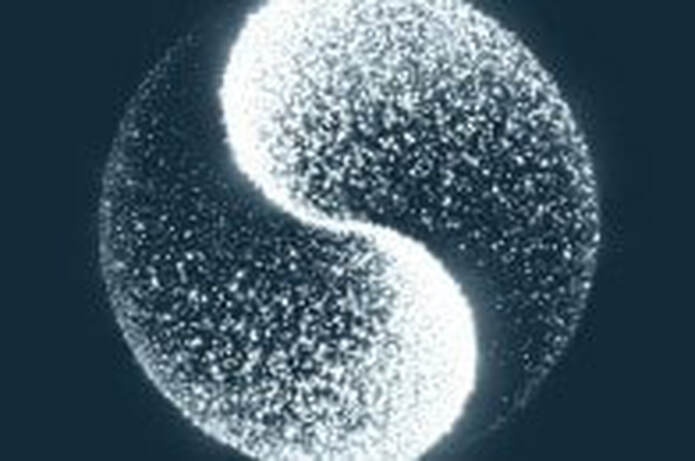
From the Interaction of Yin and Yang - All Things Are Manifest!
Author’s Note: In 2017, I wrote a short article about the Pali term ‘Bhavana’ and since then, I have been asked to write a more in-depth article regarding the meaning and application of this term in its Pali and Sanskrit context (both different and yet overlapping in places). Whereas in my earlier article (referenced below) I focused a great deal on the Chinese language term for ‘bhavana’ - in this outing I have limited myself to just the briefest of references to the Chinese equivalent – an act of considerable will-power considering Chinese Buddhism is one of my academic specialities (both ethnically and academically). However, I have always held the Theravada tradition in high regard and have been helped tremendously by its many practitioners and institutions around the world! From my Chinese Ch’an practice (and penetration of the empty mind ground) - I have come to see and appreciate how the many different branches of Buddhism (and reality in general) all manifest from the same stout trunk... Although what I convey to you is academically correct – you do not have to accept my conclusions. Always think for yourselves and make-up your own minds! ACW (17.9.2021) 
Picture
Inner and Outer Boundless Space is the Key to Unifying 'Bhavana'!
When I was studying Theravada Buddhism in Sri Lanka (in 1996), a term I came across continuously was ‘bhavana’ (‘भावना’ Pali and ‘भवन’ Sanskrit) - this was invariably used to refer to the act of seated ‘meditation’ and all the psychological and physical discipline required to successfully carry-out this important Buddhist practice. Indeed, within the Chinese written language, ‘bhavana’ is referred to as ‘修習’ (Xiu Xi) - or a central method of mind-body transformation – literally ‘self-cultivation method(s) or ‘habits’’ or ‘disciplined paths which intersect at a certain point of development’. A more succinct translation could be ‘paths of self-discipline' with the caveat that what is being suggested is the strict disciplining of the mind and body through the correct application of the Vinaya Discipline and the Bodhisattva Vows. Therefore, the single act of seated meditation has a wealth of supporting disciplinary activities surrounding its application, and does not appear does not suddenly appear out of a vacuum of non-effort. In other words, ‘bhavana’ refers to an act of ‘meditation’ which is the summation of the entire Buddhist path! Although the emphasis was always upon seated meditation, of course, standing, sitting and lying-down is allowed in the Buddhist Suttas – which very much depends upon the meditation teacher and the practitioner involved. Compassion, loving-kindness and wisdom must always be the driving force behind the practice of ‘bhavana’. 
Picture
The Great Theravada Masters Show the Way!
As a ‘noun’, the Sanskrit dictionary states that भवन (bhavana) refers to: 
  1. building, edifice 
  1. house, dwelling, residence 
  1. mansion, palace 
  1. place of abode 
Although this Sanskrit term has a wide variety of meanings, it can also refer to act of ‘coming into existence’, through the process of birth and production, etc. In other words, something that was not once present now becomes present – with ‘bhavana’ used to describe the process of it ‘becoming’ real and visible within the material world. However, these terms are still ‘objective’ in nature and do not directly refer to the Buddha’s meaning of the term.  
​
The Pali dictionary suggests that ‘bhavana’ (भावना) refers to 'mental development' (lit. 'calling into existence, producing') in what in English is generally referred to 'meditation'. The Theravada School of Buddhism distinguishes two types of bhavana: 
  1. development of tranquillity (samatha-bhāvanā), i.e. concentration (samādhi), and 
  1. development of insight (vipassanā-bhāvanā), i.e. wisdom (paññā). 
The practice of self-cultivation is in fact the act of ‘self-building’. It is the act of constructing an ability or abode of being that was not previously existent. Once achieved, tranquillity and insight are destined to become permanent attributes of the character of one who has successfully trained in the practice of ‘meditation’ (bhavana). This is the new spiritual dwelling the mind and body inhabits from now on. There is some suggestion that this term could be related to the ancient forms of cultivating the fields, planting and growing the fruit and vegetables, and harvesting the resulting crops. For every step of this process to work – the farmers of North India must keep correctly contemplating the land, the weather and the time of year. Once all this is correctly established – then the farmers must apply correct timing to everything they do. Only then will there be a good harvest at the end of all this effort.  
Picture
Clean the 'Inner' and 'Outer' World...
Interestingly, the very similar Sanskrit term ‘भावना’ (bhāvnā) refers to feeling, sensation, emotion and sentiment and is certainty moving toward the Buddhist (Pali) implications. Perhaps the Buddha modified a Pali term which once referred to the external practice of building houses and cultivating fields for farming – but changed its onus from this ‘objective’ meaning to a purely ‘subjective’ meaning relating to states of mind and patterns of thought and emotion. Just as rocks, weeds and stones are removed from the soil to make it fertile – the Buddhist practitioner uproots greed, hatred and delusion from the psychic fabric of the mind so that the mind becomes ‘fertile’ to receive the fruits of Buddhist self-cultivation. The Pali term appears to be referring to ‘that which arises from within’ - whilst the Sanskrit term is referring to ‘that which arises from without’. I would suggest that the inner perception of boundless space integrates with the awareness of boundless outer space – and that this is how the Buddha ultimately reconciles the two distinct meanings of this term. If a practitioner applies the Dhamma correctly – then like a plant growing from a seed into a might tree – the fruits of the Dhamma will manifest in the mind, body (and through behaviour) the environment!  
Picture
The Theravada Tradition Preserves the Pali Canon!
References: 
https://www.definify.com/word/भवन 
https://www.wisdomlib.org/definition/bhavana 
https://thesanghakommune.org/2017/09/20/buddhism-pali-bhavana-and-chinese-chan/ 
http://blog.sina.com.cn/s/blog_5d3204f50100btsz.html 
2 Comments

    Author

    My name is Adrian Chan-Wyles (Upasaka Heng Yu) - also known as ‘Shi Da Dao’. At the moment I am neither attached to the void, nor hindered by phenomena. Eventually I shall attempt to pass away sat upright with a clear mind.  

    Picture

    Archives

    October 2025
    July 2025
    June 2025
    May 2025
    January 2025
    December 2024
    October 2024
    August 2024
    April 2024
    March 2024
    February 2024
    November 2023
    October 2023
    May 2023
    March 2023
    February 2023
    January 2023
    October 2022
    September 2022
    February 2022
    January 2022
    November 2021
    October 2021
    September 2021
    August 2021
    July 2021
    June 2021
    May 2021
    March 2021
    February 2021
    January 2021
    November 2020
    October 2020
    August 2020
    July 2020
    April 2020
    March 2020
    February 2020
    November 2019
    October 2019

    Categories

    All
    100 Foot Pole
    10 Ox-Herding
    1200-1253
    120th Year
    1223-1227
    16th Commemoration
    17 Years
    1800s
    1839
    1840-1959
    1861-1940
    1882
    1898-1978
    1928
    1931-1945
    1937
    1949-2006
    1952
    1959
    1962
    1964
    1970s
    1973
    1980s
    1985
    1990
    1991
    1991-2006
    1996
    1998
    19th Century
    2002
    2004
    2005
    2006
    2011
    2012
    2017
    2021
    2022
    2023
    20th Year
    36
    3rd Century CE
    411
    4th Century CE
    5 Stages
    61s Anniversary
    64 Hexagrams
    64th Anniversary
    6 Senses
    6th Patriarch
    7.8
    Abhidhamma
    Abstain
    Academic
    Accuracy
    Action
    Adjustment
    Africa
    African
    Age
    Airport
    Akincanna
    AK Warder
    Alan Watts
    Alert
    Alethia
    Alignment
    All Embracing
    All-embracing
    All=embracing
    Altar Sutra
    Analects
    Ancient
    Ancient India
    Animal
    Anti-Buddha
    Anti-intellectual
    Anti-intellectualism
    Anti-Japanese
    Anxiety
    Apothecary
    Approach
    Arahant
    Arahats
    Archery
    Arise
    Arrow
    Artist
    Arts
    Artwork
    Asana
    Ascetic
    Asceticism
    Asia
    Asian
    Assistance
    Atheism
    Atma
    Atman
    Attach
    Attachment
    August 29th
    Awake
    Aware
    Awareness
    Bad
    Balance
    Ban
    Band
    Baoqing Record (宝庆记)
    Barbarian
    Beam
    Beating
    Beg
    Begging
    Behaviour
    Beijing
    Being
    Berlin
    Beruwela
    Beyond
    Beyond Words
    Bhavana
    Bhikkhu
    Bhikkhu Nanamoli
    Bhikkuni
    Bhikshu
    Bhikshuni
    Bias
    Big In Japan
    Bi Guan
    Bio-electrical
    Biography
    Birth
    Birthday
    Black
    Black Robe
    Bodhi
    Bodhidharma
    Bodhimandala
    Bodhisatta
    Bodhisattva
    Bodhisattvas
    Bodhisattva Vow
    Bodhisattva Vows
    Body
    Bombing
    Book Of Change
    Boundless
    Bow
    Box Set
    Brahma
    Brahma-chakra
    Brahmin
    Brain-wash
    Breath
    Breathing
    Brhama
    Brian Victoria
    Bridge
    Bright
    British Isles
    Broad
    Buddha
    Buddhapadipa
    Buddha Padipa Temple
    Buddhism
    Buddhist Bible
    Buddhist Monks
    Buddhist Society
    Budokan
    Building
    Burned
    Burnt
    Buudha
    Calm
    Cambridge
    Canada
    Cancer
    Canopy
    Cao Dong
    Caodong
    Caodong School
    Caodong Sect
    Caoshan
    Care
    Caring
    Carl Jung
    Categories
    Caution
    Cave
    CD
    Celtic Christianity
    Celtic Cross
    Cen Xue Lu
    Certainty
    Challenging
    Ch'an
    Ch'an
    Chan
    Ch'an Buddhism
    Ch'an Dialogue
    Ch'an Lineage
    Ch'an Master
    Ch'an Masters
    Ch'an Monk
    Ch'an School
    Chanting
    Chan Tin Sang
    Ch'an Week
    Chao Lun
    Chaos
    Charles
    Charles Luk
    Charles Luk (1898 1978)
    Charles Luk (1898-1978)
    Chastity
    Cherished Virtue
    Chiang Kai-Shek
    Chimyo Horjoka
    China
    Chinese
    Chinese Buddhism
    Chinese Ch'an
    Choice
    Choices
    Christianity
    Christian Orthodox
    Christmas Humphreys
    Chronic
    CIA
    Circumstance
    Citta
    Clarity
    Classic
    Clean
    Clear
    Clergy
    Cloud Of Unknowing
    Cold War
    Combat
    Commemoration
    Commentary
    Communication
    Community
    Compassion
    Concise
    Conditionality
    Conditions
    Conference
    Confucian
    Confucius
    Consciousness
    Construction
    Contact
    Contemplation
    Context
    Contraction
    Cooking
    Corner
    Cornwall
    Corrupt
    Countryside
    Covid19
    CPC
    Creativity
    Criminality
    Cult
    Culture
    Cutting Through
    Cycles
    Daemons
    Dagger
    Dana
    Dao
    Dao De Jing
    Daoism
    Dark
    Darkening
    Darshan
    Darwin
    Dates
    Daughter
    David Robertson
    Day
    Da Zhuan
    Dead Sea Scrolls
    Death
    Decadence
    Deception
    Deep
    Delusion
    Denial
    Depth
    Detach
    Detached
    Development
    Devotion
    Dhamma
    Dhammapada
    Dharma
    Dharma-Ending
    Dharma Master
    Dharma-Name
    Dharma-Successor
    Dharma-Talk
    Dharma Words
    Dhayana
    Dhyana
    Dialogue
    Dichotomy
    Dimension
    Dim Sum
    Direct
    Direction
    Disciple
    Discipline
    Discourse
    Dishonesty
    Distinguish
    Distraction
    Distress
    Divine
    Divine Silence
    Divine Space
    Dogen
    Dojo
    Dolphins
    Dongshan
    Doubt
    Douglas Harding
    Dragon
    Drawing
    DT Suzuki
    Dualism
    Duality
    Dull
    Dust
    DVD
    Dwelling
    Dying
    Early Buddhism
    Effort
    Ego
    Elemet Books
    Embracing
    Emotion
    Empathy
    Emperor Daoguang
    Emptiness
    Empty
    Empty Circle
    Empty Cloud
    Empty Mind Ground
    Energy
    England
    English
    Engraving
    Enlightement
    Enlighten
    Enlightening
    Enlightenment
    Environment
    Essence
    Essenes
    Essex University
    Eternal
    Eurocentricism
    Evil
    Evil Deeds
    Evolution
    Example
    Existence
    Existential
    Expand
    Expanded
    Expanded Mind
    Expansive
    Expedient
    Expedient Life
    Experience
    Exploring
    Externality
    Facing West
    Fake
    False Ch'an
    Family
    Fans
    FanShe
    Far
    Farming
    Fast
    Father
    Father-Abbot Robert
    Fear
    Feather
    Fifth Ramk
    Filial Piety
    Filter
    Finger
    Fivefold Meditation
    Five Houses
    Five Positions
    Five Ranks
    Flight
    Flow
    Focus
    Forehead
    Forgive
    Form
    Four Directions
    Four Noble Truths
    Four Practices
    Fourth-finger
    Fourth Rank
    Fraud
    Free
    Freedom
    Freud
    Friendship
    Fruits
    Fujian
    Full
    Fullcircle
    Full Enlightenment
    Function
    Future
    Ganga Ramaya Temple
    Gangaramaya Temple
    Gaze
    Gee
    Generation
    German
    GF Sutton
    Gift
    Giving
    God
    Godds-goddesses
    Golden
    Gongan
    Good
    Great Pearl
    Greece
    Greed
    Greek
    Ground
    Guangdong
    Guangong
    Guangxu
    Guangzhou
    Guest
    Guidance
    Guide
    Guitar
    Guru
    Hakka
    Hall
    Han Shan (憨山)
    Happiness
    Hatred
    Head
    Head Monk
    Healing
    Health
    Heart
    Heart Sutra
    Heaven
    Heavy
    Help
    Henan
    Heng
    Heng Yu
    Here
    Here And Now
    Hermit
    Hexagram
    Hexagram52
    Hexagrams
    HG Wells
    Hinayana
    Hishonesty
    History
    Hokyo-Ji
    Holy
    Homelessness
    Honesty
    Honey
    Hong Kong
    Honour Fights
    Hope
    Host
    Host In Host
    Hua Tou
    Huatou
    Hui Neng
    Hui Neng (坐化)
    Humanity
    Hundred-foot
    I Ching
    Identity
    Ideograms
    Ignorance
    Illiteracy
    Illiterate
    Illness
    Imagined
    Imperial Japan
    Impermanent
    India
    Indifference
    Indifferent
    Inner
    Inner Gazing
    Inner Vision
    Insects
    Insight
    Inspiration
    Instruction
    Instruments
    Integration
    Interior
    Internal
    Interpretation
    Intrigue
    Introvert
    Intuitive
    Invasion
    Inward
    Ireland
    Isolation
    Japan
    Japanese
    Japanese Fascism
    JC Cleary
    Jesus
    Jesus Christ
    Jhana
    John Blofeld
    John Snelling
    Journey
    Judeo-Christian
    Judgement
    July 1st
    June 30th
    Jung
    Kamma
    Karma
    Karuna
    Ken
    Kidnap
    Killing
    Kindness
    Kingston-Upon-Thames
    Klesa
    Knowledge
    Koan
    Kongfuzi
    Kong Xin Di
    Korea
    Kukai
    Kyoto
    Laity
    Lama
    Lamp
    Lanakavatara Sutra
    Language
    Lankavatara Sutra
    Last Temptation
    Lay
    Lay Enlightenment
    Lay-person
    Lay Practice
    Lay-practice
    Learning
    Left-hand
    Lesa
    Letters
    Lies
    Life
    Light
    Li Hongzhi
    (Li Huade - 李华德)
    Limited Edition
    Linda
    Lineage
    Lines
    Linji
    Listen
    Living-beings
    Lizong
    Log Cabin
    Logic
    London
    Longevity
    Look
    Looking Inward
    Looking Outward
    Looking Within
    Looking Without
    Lost
    Love
    Loving Kindness
    Loving-kindness
    Lu Kuan Yu
    Lunar
    LunYu
    Lying
    Lying-down
    Mahasiddhi
    Mahayana
    Mahayana Sutras
    Mangala Thero
    Mangalo Thero
    Manifest
    Manjushri
    Manpukuji
    Marriage
    Martial
    Martial Arts
    Master
    Master Cao
    Master Dong
    Master Hai Hui
    Master Han Shan Deqing
    Master Hongyi
    Master Huaixi
    Master Taixu
    Master Wu Yunqing
    Master Xu Yun
    Master Xu Yun (1840 1959)
    Master Xu Yun (1840-1959)
    Master Xu Yun [1840-1959]
    Mastery
    Master Yi Cun
    Master Yin Guang
    Material
    Materialism
    Matter
    Meaning
    Medicine
    Meditate
    Meditation
    Method
    Metta
    Miao Lian
    Middle
    Mind
    Mindfulness
    Mind Ground
    Mind-ground
    Mind Precept
    Mind To Mind
    MingYi
    Minister
    Mirror
    Mirror Samadhi
    Missing
    Missionaries
    Missionary
    Modern
    Modernity
    Modern World
    Moment
    Momentum
    Monasteries
    Monastery
    Monastic
    Monasticism
    Monasticsm
    Mongolian
    Monk
    Monks
    Moon
    Morality
    Mortal Coil
    Mother
    Motive
    Mountain
    Mount Athos
    Mount Fuji
    Movement
    Murder
    Muscles
    Music
    Myth
    Naked
    Namo Amitabha Buddha
    Nationalist
    Natural
    Near
    Neidan
    Neutral
    New Territories
    New Year
    Nice
    Night
    Nimble
    Nippon
    Nirdesa
    Nirvana
    Noise
    Non-attached
    Non-attachment
    Non-attachmrnt
    Non-duality
    Non-existence
    Non-perception
    Non-thought
    Non-understanding
    Norfolk
    North India
    Norwich
    'not Born'
    Not Easy
    Not Good
    Nothingness
    Not Knowing
    Now
    Nun
    Nuns
    Object
    Objective
    Objects
    Obscuration
    Observe
    Oil
    Old
    Old Master
    Omission
    Omitofo
    On Having No Heasd
    Opinion
    Ordain
    Ordained
    Order
    Origin
    Outer
    Oxford
    Oxford University
    Paedophilia
    Pain
    Painting
    Palace
    Palestine
    Pali
    Pali Suttas
    Panda
    Panna
    Paradise
    Paravritti
    Parents
    Parinirvana
    Passing
    Past
    Patanjali
    Patient Endurance
    Patriarch
    Pause
    Peace
    Pebble Mill
    Penetration
    Peng Yun
    Perception
    Perfection
    Permanent
    Phowa
    Physical
    Pictures
    Pierce
    Pilgrimage
    Plagiarism
    Planting
    Plants
    Plotinus
    Poetry
    Pole
    Politics
    Polytheism
    Por Por
    Portrait
    Position
    Post-enlightenment
    Post-thought
    Posture
    Poverty
    Power
    POWs
    Practice
    Prajna
    Prajna Sword
    Pre-1991
    Precepts
    Precise
    Prediction
    Pregnancy
    Pre-modern
    Presence
    Present
    Present Moment
    Pressure
    Pre-thought
    Priest
    Prince
    Process
    Profit
    Progression
    Protestant
    Psyche
    Psychic Fabric
    Psychology
    Psychotherapy
    Public
    Publishing
    Punishment
    Pure
    Pure Land
    Purification
    Purifying Senses
    Purity
    Qi
    Qiao Seng
    Qing Dynasty
    Quality
    Quick
    Racism
    Rain
    Rape
    Reading
    Real
    Realisation
    Realism
    Reality
    Reality Thusness
    Reason
    Rebirth
    Recluse
    Record
    Red Army
    Reflect
    Reflection
    Reflective
    Regime
    Registered Post
    Regression
    Regular
    Reign
    Reincarnation
    Relative
    Relative Enlightenment
    Relics
    Religion
    Relocate
    Remember
    Remembrance
    Rescue
    Research
    Respect
    Retrace
    Retreat
    Return
    RHACS
    Richard Hunn
    Richard Hunn (1949 2006)
    Richard Hunn (1949-2006)
    Richard Wilhelm
    Right-side
    Ritual
    Rivers
    Robes
    Romano-Britain
    Root
    Rootedness
    Roots
    Rose
    Rose Fisher
    Round
    Roundels
    Rules
    Sacred Space
    Sacrifice
    Sad Monk
    Safety Zone
    Sai Kung
    Samadhi
    Samsara
    Samurai Cottage
    Sangha
    Sanna
    Sannyasa
    Sanskrit
    Sanskrit Sutras
    Scholarship
    Schoolboy
    Science
    Scotland
    Scott Martinez.
    Search
    Seated
    Seated Transformation
    Secret
    Secrets
    Security
    Seeking
    Seeming
    Self-cultivation
    Self-enlightenment
    Self-healing
    Self-immolation
    Self-Isolation
    Selfless Giving
    Self-study
    Seng Chao
    Seng Zhao
    Senses
    Sentences
    Separation
    Serious
    Sex
    Sexual Abuse
    Shallow
    Shaolin
    Shaolin Temple
    Sheng-Yen
    Shi
    Shi Da Dao
    Shinnyo-dō (真如堂)
    Shock
    Shrine
    Sichuan
    Sila
    Silence
    Simplicity
    Singing
    Sino-Japanese War
    Sitting
    Sixth Patriarch
    Skull
    Sleep
    Snake
    Snow Peak Temple
    Society
    Solar
    Solitude
    Son
    Song Dynasty
    Songs
    Soto
    Soul
    Source
    South Korea
    Southpaw
    Space
    Spece
    Speed
    Spirit
    Spiritual
    Spirituality
    Spoon
    Sri Lanka
    Stability
    Standing
    St Anthony Of Egypt
    St Anthony The Great
    State
    Stationary
    St Benedict
    Stephen W Holmes
    Sthaviravada School
    Stick
    Still
    Still Mind
    Stillness
    Stream
    Streams
    Strength
    Stretch
    Study
    Style
    Subject
    Subjective
    Sue Ling Chan-Wyles
    Sue-Ling Chan-Wyles
    Suffering
    Sun
    Sunnata
    Sunset
    Sunya
    Sunyata
    Superstition
    Support
    Supportive
    Surangama
    Surangama Sutra
    Surface
    Surface Mind
    Surname
    Survival
    Sutra
    Sutras
    Suttas
    Sutton
    Sutton United
    Symbol
    Taeko
    Taeko Hunn
    Taeko Watani
    Taiji Tu
    Taints
    Taiwan
    Takashi James Kodera
    Tang Dynasty
    Tantrayana
    Target
    Tea Ceremony
    Teach
    Teacher
    Teaching
    Technique
    Teenager
    Temple
    Temples
    Ten Directions
    Ten Prohibitions
    Ten Wings
    Terrence Grey
    Test
    Thai
    Thailand
    The Beatles
    The Buddha Box
    The Buddhist Society
    Theft
    The Meditations
    Then
    The Path Of Perfection
    Theravada
    Theravada Buddhism
    Theravada School
    There
    Third Eye
    Thiryy Blows
    Thorpe Hamlet
    Thought
    Thrashing
    Three Bodhisattvas
    Three Cumulative Conditions
    Three Stages
    Tiantong Rujing
    Tibet
    Tiger
    Time
    Timeless
    Timing
    Togetherness
    Tokyo
    Torture
    Tradition
    Training
    Training Hall
    Trandslation
    Tranmission
    Transcend
    Transcendence
    Transform
    Transformation
    Transition
    Translate
    Translation
    Transmission
    Trap
    Travel
    Travelling
    Treating
    Treatise
    Treatment
    Tree
    Trends
    Trigram
    Trigrams
    Troubles
    True Nature
    Truth
    Tsunami
    Turn
    'turning About'
    UK
    UK Cult
    Unchanging
    Uncreate
    Underlying
    Understanding
    Unfavoured
    Unity
    University
    Unlikely
    Unnatural
    Unwanted
    Upali
    Upanishads
    Upasaka
    Upasaka Heng Yu
    Upasaka Lu Kuan Yu
    Upasaka Wen Shu
    Upright
    Uprooting
    Vegetarian
    Vietnam
    Villages
    Vimalakirti
    Vimalakirti Nirdesa Sutra
    Vimalakirti Sutra
    Vimaya
    Vinaya
    Vinaya Discipline
    Violence
    Violent
    Virtue
    Vision
    Visual
    Visualisation
    Visualise
    Visuddhimagga
    Void
    Volition
    Vows
    Vsion
    Walking
    Wall
    Wall-examination
    Wall-gazing
    Wall-staring
    Wall-viewing
    Walpola Rahula
    Walter Liebenthal
    War Crimes
    Wat
    Waves
    Way
    Wealth
    Weaponry
    Weight
    Wen Shu
    West
    Western
    Western Ch'an Fellowship
    Western Paradise
    Whisk
    Whiskers
    White-Robed Monks Of St Benedict
    Who Is Hearing?
    Wikipedia
    Wilhelm
    Wisdom
    Wisdon
    Withdraw
    Within
    Woman
    Word Head
    Word Origin
    Words
    Words And Letters
    Work
    Worldly
    Wounds
    Writing
    Written
    WWII
    Xin Ti
    Xinti
    Xue Feng Si
    Xu Yun
    Yang Bo
    Yijing
    Yin Guang
    Yin-Yang Symbol
    Yoga
    Yoga Sutra
    Youngman
    Youth
    Yum Cha
    Yunmen
    Zen
    Zen Art
    Zen At War
    Zen Dialogue
    Zen Master
    Zhejiang
    Zhenru Tang
    Zhouyi
    Zhuangzi
    Zuo Hua
    Zurich
    परावृत्ति
    二入四行
    (二入四行經
    体位法
    “体位法” (Ti Wei Fa)
    反射
    坐化 - Zou Hua
    壁觀
    天童如淨
    太極圖
    (太虚)
    恆
    文殊
    曹洞
    理宗
    禪修入門 參禪的先決條件 萬緣放下
    空心地
    空海
    聖嚴
    '艮' (gen4)
    茶流
    菩提达摩
    虚云
    虛雲老和尚
    释

    RSS Feed

'Licchavi Vimalakirti came to the foot of that tree and said to me, ’Reverend Sariputra, this is not the way to absorb yourself in contemplation. You should absorb yourself in contemplation so that neither body nor mind appear anywhere in the triple world. You should absorb yourself in contemplation in such a way that you can manifest all ordinary behavior without forsaking cessation. You should absorb yourself in contemplation in such a way that you can manifest the nature of an ordinary person without abandoning your cultivated spiritual nature.'
                                                                                                                                                                                        Vimalakirti Nirdesa Sutra


©opyright: Site design, layout & content Richard Hunn Association for Ch’an Study (2012).  No part of this site (or information contained herein) may be copied, reproduced, duplicated,
or otherwise distributed without prior written permission from
[email protected]