|
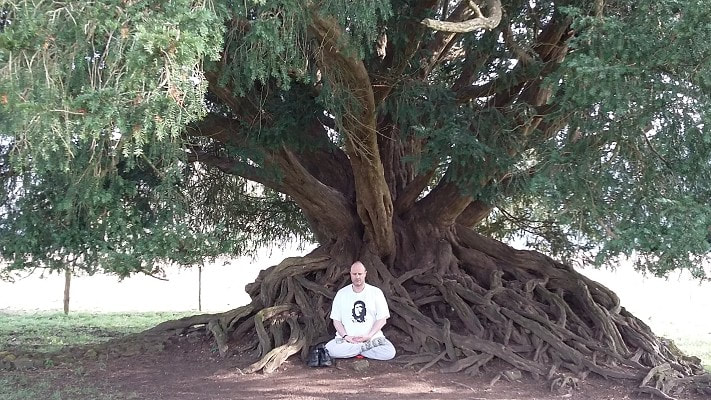
The point is to realise the empty mind ground – here and now – and not be distracted by other thoughts that would divert the practitioner away from this vital objective. On the one hand, there is the cycle of the external world, which quite often requires a type of timed ritualistic behaviour, and then there is the imminant need to focus the attention firmly within, and directly perceive the all-embracing empty mind ground. Which is it to be, outer convention or inner revolution? For Ch’an, the direction is clear – nothing else matters other than the realisation of the empty mind ground. This is the caee despite all living Ch’an Masters occupying a living body that inhabits the material world. The facilitator of the empty mind ground must live by eating, wearing clothes, living within a building, and earning a living, etc. All these things, which includes social, cultural, and political interactions, turn-out to be vitally important on the one-hand – and completely pointless on the other. And yet some type of anchorage in the material world must be established if Ch’an is to be effectively taught. This is a paradox that possesses no single answer. There is no blue-print or set manner in response to this need. How a Ch’an teacher manifests – is how they manifest – and that all depends on the personal situation of the teacher in question. A homeless monk, for instance, can effectively teach, as can an ordinary person, or a person in a high position. Status does not matter. That is merely a necessary window-dressing. What is important is that those who are searching for the empty mind ground must also understand that the expedient circumstances of an effective teacher are irrelevant – if the student can effectively grasp the huatou and decisively “look within”. The reason externality does not matter at this point is that to be overly concerned with externality is to fall into the trap of “attachment” as taught by the Buddha. Attachment to externality is to be ensnared in the distraction of a sideways thinking that diverts from “looking within”. Non-attachment dissolves part of the habitual power of delusion and assists in the clearing of many barriers to achieving inner awareness and profound insight. Of course, once the empty mind ground is fully realised – and the form and void integrated – then the state and function of the external world can be altered for the better using “wisdom” – if such an alteration is required. By 2004, I was discussing with Richard Hunn about the possibility of him relocating back to the UK and living in Sutton – in the same street as my family. At that time, things were very good in the UK, and this idea was a very real possibility. Richard Hunn had lived in Japan since 1991, and had achieved every one of his primary (academic) research objectives. Furthermore, after 13-years in Japan – Richard was beginning to yearn for a return to his native English culture. Not only this, but he very much appreciated the Anglo-Chinese set-up we had going in the Sutton area. The perfect integration of English and Hong Kong culture. Richard Hunn had been teaching English in Kyoto whilst researching the roots of Chinese Ch’an in Japan. This research had been more or less completed by 2004. Richard wanted a return to tea, fish and chips, and Chinese cooking! The problem was that he started to experience alarming health episodes which started off as apparently minor, but got steadily worse - until the terrible diagnosis of terminal cancer during late 2005. Richard opted to stay in Japan and adjust himself to circumstance. This he did until his final breath - taken during October 1st, 2006, whilst sat-up meditating in a Kyoto hospital bed.
0 Comments
Dear A A story that sometimes comes to mind is something Richard Hunn once told me whilst visiting the UK (from Japan) in the early 2000s. He said that at one time in his life, he was living in a bed-sit - but one where other members in the house used to "walk" through his room during the day or night to access the toilet and kitchen, etc. He said that he used the situation to apply the huatou properly and to a greater depth - outside his comfort zone. He described the people entering, traversing, and leaving his living space as "waves" of phenomena arising, stabilising, and falling apart. He was able to distance himself from his physical surroundings as for most of the time, there was no urgency to "respond" to - or "interact" with - the people or circumstance. He was able to detach from the material circumstances around him - and "look within" - toward the empty mind ground. This is similar to the monastic position where everything is strictly controlled in the monastery - essentially an eternally repeating regimen where all basic needs are met - freeing the mind to move its awareness from the "outside" world to the "interior" of perception. Of course, this changes slightly with the hermit - who might live in a cave, at the foot of a tree, a hut, or some other remote place - free from any external support mechanism. Usually, a young monk trains in a monastery (where everything is provided) and progresses to living alone (with no support mechanisms). Perhaps this is a progression to moving away from predicting or relying on preconceived outcomes. Lay and monastic are two-sides of the same coin with the empty mind ground underlying both manifestations (Vimalakirti). Again, "Neither attached to the void - or hindered by phenomena". The question becomes one of path of access - but the method (returning thoughts to their empty essence) is the same. Within China, the "Dao" (Way) is used interchangeably to refer to the "path" and the "destination". Sometimes, this distinction is subtle and the nuance is lost in translation. Still, Charles Luk, who read copious amounts of Daoist texts, and was of the opinion that the Dao De Jing is the essence of all Daoist teaching. Placing the opening chapters into into a coherent and relevant English-language context is still an ongoing process. Many shuffle the words around - copying one another's translations. The assumption is that what came before is "correct" and that these conventions simply require re-organising. The problem is that these "assumptions" may not be correct, precise, or even relevant. First principles must be re-established time and time again as a better understanding develops. Many are surprised, as they understandably work from a select number of translations - forming an integrative understanding - but when they see the original Chinese text and look at the literal meaning, quite often there is a slippage of meaning. The problem with personal development within Ch'an is the detaching from the external, the penetrating of the empty mind ground within, and then the integration of the two - which is easier said than done. Many ignore this difficulty as its recognition might take away the momentum of developmental purpose. Even after penetrating the empty mind ground - and when living in the material world - "klesa" (defilements) bubble-up in the mid-mind (that is the cognitive space between the empty mind ground and the material world of perception in the fore-mind) as responses to phenomenal reality. These reactions, as you know, are good, bad. and neutral, and the bread and butter of everyday life. In other words, the waves of "change" are incessant, ongoing, and never-ending.As they unfold - we change and mature. Experience equals process. It is interesting that when people meet - they swap stories of "change" - perhaps this is the currency of human communication - and the reason the ancient Chinese people developed an entire Classical Text dedicated to its interpretation. The main text of the Book of Change (Yijing) the oldest parts - do not use the term "Dao" - which begins with the Commentaries associated with Confucius (or his disciples and followers - perhaps even relatives). I suppose everything has an origin. Best Wishes
Adrian What about the dishonest, the the lying and the deceptive? What happens when such people 'pretend' to seek Ch'an instruction, guidance or clarification? Generally speaking, this is not a problem. If the Ch'an Teacher, Master or Guide has realised the (enlightened) 'host' position, that is the 'empty mind ground', then the questioner - regardless of their apparent 'honesty' or 'dishonesty' - simply represent the (deluded) 'guest' position, and no further explanation is required. The 'honesty' and/or 'dishonesty' of the enquirer means absolutely nothing as the moral-tone of the words such individuals use are all subject (without exception) to being 'returned' to their essential source. The Hua Tou method does not discriminate or support any form of dualistic thinking or acting. The 'enlightening' function is performed by all genuine Ch'an Masters automatically turn ALL words, regardless of the moral orientation of the enquirer, back to their empty essence. When the enquirer is subjected to this process in an appropriate manner, then all delusive constructs 'drop-away' never to arise again. The genuine Ch'an Master is indifferent and can laugh, smile, remain silent or chastise as the need arises. What matters is the realisation that there is NO action the 'guest' can take which will disrupt the 'host'! When the 'host' rests in the 'host' - the trivialities of the 'guest' have NO place to abide or function! Therefore, those who approach - 'approach' - and when 'struck-down' - they 'leave'. Nothing changes in the reflection and there is NO undue movement in the situation.
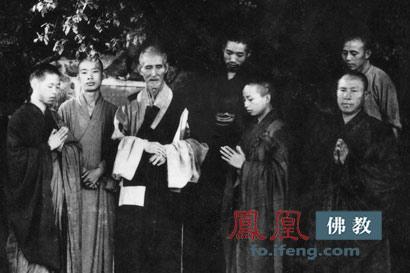
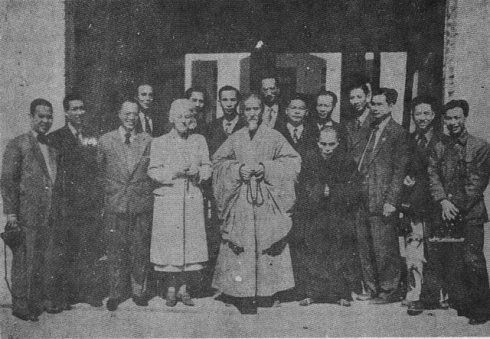
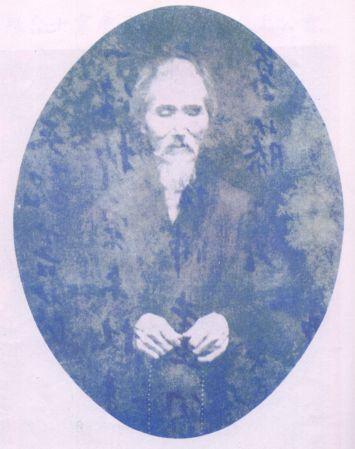
‘We are here to inquire into the hua-tou which is the way we should follow. Our purpose is to be clear about birth and death and to attain Buddhahood. In order to be clear about birth and death, we must have recourse to this hua-tou which should be used as the Vajra King’s precious sword to cut down demons if demons come and Buddha’s if Buddhas come so that no feelings will remain and not a single thing (Dharma) can be set up. In such a manner, where could there have been wrong thinking about writing poems and gathas and seeing such states as voidness and brightness? If you made your efforts so wrongly. I really do not know where your hua-tou went. Experienced Chan monks do not require further talks about this, but beginners should be very careful.’ Master Xu Yun (113-114 years-old) - Ch’an Week - 1953-1954 – Fourth Day - Jade Buddha Temple (Shanghai) Master Xu Yun never wastes a single word. This is because he is never confused as to the origin of a single thought. Master Xu Yun exists (psychologically and physically) within the permeant realisation of the empty mind ground. According to the historical (Indian) Buddha, ‘life’ as we experience it is unsatisfactory, seldom stable and prone to disappointment and ultimate dissolution. Physical life begins through the chemical explosion of conception, and ends when the body naturally shuts-down (during biological death), or is extinguished early through accident, illness or disaster, etc. Master Xu Yun lived through many such episodes throughout his extraordinarily long life (of two-cycles of the Chinese Zodiac). He lived within the space of the enlightened mind as explained in the Surangama Sutra. This is described as a round, all-embracing mirror that sees everything and rejects nothing. Like the sun – such a realised state shines on everything equally – bringing light and loving kindness to all phenomena whilst clearly distinguishing between this and that. This is why Master Xu Yun described the enlightened state as being ‘this and thus’ in his final years. What many believe to be exalted states experienced when training in methods of self-cultivation, are nothing more than marks of progression and subtle expressions of delusion that must be ruthlessly ‘cut-down’ without hesitation. Buddhas in the mind are only shadows in the imagination, nothing else. Being obsessed with a shadow is not the realisation of ‘enlightenment’ but just more delusion indulged in a more favourable direction. These achievements signify spiritual ‘dead-ends’ that many reach and mistake for the state of ultimate ‘enlightenment’. Practitioners then become satisfied to remain in these dark corners of the imagination and to lead all other into the same cul-de-sac of doom! When attachment mixes with a false attainment, then an individual will not be able to move-on for very long extended periods of time. All is lost as darkness replaces light – and ignorance dominates genuine wisdom. This quagmire can be avoided or escaped simple by applying the hua-tou correctly and effectively. What was once inevitable instantaneously ‘melts’ away as the hua-tou detaches the mind’s faulty awareness from this delusion and turns it toward the empty mind ground. This demonstrates the power of a) delusions to fool and distract the mind, and b) for the hua-tou method to quickly resolve this issue. The hua-tou is a very effective method of self-cultivation now only found in the Chinese Ch’an School of Buddhism (and the various lineages that have spread to other countries). Looking within is a matter of proper view – nothing else. Looking correctly will reveal the empty mind ground – looking incorrectly will reveal the delusion of the mind which cannot be escaped. Settling the body and directing the awareness is more important than all the passing phenomena of the external world (good or bad) - and has nothing to do with existential circumstance. This is why Ch’an is both difficult and easy.
|
Archives
June 2025
Categories
All
|
RSS Feed