|
Master Xu Yun (1840-1959) was adamant that everyone follows the Vinaya Discipline. Of course, although the Buddhist monastics have to follow all the hundreds of rules – the laity have to follow fewer (minus the ‘celibacy’) rules – but those that are followed are still ‘Vinaya’ rules. This is as well as the Bodhisattva Vows - which monastics and laity generally follow (as they do not demand ‘celibacy’). Therefore, a firm ‘moral’ (Sila) base is established that limits bodily movements and assist in the ‘stilling’ of the mind. Buddhist morality advocates psychological and moral ‘non-attachment' to worldly sensation. This in-turn prevents a stimulation of the mind that generates and encourages greed, hatred and delusion. With the three-taints ‘cut-off’ - the practitioner can effectively focus all their efforts upon looking within and realising the empty mind ground. Furthermore, there is a belief within Buddhist culture that by following a morally pure existence an individual guarantees a good rebirth either as a human-being or in one of the divine ‘heavens’ reserved for people who have acquired very good karma but who are not yet enlightenment. Taking this model into account, a devout ‘Buddhist’ guarantees a future rebirth free of the suffering generally associated with the lower realms of demi-gods, spirits and hungry ghosts, etc. Simply following moral rules, however, does not guarantee enlightenment even if it does generate a morally pure behaviour and conduct. Unless a Buddhist practitioner ‘looks’ firmly and carefully into the interior of the mind – and perceives the empty mind ground – no mind-development can take place. This means that although following arbitrary rules of conduct creates pure karma – this process in and of itself does not break the practitioner ‘free’ of the ‘samsaric’ cycles within which humanity in trapped. Just as the moral force of good karma eventually runs-out – an individual is then propelled back into the lower realms of existence to start the process all over again. This means that ‘suffering’ is transformed in a number of ways – but is never transcended and overcome. The Buddha’s path requires that the ridge-pole of karmic ignorance is permanently ‘broken’ once and for all, and for this to happen, morally purifying action must be undertaken so that the Buddha’s meditational methods can be fully applied in an efficient manner. If a person immorally behaves in the world and reinforces greed, hatred and delusion, then no amount of meditation will ‘uproot’ the three-taints and ‘clear’ the surface mind. Indeed, in such a situation, meditation in such a situation might well have the effect of strengthening and magnifying the three-taints and making their presence ever more obvious and domineering! Precepts, therefore, only work if the attention of the mind is firmly ‘turned within’ so that the meditator can clearly perceive the underlying reality of the empty mind ground. This is the exercising of the ‘Mind Precept’ as taught by Master Xu Yun and which is part of the Caodong Ch’an tradition. This is clearly explained throughout the Vimalakirti Nirdesa Sutra whilst never being mentioned by name. Unless the Buddhist method is being firmly applied to the mind – then all the precepts are relegated to ‘karma-purifiers’ and lose their enlightening function as ‘mind-realisers’. The hua tou and the gongan, for instance, are Ch’an methods for effectively ‘looking within’ - and it is through ‘looking within’ that the ‘Mind Precept’ is established. The empty mind ground is the essence of a) the mind and b) all phenomena. This means that all the hundreds of precepts of the Vinaya Discipline have the empty mind ground as their origination – with the understanding that this can only be known by ‘looking within’ and realising it as being so. By ‘looking within’ - the surface mind is ‘stilled’ and greed, hatred and delusion is fully and permanently ‘uprooted’. The emptiness of the mind eventually expands and becomes ‘all-embracing’ as it envelops all phenomena. This is how the ‘Mind Precept’ underlies all precepts and should serve as the foundation of genuine Buddhist self-discipline.
0 Comments
Dear Venerable
We must navigate our way through the tangle of worldly pathways until it is time to transition to whatever comes next (if anything). I always remember your kind postcards and inspiring emails. You certainly seem to possess a sincere and deep connection with the Dharma. Master Xu Yun (1840-1959) would have been intrigued by your commitment, energy and ongoing Dharma-work! He always thought about the West and how the Dharma could be spread to help the ordinary people. This is probably because he met a surprising number of Western people during his very long life! I have spent a number of years carefully working my way through old Chinese texts and making extensive notes - keeping an eye on the dates and times, as well as the locations and the individuals involved. Every time I add up the years and cross-reference the dates and locations - the chronological age of Master Xu Yun always comes to 119-years-old - with him dying within (and during) his 120th year of life! I was once contacted by a Western scholar who was determined to prove Master Xu Yun's age 'wrong' and to suggest Master Xu Yun was 'lying'. He provided a photograph of an engraved tomb-stone in China which appear to suggest that Master Xu Yun was born in or around 1859! I located this stone and flew-out to China with permission to investigate. It transpired that once the moss and dirt was cleaned away - the date actually said '1839' rather than '1859'! The Chinese language numbering had been completely obscured but when restored it read '一千八百三十九' or more specifically the '20th year of the reign of the Emperor Daoguang'. This suggests that the Western solar years 1839-1840 span the single Chinese lunar year which began on February 3rd, 1840 (which was the 'Metal Rat'). However, the Emperor Daoguang ascended the throne on October 3rd, 1820 - whilst Master Xu Yun was born on August 26th, 1840 (according to Charles Luk's calculations). This is probably an editing error and should read 'August 29th' according to my research. As '1820' is counted as 'year 1' of Emperor Daoguang's reign (meaning that '1839' is year twenty of his reign) - it follows that any date before 'October 3rd' 1840 falls within the twentieth year of Emperor Daoguang's reign - and therefore Master Xu Yun was indeed born in the twentieth year of the reign of Emperor Daoguang. If he had been born on or after October 3rd, 1840, then Master Xu Yun would have been born during the twenty-first year of the reign of Emperor Daoguang! You are probably aware that within Chinese culture, when a baby is born - he or she - is already considered 'one year's old'! This habit of counting the first year as 'one' was used in dating and measuring reigns, etc, with another year added to a person's life when they died (out of respect)! With Metta Adrian The Buddha recognised that all physical bodies are born, exist and then die. This logical observation serves as the foundation of the Buddha’s Teaching. It is an inevitable process that every living-being must experience. An individual will be born, will live their life in any number of ways, and will then pass away through natural (old age) or unnatural (illness, injury or accident, etc) causes. According to the Buddha, the state of an individual’s mind is responsible for the ‘willed’ (volitional) actions performed through the body. The frequency of these decisions can be ‘healing’ and ‘compassionate’ or ‘debilitating’ and ‘horrible’ - it all depends upon the past conditioning (karma) of the individual mind (and body). By permanently ‘stilling’ (and ‘expanding’) the mind, all karmic production is eradicated. This is a moment of karmic purification of mind and body. The ‘ridge-pole of ignorance is destroyed forever’ as the Buddha states in the Dhammapada. This is the experience of nirvana whilst still inhabiting a human-body – and when death arrives the body will ‘fall away’ - revealing the state of experiencing ‘nirvana’ without inhabiting a body. Through adhering to the Vinaya Discipline – this strict regulation of the mind and body in the environment has a beneficial effect with regards to health. This is because every rule is designed by the Buddha to ‘remove’ a particular negative (karmic) trait that causes ‘suffering’ in the mind and body of the individual and which permeates out into the environment if not ‘checked’ through the deployment of purposeful discipline. This is how the Buddha strives to reduce suffering in the mind and body of the individual (and in the world). This process is cemented by emptying the mind of greed, hatred and delusion – whilst directly ‘perceiving’ the empty essence of the perceiving (and ‘non-perceiving’) mind. This is how the Buddha strives to eradicate all ‘illnesses’ (and illness generating ‘delusion’) from the mind, body and environment through the application of a strict discipline. This is why Master Xu Yun (1840-1959) was of the opinion that the Vinaya Discipline is a vital (foundational) element of ALL genuine schools of Buddhism – and refused to follow the example of Japan in ‘abolishing’ the Vinaya Discipline as a guide for monks and nuns. If a person wants to live longer and in a healthier manner – then follow the Vinaya Discipline!
‘We are here to inquire into the hua-tou which is the way we should follow. Our purpose is to be clear about birth and death and to attain Buddhahood. In order to be clear about birth and death, we must have recourse to this hua-tou which should be used as the Vajra King’s precious sword to cut down demons if demons come and Buddha’s if Buddhas come so that no feelings will remain and not a single thing (Dharma) can be set up. In such a manner, where could there have been wrong thinking about writing poems and gathas and seeing such states as voidness and brightness? If you made your efforts so wrongly. I really do not know where your hua-tou went. Experienced Chan monks do not require further talks about this, but beginners should be very careful.’ Master Xu Yun (113-114 years-old) - Ch’an Week - 1953-1954 – Fourth Day - Jade Buddha Temple (Shanghai) Master Xu Yun never wastes a single word. This is because he is never confused as to the origin of a single thought. Master Xu Yun exists (psychologically and physically) within the permeant realisation of the empty mind ground. According to the historical (Indian) Buddha, ‘life’ as we experience it is unsatisfactory, seldom stable and prone to disappointment and ultimate dissolution. Physical life begins through the chemical explosion of conception, and ends when the body naturally shuts-down (during biological death), or is extinguished early through accident, illness or disaster, etc. Master Xu Yun lived through many such episodes throughout his extraordinarily long life (of two-cycles of the Chinese Zodiac). He lived within the space of the enlightened mind as explained in the Surangama Sutra. This is described as a round, all-embracing mirror that sees everything and rejects nothing. Like the sun – such a realised state shines on everything equally – bringing light and loving kindness to all phenomena whilst clearly distinguishing between this and that. This is why Master Xu Yun described the enlightened state as being ‘this and thus’ in his final years. What many believe to be exalted states experienced when training in methods of self-cultivation, are nothing more than marks of progression and subtle expressions of delusion that must be ruthlessly ‘cut-down’ without hesitation. Buddhas in the mind are only shadows in the imagination, nothing else. Being obsessed with a shadow is not the realisation of ‘enlightenment’ but just more delusion indulged in a more favourable direction. These achievements signify spiritual ‘dead-ends’ that many reach and mistake for the state of ultimate ‘enlightenment’. Practitioners then become satisfied to remain in these dark corners of the imagination and to lead all other into the same cul-de-sac of doom! When attachment mixes with a false attainment, then an individual will not be able to move-on for very long extended periods of time. All is lost as darkness replaces light – and ignorance dominates genuine wisdom. This quagmire can be avoided or escaped simple by applying the hua-tou correctly and effectively. What was once inevitable instantaneously ‘melts’ away as the hua-tou detaches the mind’s faulty awareness from this delusion and turns it toward the empty mind ground. This demonstrates the power of a) delusions to fool and distract the mind, and b) for the hua-tou method to quickly resolve this issue. The hua-tou is a very effective method of self-cultivation now only found in the Chinese Ch’an School of Buddhism (and the various lineages that have spread to other countries). Looking within is a matter of proper view – nothing else. Looking correctly will reveal the empty mind ground – looking incorrectly will reveal the delusion of the mind which cannot be escaped. Settling the body and directing the awareness is more important than all the passing phenomena of the external world (good or bad) - and has nothing to do with existential circumstance. This is why Ch’an is both difficult and easy.
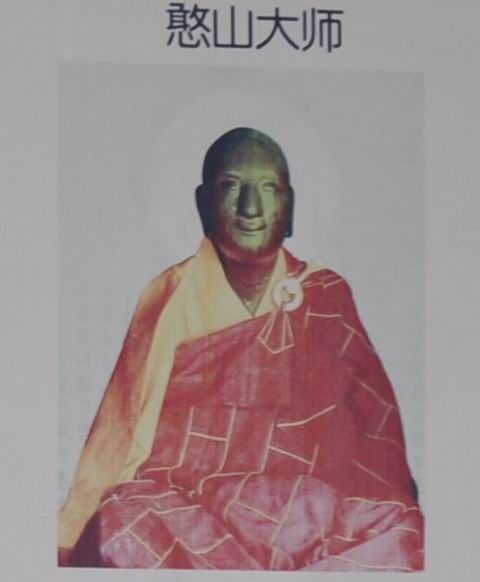
A ‘Personal’, or ‘mind to mind’ transmission is described as follows. Enlightenment is the realisation of the empty mind ground (relative enlightenment) - and the integration of this realisation of with all phenomena (full enlightenment). An enlightened being (or ‘Bodhisattva’) is neither attached to the void or hindered by phenomena – a reality that ‘deepens’ in maturity as the years go by. Transmission is the recognition by an enlightened master that a disciple has realised this state, and is therefore able (and ‘authorised’) to teach others to realise this state. A ‘Supportive’ transmission, by way of contrast, is designed to ‘assist’ and ‘uplift’ a practitioner in preparation for the achievement of ‘relative’ and ‘full’ enlightenment, and to transition into a ‘Personal’ transmission should an individual achieve a suitable status of realisation. Master Han Shan Deqing [憨山德清] (1545-1623) may be taken as a reliable model of a Ch’an monk who realised full self-enlightenment (confirmed through the guidance found in the Surangama Sutra). Master Xu Yun (1840-1959) inherited the Dharma-Name ‘Deqing’ (德清) - or ‘Virtuous Clarity’. Master Han Shan understood that ‘sound’ was only perceptible through a ‘subject’ - ‘object’ duality when the mind ‘moved’. When the mind was ‘stilled’, all perception came to an end for the realisation of ‘relative’ enlightenment’. From this position, and following a period of further training, Han Shan’s mind appeared to ‘expand’ and embrace the entire environment (full enlightenment) - a luminous state within which the mind becomes like a mirror and reflects all things. Another text designed to assist the self-enlightenment process is the Vimalakirti Nirdesa Sutra – within which the enlightened layman – Vimalakirti - ‘corrects’ the Buddha’s monastic disciples who have only realised the state of ‘relative’ enlightenment. Through his ‘supportive’ presence and influence he provides the outer and inner conditions (and expert stimulus) to ‘assist’ these monks to ‘move beyond’ their own limited achievements. Vimialakirti’s example is the ‘essence’ of the Guild of Hui Neng’s ongoing Cao Dong transmission. ACW (5.10.2020)
The paradox of the Chinese Ch’an tradition is that it expects lay-people and monastics alike to realise full enlightenment - ‘here and now’. What does this mean? Regardless of the circumstances of an individual’s life, the insight capacity of the mind must be turned inward with such a high degree of focus and precision, that perception is permanently ‘altered’ so to ‘see’ and ‘understand’ more than what was understood before. Being a Buddhist monastic is no guarantee of success in realising enlightenment, just as being a lay-person should be no barrier. Individuals will learn at their own pace and in their own way, with all kinds of psychological and physiological factors coming into play (traditionally referred to as ‘personal karma’). The ‘language of the uncreate’ is unique to Chinese Ch’an Buddhism and uses language in such a way that does not allow the habitual ‘dualism’ of conventional communication to come into play during an ‘enlightening’ interaction or dialogue. The convention of ‘dualism’ preserves delusive states of mind, and prevents clarity of insight from developing. This is why Ch’an masters (in ancient times) developed this mode of non-communication, although when Master Xu Yun (1840-1959) taught during the 19th and 20th centuries, he often used a modern example of logic and reason to describe the history, method and purpose of the Ch’an School. Indeed, whilst encouraging his disciples to fully penetrate (and realise) the empty mind-ground, he would often warn against the cultural habit of many people attending Ch’an Week Retreats to descend into ‘mystical’, or ‘nonsensical’ states of mind, each of which was nowhere near the authentic realisation of the empty mind ground! Uttering nonsense about ancient masters, does go much beyond the nonsense being uttered! However, once the empty mind ground is realised, then every word spoken by the Buddha is understood exactly and clearly, as is every odd action and utterances of the ancient Ch’an masters!
What happened next? Richard Hunn had talked about separating the ‘bodhis’ from the ‘klesas’ - but like much of his method, a pristine insight was delivered through a typical British sense of humour. He also said that an individual must not be attached to the void nor hindered by phenomena, and that an indeterminate period of further training was required. Within Ch’an training, often it is the case (but not always) that ‘klesa’ still bubble-up to the surface of the mind post-enlightenment, where they can be harmlessly ‘dissolved’ through the power and strength of meditative insight (prajna). What are ‘klesa’? Klesa are psychological and emotional distractions of various strength, thought to be the product of eons of generating thoughts premised upon greed, hatred and delusion, through the filter of subject-object duality. In modern terms, this is the disrupting (and potentially damaging) reactions in the mind that respond to, and condition further actions and reactions in the physical environment. If a strictly scientific analysis is applied, klesa are the negative thoughts and feelings that cause distress to an individual that have been imported into the interior of the personal mind from the conditioning elements of the collective environment since birth. The Buddha states that a type of rebirth (but not reincarnation) operates within his system, whilst also asserting that at the point of enlightenment (viewed as the stage of ‘relative enlightenment’ as recorded by the ‘3rd’ position of the Caodong School) all rebirth ceases (as the ridge-pole of ignorance is forever broken), and is understood to be non-existent. Therefore, within the enlightened state, rebirth does not exist and only APPEARS to exist in the unenlightened state (probably because it was a common belief in India when the Buddha was alive). Of course, ‘rebirth’ can be imagined as existing as virtually everything can. In this scenario a vivid depository of thoughts may exist in the mind apparently linked to other existences, and this is an experience I have had during meditation (seeing previous existences in China), recognising friends and family around me today, as characters previously existing in bygone lifetimes in different places. The Ch’an method interprets all this as delusion which must be ‘given-up’ if the empty mind ground is to be realised. From 1992 until today (2019) I have been adjusting myself to circumstance. Physical existence appears to be happening within a glowing luminosity, an empty three-dimensional space or void that contains all things. Material objects and the physical world appear real in their own right, but inhabit this infinite, vacuous reality without hindrance or contradiction. Thoughts and feelings yet again move across the surface of the mind but are now both in the ‘present’ and yet fully ‘transparent’. This flow of conscious paraphernalia is no longer hindering or obscuring, but a natural part of physical existence. It no longer possesses historical roots, but appears purely existential in nature (linked entirely to my present and unfolding existence). As time goes by I find myself becoming ever more deeply ‘aware’ of this reality and its processes.
There is always the ever-present trap of too many words, but there is also the reality of not enough. It is a question of knowing when to combat ignorance, check its progress and uproot its many premises, and when to allowing it a certain tactical growth for easier (later) disintegration. Ego exist in the dark corners of Buddhism where it masquerades as wisdom. Much of this spiritual materialism has its roots deeply ensconced in the Japanese Zen and Chinese Ch’an community in the West. Those lauded as authorities mimic the ethnic Asian culture they have an interest in, and spend their time taking on Asian names, wearing robes and assuming various airs and graces without ever penetrating and realising the empty mind ground. Such people dominate the business world (whilst pretending to be free of it) as they extend their ignorance through the power of commerce. Flying backwards and forwards from China may collect the air miles, but it means nothing on the meditation mat. I am not your friend and even less your enemy, but I am charged with making available (free of charge) any and all Chinese Ch’an teachings to you, and raise the level of consciousness in the West. Master Xu Yun (1840-1959) gave me this task, passed on via Charles Luk (1878-1978) and Richard Hunn (1949-2006), and further authority has been accumulated from various Ch’an temples, monastics and lay practitioners in modern China, as well as receiving encouragement from the Government of China. Of course, I could do without this duty and would prefer to enjoy my middle age in an insular manner, but the love and compassion I have in my heart for humanity and ALL living beings prevents this kind of selfishness.
|
Archives
June 2025
Categories
All
|
RSS Feed