|
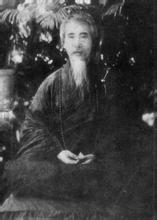
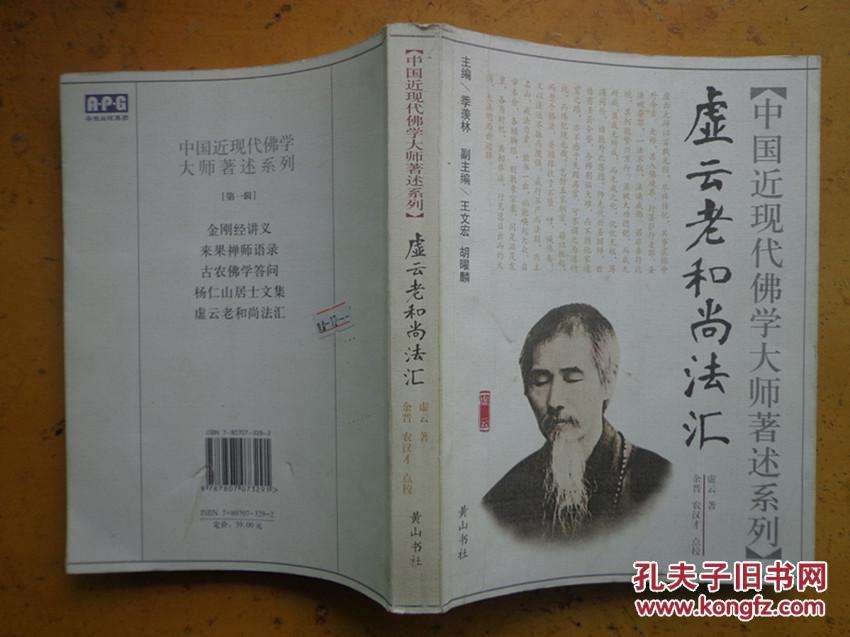
The Buddha recognised that all physical bodies are born, exist and then die. This logical observation serves as the foundation of the Buddha’s Teaching. It is an inevitable process that every living-being must experience. An individual will be born, will live their life in any number of ways, and will then pass away through natural (old age) or unnatural (illness, injury or accident, etc) causes. According to the Buddha, the state of an individual’s mind is responsible for the ‘willed’ (volitional) actions performed through the body. The frequency of these decisions can be ‘healing’ and ‘compassionate’ or ‘debilitating’ and ‘horrible’ - it all depends upon the past conditioning (karma) of the individual mind (and body). By permanently ‘stilling’ (and ‘expanding’) the mind, all karmic production is eradicated. This is a moment of karmic purification of mind and body. The ‘ridge-pole of ignorance is destroyed forever’ as the Buddha states in the Dhammapada. This is the experience of nirvana whilst still inhabiting a human-body – and when death arrives the body will ‘fall away’ - revealing the state of experiencing ‘nirvana’ without inhabiting a body. Through adhering to the Vinaya Discipline – this strict regulation of the mind and body in the environment has a beneficial effect with regards to health. This is because every rule is designed by the Buddha to ‘remove’ a particular negative (karmic) trait that causes ‘suffering’ in the mind and body of the individual and which permeates out into the environment if not ‘checked’ through the deployment of purposeful discipline. This is how the Buddha strives to reduce suffering in the mind and body of the individual (and in the world). This process is cemented by emptying the mind of greed, hatred and delusion – whilst directly ‘perceiving’ the empty essence of the perceiving (and ‘non-perceiving’) mind. This is how the Buddha strives to eradicate all ‘illnesses’ (and illness generating ‘delusion’) from the mind, body and environment through the application of a strict discipline. This is why Master Xu Yun (1840-1959) was of the opinion that the Vinaya Discipline is a vital (foundational) element of ALL genuine schools of Buddhism – and refused to follow the example of Japan in ‘abolishing’ the Vinaya Discipline as a guide for monks and nuns. If a person wants to live longer and in a healthier manner – then follow the Vinaya Discipline!
0 Comments
St Anthony (251-356 CE) is considered by many theological commentators as being the founder of Christian monasticism – despite the fact he was not the first Christian hermit – and admits seeking instruction from an old man who lived on the edge of a nearby village. Although being from Egypt – the Catholic Church makes a point of him supposedly being ‘White’ - with ‘Whiteness’ being presented as ‘good’ and ‘Blackness’ (the skin-tone of the average indigenous African) being firmly associated with ‘evil’! (Although to be fair, my Christian colleagues state that ‘Black’ in this context is a ‘figure of speech’ and should not be taken as ‘racial’. My colleague states: ‘See it in the context of Solomon's Song of Songs where bride speaks to her beloved and says "I am black but beautiful''. We are all black before the light of God, God is source of all light, we just reflect to a greater or lesser degree, and it will just be a million shades of black compared to God's light.’ Later, one of the Desert Fathers is described as ‘Black’ and yet considered entirely ‘good’ within Christian texts). Was St Athony the Great ‘European’? He could have been if his parents were the descendants of Greek invaders – and had never mixed with non-Europeans in the six-hundred years since Alexander the Great! St Anthony came from a rich family who seem to have been Christians. After selling all his belongings and giving the money away to the poor, he left mainstream society to live on the periphery of society – rather like a homeless person today – who has been failed by the Bourgeois State and the capitalist system, although in the case of St Antony, the poverty he embraced was a totally voluntary endeavour. It would appear that despite his prosperous background – St Anthony was illiterate and did not read or write (he did not leave any writings of his own – but we know he existed by others writing about his life and teachings). Perhaps his supposed Greek parentage (oddly) did not put too much value in their child learning to read and write – two skills very much at the forefront of Greek civilisation. St Anthony the Great was not a Desert Father in the struct sense, although he is often conflated with these later Christian monastics. He never lived in the desert and so cannot be correctly associated with this practice. Of course, Since around 100 BCE (and perhaps even earlier), the Jewish ‘Essenes’ had been living in the deserts of Palestine and frequenting meditation cells hued from indentations in the rock-face. Living a lifestyle very similar to what the Christian Desert Fathers would adopt – the ‘Essenes’ wrote of their experiences in the ‘Dead Sea Scrolls’. St Anthony makes no mention of the Jewish ‘Essenes’ whilst imitating their behaviour. The Christian narrative is that he developed the Christian hermetic lifestyle following a Revelation from God that nothing to do with local history or religious trends in the area. St Anthony literally believes in daemons as manifesting in the physical environment (often as ‘Black boys’), and within as troublesome thought-patterns and emotional responses. Racism aside – St Anthony views any form of ‘modern’ thinking as being the product of daemonic influence or daemonic possession. He dismisses the entire edifice of Greek philosophical thought and scientific investigation - as being the product of ‘daemonic influence’ that has no intrinsic value for humanity whatsoever! Understand how natural processes function is perceived by St Anthony as the indulgence of ‘evil’ by those who seek answers about how the universe works. Such knowledge, St Anthony tells us, only serves to create a barrier between individual humans and the God who he believes ‘made them’ in the first place. As regards agriculture, St Anthony severely criticises anyone or practices ‘farming’ and growths food to sustain the community! Observing the seasons and how one transitions into another – is a manifestation of ‘pure’ evil according to St Anthony! He believes this because God has a set plan for humanity which involves tremendous suffering, death and persecution – and that if human-beings interfere in this process – then God’s will is either water-down or prevented from functioning altogether in the physical world! Yes – humanity is made to pointlessly suffer by God – but in so doing – God is creating the scenario for some of the more deserving’ humans to be ‘saved’ by his ‘grace’. St Anthony tells his disciples that knowledge of how natural processes work amounts to accumulating a ‘pointless’ knowledge that serves no purpose in assisting God to manifest his presence in the world! St Anthony, therefore, is opposed to scientific knowledge and any form of modernistic progression for humanity. This is because such knowledge ‘empowers’ human-beings as individuals and a species – so that humanity no longer requires any direct contact with the God that created them. This is how the Christian Church explains ‘why’ most people in the West today – no longer possess a literal belief in Christianity – or no longer subscribe to traditional, theological interpretations of the world. In this sense, St Anthony was very good ‘at not learning anything’. It is one thing for an individual to embark on a path of subjective (internal) development that requires the complete ‘emptying’ of mind - of its patterns of historical conditioning (as is common within Buddhist and Daoist self-cultivation) - but it is quite another to insist that the entirety of society (and the progression of humanity as a species) should also be ‘limited’ to this ‘emptying’ in the socio-economic sense – if, indeed, that is what St Anthony is saying. Imagine a modern world without ‘science’, ‘education’ and ‘medicine’! Think also of the ‘good’ these developments have achieved for the benefit of humanity! I would say that the enlightenment that St Anthony is striving for equates with the third position of the Cao Dong (Soto) School of Chinese Ch’an Buddhism. When viewed from this perspective, then even in China it is not uncommon for Ch’an adepts to leave society and ‘reject’ the world and go and live in the remote valleys or isolated hill-tops until they are clear about the ‘empty’ essence of their minds. After a period of further training – such adepts enter the fourth and fifth stages of Cao Dong realisation (which are stages of ‘no stages’) - where they are instructed to (permanently) integrate their (pristine) ‘empty’ inward state with their material surroundings. This is the spiritual interfacing with the material ‘as it is’. Of course, some Ch’an Masters used their enlightened wisdom (like the Buddha) to protest about injustices and to defend the weak and innocent – whilst others lived as unknown beggars under bridges or on river-banks, etc. We do not have to permanently ‘reject’ the outer world to be spiritual – even if on occasion we like to take a break from its nonsense!
Charles Darwin’s theory of evolution through natural selection is elegant. Sometimes individuals mistakenly assume that evolution moves only in one direction only – as if for change to be valid it must be ‘progressive’ in a non-stop trajectory of development. The reality is something quite different. In fact, evolution occurs just as much by ‘regression’ as it does by ‘progression’ - such is the random nature of its unfolding. The human big-toe, for example, is actually a ‘deformed’ thumb similar that found on the human-hand today. At one time in human development, an early version of ‘us’ could climb trees and hold onto branches with the minimum of effort early in our development – similar to chimpanzees and other extant monkeys. However, when early humans took to pedal walking upright (along the ground), the thumbs on the ‘lower hands’ quite literally ‘devolved’ into a far more rigid ‘toe’ to aid balance and stability whilst standing, walking and running on two legs. This development ‘freed’ the human-hands to develop all kinds of dextrous activities which resulted in tool-making and the beginnings of the transformation of the environment. Positive developments within human evolutionary development, therefore, are not always ‘progressive’, and yet such ‘negative’ changes make way for some quite stunning improvements in human-activity and thought-processing, etc. This observation can be applied to the individual with regards self-cultivation. Not every change in life is ‘positive’ or necessarily ‘conducive’ to well-being or progression, and yet if used in an appropriate manner, can be adapted to advance our psycho-physical developments outside of our perceived safety zones. Sometimes, for human-beings to develop more completely, it is the ‘uncomfortable’ and the ‘unthinkable’ that must be embraced and treated like a long-lost friend. To achieve this, as individuals we must bravely advance into situations that usually we would possess no possible reason to be associated with. Many people, living in the modern world, are trained from birth to prefer those situations that confuse them least. Inherently, this also means that we tend to choose to live in situations that challenge us least. In a very subtle manner, we avoid the very challenges and conditions that would develop us the most, if only we allowed ourselves to manifest within them. Fear of failure, fear of suffering and fear of ridicule often keeps us from bravely exposing us to situations whereby we would not ‘voluntarily’ venture. Perhaps it is helping a homeless person covered in lice, urine and excreta, or assisting a disabled person with no social skills. It could be less obvious than this – such as mingling with those who hold intolerable ideological or political ideas. It could be an atheist mixing with a religionists – or a Socialist with a fascist, etc. My point is that sometimes, we must not artificially shut ourselves off from various realities just because we do not ‘like’ or ‘prefer’ them. Compassion and loving kindness work best when applied in situations and circumstance where neither of these attributes are thought to exist. If we firmly understand whatever spiritual, political or social reality we subscribe to, then our reasoning and logic should be so strong that exposure to contradictory ideas and situations should not ‘weaken’ but only ‘strengthen’ our resolve. Difference, although very real and tangible, should not be considered as an excuse for walling ourselves off from expressing a greater love for humanity whilst cultivating an insight into the spiritual essence of all reality. The Daoist sage Zhuangzi once said that a truly enlightened being must be indifferent to praise or blame – surely the only way to test this is to voluntarily enter into situations where we would usually never choose to enter. We must bring ‘light’ to the darkest corners of the Earth through such undertakings!
Dear Ben My personal experience (for what it is worth), appears to suggest to me that the enlightened state can (and is) realised by all and sundry - irrespective of circumstance - even though I fully acknowledge that its attainment is 'rare' even for those who are actively seeking it. When I was on Mount Athos, for instance, (probably around 2001), I met some remarkable Orthodox Christian monks whose ideas were very similar with regards to inner attainment. I also appreciate the beautiful icons of Jesus Christ depicted as an Asian man! In the West, the Christian monastics are the people who 'look within' to a surprising degree - but due to humility - their attainments are virtually unknown. Of course, this is very different to what might be called the 'popular Church' which is only concerned with crass individuality, recruitment (through conversion) and the amassing of wealth! These are the missionaries who did so much damage in Asia in times gone by. I have no time for this type of 'racist' spirituality - but I know that this is not the genuine Christianity and does not represents the ordinary Christian people who are very 'humble' and very 'compassionate'. Where Judaism has assisted me is mostly through superb secular academics who have happened to be of a Jewish ethnicity. I have also lived in Hindu and Muslim families and experienced tremendous caring and compassion - not being asked for a penny even after a year of hospitality! In all of this I do not exclude those who see themselves as 'atheists' (other than 'fascists') - as reality can emerge at the strangest of times. I was once walking who a dense jungle in Sri Lanka (in late 1996) with a bare-footed Buddhist monk. Suddenly, a huge hooded-snake rose up from the ground and was about three or four foot off the ground. It gently looked at me - swaying left and right. The Bhikkhu did not break his stride but walked toward the snake - which slithered up his body and rested its head on his right shoulder! The Bhikkhu then asked me to 'touch' the snake's head - which I did in a type of 'haze'! The snake then dropped to the ground and retraced its slither back into the undergrowth. The monk said he has met this snake for nearly 20-years years and almost in the same spot! The snake wanted to make sure that I understood that this was his path and that the jungle was not 'safe' for inexperienced strangers!
As Spring transitioned into Summer (in 1945) - the Great Maser Huaixi (淮西大师 - Huai Xi Da Shi) wrote an article which made the following observation:
‘One morning, after eating (watery) porridge for breakfast, Master Xu Yun casually commented to a nearby monk: “It is my opinion that the Japanese invaders will definitely fail. I had a dream last night and saw the Japanese kneeling in defeat and asked to surrender to the Chinese government.” Soon after Master Xu Yun made this statement, the Japanese Imperial Army – which had raped and pillaged its way across China since 1931 - announced its unconditional surrender. Acting in accordance with the British, Americans and the Chinese – the Soviet Red Army had entered Northeast China (i.e. the Japanese puppet State of ‘Manchuria’) and like a giant tidal-wave had swept the usually stubborn and fanatical (Japanese) Kwantung Army out of existence! As Master Xu Yun usually took no notice of current (worldly) events, it is interesting that he made this comment. Of course, he was aware of the War Crimes and Crimes Against Humanity committed by the Japanese Imperial Army, as he had lived in the Southern areas of China at the time, and had been amongst the ordinary people who had directly experienced this Japanese barbarity. Indeed, the common people often said that wherever Master Xu Yun was sat in meditation – the Japanese bombs would fail to penetrate! Master Xu Yun was ‘other worldly’ and yet he had to live in this ‘real’ world. He possessed a sharp-mind and despite his compassion, he did not suffer fools lightly. He was a strict task-master who taught his disciples and students through the use of a harsh wisdom and pure discipline. He would ensure that the mind and body would be purified through ‘correct behaviour’ of body, and that greed, hatred and delusion would be uprooted from deep within the mind. Like any good Ch’an master – he could sense arrogance, pride and ignorance, as well as hidden motives and black hearts lurking within potential students. As this corruption is even more prevalent today, not tolerating this ‘klesa’ is a mark of any competent Ch’an teacher. Chinese Language Reference: http://www.youcin.com/shijie/152650210.html ‘...After my death, if you carry out my instructions and practise them accordingly, my being away from you will make no difference. On the other hand, if you go against my teaching, no benefit would be obtained, even if I continued to stay here.’
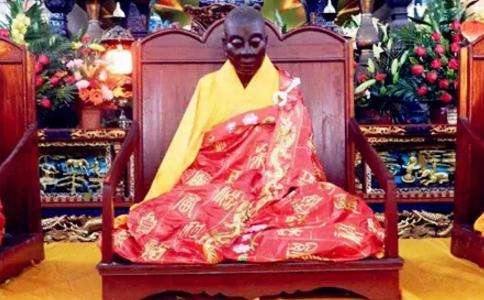
Then he uttered another stanza: “Imperturbable and serene the ideal man practises no virtue. Self-possessed and dispassionate, he commits no sin. Calm and silent, he gives up seeing and hearing. Even and upright his mind abides nowhere.” Having uttered this stanza, he sat reverently until the third watch of the night. Then he said abruptly to his disciples, “I am going now,” and in a sudden passed away. A peculiar fragrance pervaded his room, and a lunar rainbow appeared which seemed to join up earth and sky. The trees in the wood turned white, and birds and beasts cried mournfully. ...The Patriarch inherited the robe when he was 24, had his hair shaved (i.e. was ordained) at 39, and died (sat upright) at the age of 76. For thirty-seven years he preached for the benefit of all sentient beings. Forty-three of his disciples inherited the Dharma, and by his express consent, became his successors; while those who attained enlightenment and thereby got out of the rut of the ordinary man were too numerus to be calculated. The Altar Sutra of Hui Neng (Chapter 10 – His Final Instructions) ‘Mind is the root of the myriad phenomena. All phenomena are born from mind. If you can completely comprehend mind, the myriad practices can completely comprehend mind, the myriad practices are complete.’ Bodhidharma The Western world is attempting to apply the methods of modern science to each of its societies as a means to prevent the spread of a new type of pneumonia. Ordinary freedoms are suspended, commerce curtailed and politics geared toward controlling the situation. Many of us gravitate around our homes – which is the same for the rich as it is for the ordinary – we are all equal when we film ourselves self-isolating on social media. In the Book of Change (Yijing) it advises that in such times there is a ‘darkening of the light’, and we should adjust ourselves to this new circumstance, look within and work on our own shortcomings. This is a time of true and genuine monasticism in its purest sense. The mind should not be allowed to wander or speculate about the outside world. Whilst not catching or spreading the virus, we must use this situation as a blessing and not a punishment. The empty mind ground is always present and underlies all phenomena equally, good, bad or neutral. We can transform even the worst of situations by directly perceiving the empty mind ground ‘here and now’.
Poverty is not a problem, as it limits unnecessary travelling and pointless experiences. I am not saying that poverty is correct, or even preferred, but when it comes to remaining ‘stationary’ and having to study ‘here and now’, having no options premised upon purchasing power can be an advantage. Focusing upon ‘awareness’ here and now is a definite advantage if the objective is to develop meditational insight as the mind exists, rather than being taken with the external world of ever-changing phenomena. Indeed, the Vinaya Discipline is nothing but the acceptance of voluntary impoverishment, and if this reflects or mirrors actual impoverishment, more’s the better. This is because the Buddha rejects wealth premised upon the accumulation of material goods, and instead advocates the accumulation of spiritual insight and loving kindness toward all beings. The giving-up of self allows the individual to experience a new collectively with existence which is freeing, fulfilling and accepting of all difference. We may exercise our economic muscle and travel places to entertain the mind, but this process, although enriching in one sense (like a Viking raid), nevertheless delays the real work of directly facing the essence of the mind as it exists here and now, with all its impurities, depressions, insecurities and dysfunctions. Travelling from one place to another is as the Ch’an masters say – mistaking everything in-front of a horse and behind a cow – for the essence of the mind! Being ‘where we are’ is a powerful weapon in the fight against ignorance and the injustice of the world. No one can take away your profound acceptance of things ‘just as they are’ - as this acceptance in no way equates to ‘agreement’ with the status quo! Outer change, if it is to last, must come from within. The outer structures of society must emerge from the deepest recesses of the mind. How we live as a species must be an outer expression of the deepest functions of the inner psychic fabric...
The Buddha explains clearly, in every expression of his teaching, that consciousness and physical matter are not two different things, even though they may be viewed as two distinct expressions of the same underlying reality. This understanding avoids the traps of ‘idealism’ and gross ‘materialism’, which are both declared errors by the Buddha. It is not that the mind does not exist, or that the physical world does not exist – both definitely do within an interpretive context – but that attachment to one view or the other is unhelpful when it comes to meditational development and the cultivation of wisdom. Furthermore, within the Four Noble Truths, it is clear that ‘consciousness’ in the chain of becoming has ‘physical matter’ as its basis (I.e. matter, sensation, perception, thought formation and conscious awareness). If this was not the case, this chain would read ‘conscious awareness’, ‘thought formation’, ‘perception’, ‘sensation’ and ‘matter’ - but it does not. This is the error made by DR DT Suzuki in his commentary upon the Lankavatara Sutra, which is perpetuated by those who think the Yogacara School is ‘idealist’ - when in fact the founders of this school begin their analysis by firmly stating that they agree with the Buddha when he says that the human mind is ‘impermanent’. Besides, genuine Buddhist training is as much in the mind as it is in the body, with ‘sila’ (morality) being the control of thought and physical behaviour. The ‘stilling’ of the mind is as important as the ‘stilling’ of the body, although the former supersedes the latter with regard to transformation and perception thereof. However, for a human mind to be functional, it must be existent within a living body. As to what might happen ‘before birth’ and ‘after death’, the Buddha remains ‘silent’, with many people utilising the metaphysics of religion to fill in this void...
The body is disciplined so that the mind may be ‘focused’. The Buddha teaches a type of Yoga, or at least a path that is recognisably ‘Yogic’ in origination. One of the first lines of the Patanjali Sutra reads ‘Yoga is the restriction of the fluctuations of consciousness.’ (Feuerstein 1989). Yoga is also an umbrella term used to describe a profound mind and body training that generates a permanent psycho-physical transformation. This is not a ‘subjective’ delusion, as the Buddha warns against this misidentification of inner awareness, and neither is it a hedonistic attachment to external pleasures (or pain) depending upon the conditionality of an individual. The Buddha advocates a non-identification with thought (and feeling), and a detachment from all physical sensation. Although there is a stage whereby the mind becomes free of surface thought (and a ‘stillness’ is experienced), nevertheless, eventually the process of thought is re-born in the mind but in an entirely ‘new’ manner which no longer ‘obscures’, ‘confuses’ or induces any form of ‘suffering’, etc. (The post-enlightenment situation is controversial and open to debate.) Being a ‘Bodhisattva’ requires an individual to become truly ‘universal’ in perception, understanding and empathy. The conundrum of personal suffering must be solved before the suffering of the entire world can be taken on without any form of hindrance. To be a genuine Bodhisattva, is to be able to take responsibility for every single mode of suffering that exists in this world and the worlds beyond. Universal suffering is not limited to only that which humans feel – but necessarily includes ALL suffering everywhere. Furthermore, the committed Bodhisattva willingly takes on the suffering of past, the present and the future. The ‘intention’ is to be with those who are experiencing suffering, and to spiritually offer support and sustenance to help them through that which most would find difficult to experience or even face. How this is to be achieved is entirely dependent upon circumstance as there is no single method that meets all requirements. This is not an easy ability to achieve or function to perform. This is why Buddhist monastics in China take the ‘Bodhisattva Vows’ as well as the ‘Vinaya Discipline’ as part of their spiritual responsibilities. |
Archives
June 2025
Categories
All
|
RSS Feed