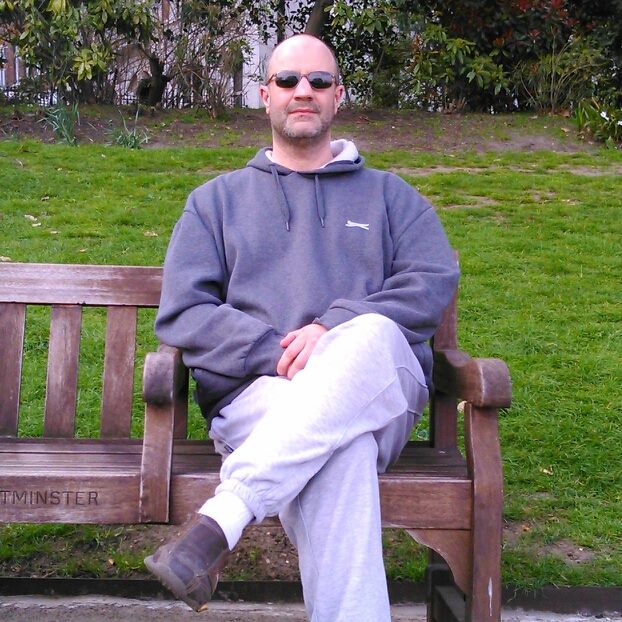
Demystifying the enlightening experience is not a trivialisation of this experience, on the contrary, it is a clarification. As an exercise in logical thinking it also seeks to uproot and exclude the pretensions associated with pseudo-enlightenment and the exploitation contained therein. Is enlightenment a real experience? Yes – in my experience it is – but this statement should not be taken as a support for religion or religious dogma of any sort. It is a subjective experience which marks a radical shift in how an individual consciously perceives and interacts a) with consciousness itself, b) their physical body, and c) the material environment (and everything within it). I used the hua tou method for years (1989-1992) in an intense and dedicated manner, whilst living in relative isolation and receiving instruction from numerous individuals (with the guidance of Richard Hunn proving decisive). What happened? Through seated meditation throughout the day and night, I looked for certainty in a mind that was forever moving. My root consciousness would grasp this fleeting state, or that fleeting state which temporarily passed before it as being ‘the one’, as I had no real knowledge of what I was seeking. The act of regular meditation pursued through a highly regulated and disciplined outer lifestyle granted me security and stability in the physical world, so that I could direct all my available energy into the interior of my being. Endless thoughts and feelings traversed the surface of my mind and led to all kinds of vivid imaginations, usually as opposite and equal responses to the Vinaya Rules. (For instance, a complete lack of sexual activity in word, deed ad thought, led, for a time, to an intensification of thoughts and feelings premised upon ‘desire’). Initially, the surface mind would ‘quiet’ and a dull emptiness would appear – similar to a mirror made dull my smears and layers of still dust. On other occasions, this admixture of filth would manically swirl around. I could sense the true void behind this interchanging activity, but could not quite see through to it. (Later, I learned that this is stages ‘1’ and ‘2’ of the Caodong School methodology). After two years of meditation, and having my words ‘turned’ by Richard Hunn, a major (and permanent) breakthrough occurred. Whereas my words of enquiry were invariably jumping from one aspect of externality to another, Richard Hunn would expertly switch the emphasis away from the external (objective) to which I was attached – back toward the ‘root’ of the word-thought nexus, and into the empty mind ground. He performed this duty for me continuously and without fail. There was no pretence, no attachment to the external world – just Ch’an function returning to principle.
Eventually, after being shown the empty mind ground enough times, my mind-state radically shifted. A deep and profound ‘emptiness’ manifested that was nothing but complete ‘bliss’ to experience – like a continuous sexual orgasm throughout the mind and body, but completely divorced from the sexual function. Richard Hunn explained this as stage 3 of the Caodong School – further describing this awareness as ‘relative enlightenment’. The temptation was to stay in this magnificent state and never come out of it (once described as ‘samadhi suicide’). I could imagine living in a forest or on top of a hill, and permanently experiencing this ‘bliss’ for as long as my physical body existed. However, Richard Hunn warned me against this, and stated that the journey was not yet over. Being attached to this state of ‘oneness’ and ‘bliss’ was like being detained on a journey by a deceptive gold chain. This was also the stage of being sat atop of a hundred-foot pole – the key now was to ‘jump off’ - but how to do this? Although my mind had ‘cleared’, I still subtly mistook the now calm (and reflecting) surface mind (guest), as being the profoundly empty mind’s eye (host) – without knowing at the time that I was doing this. Stages ‘4’ and ‘5’ of the Caodong School explained this, but it was a difficult teaching to understand. Richard Hunn explained that I could meditate or not, and that he was saying nothing more about any of this.
I decided to continue to meditate and to read the sutras (particularly the ample Ch’an literature translated by Charles Luk), as previously I had not read a word for a few years. When I first read a Buddhist text (the first of any text for two years), it was like the words were tumbling from mind, through my eyes and onto the paper... Surely an indication of what the Lankavatara Sutra terms the ‘turning about’ in the deepest recesses of the mind. This is where genuine Ch’an literature (and recorded dialogue) come into play. These enlightened (I.e. ‘non-inverted’) utterances orientate the mind and clear away confusion (although for the ego the opposite effect is observed). I altered my practice to periods of intense Ch’an meditation interspersed with elongated periods of worldly activity, as this entire affair appeared to turn on how ‘stillness’ and ‘activity’ was understood and undertaken. Richard Hunn simply advised that my ‘virya’ will carry me through.
My mind in my head remained ‘still’ in the face of the ‘moving’ external world. For about a year I endeavoured to ‘balance’ this reality in various ways (the ‘not one’ of the ‘4th’ Caodong stage), always seeking the ‘not two’ (‘5th’ stage of the Caodong School). This is how it seemed to me then, with Richard Hunn stating that no genuine Ch’an master would say anything beyond the ‘3rd’ Caodong stage. Try as I might, I could not get beyond the duality of my ‘empty’ mind and the ‘moving’ world. I decided that the key lay in finding the ‘emptiness’ within the ‘empty’ mind. All of this was the world viewed from the ‘3rd’ stage of the Caodong School - looking inward and looking outward – there was the basic duality that I could not transcend. In the meantime, my hua tou practice matured. Whereas I had ruthlessly pursued ‘Who is hearing?’ - using the hearing capacity to control, organise and transcend the stream of thoughts in my mind, I now used this practice to simultaneously ‘return’ ALL my six senses (simultaneously) to the empty mind ground – although I always remained just this side of a major breakthrough. I began to see that ‘subject’ and ‘object’, although expediently disconnected, where in fact (and in some way) intrinsically connected. There was ‘oneness’ and there was ‘twoness’ all at once – but Richard Hunn (out of his compassionate wisdom) would not affirm or deny any validity to my observations – an I was always thrown back upon my own devices.
Since my initial realisation there had been a tension of sorts. This provided the inner power to continue the journey. An ‘inner potential’ built-up through right intention, and correct meditational effort. One day, I was sat meditating out-doors, as I found the open air conducive to expanding the mind’s awareness. Whilst ‘returning’ all sensation to the empty mind ground, a gentle breeze blew across my face and front of my body. At this exact moment (around August, 1992), my perception finally altered and I adopted the ‘host’ and ‘host in host’ position – an integration of stages ‘4’ and 5’ of the Caodong School. My awareness, which had been confined only to my head, suddenly ‘expanded’ to encompass the entire environment. The awareness penetrated through my body and united the sense organs with sensory stimulus and sense objects into a profound (and empty) oneness and was vibrant and diverse. Reality was both ‘empty’ and yet ‘full’, and there was no contradiction to this understanding. My mind finally ‘turned’ so that I now perceived the world directly through the mind’s eye (host), rather than through its reflection in the surface mind (guest). Around 8 years later (in summer, 2000), Richard Hunn confirmed this experience as being genuine and correct (although in the years between 1992 and 2000 I had travelled to Hong Kong and Mainland China to visit relatives and meet various Ch’an monastics and lay practitioners, all of whom issued the appropriate recognition). As the ‘guest’ became the enlightened function of the ‘host’, the delusive quality was transcended so that the ‘guest’ became the ‘host’, or reality was now comprised of ‘host in host’. The ‘form’ and ‘void’ were clearly distinguishable (hence ‘not one’), and yet the ‘form’ and ‘void’ exist simultaneously integrated without contradiction, boundary or limit (hence ‘not one’). Everything continued as it was before (with Richard Hunn becoming my friend), and yet my mind was permanently (and radically) altered.
Eventually, after being shown the empty mind ground enough times, my mind-state radically shifted. A deep and profound ‘emptiness’ manifested that was nothing but complete ‘bliss’ to experience – like a continuous sexual orgasm throughout the mind and body, but completely divorced from the sexual function. Richard Hunn explained this as stage 3 of the Caodong School – further describing this awareness as ‘relative enlightenment’. The temptation was to stay in this magnificent state and never come out of it (once described as ‘samadhi suicide’). I could imagine living in a forest or on top of a hill, and permanently experiencing this ‘bliss’ for as long as my physical body existed. However, Richard Hunn warned me against this, and stated that the journey was not yet over. Being attached to this state of ‘oneness’ and ‘bliss’ was like being detained on a journey by a deceptive gold chain. This was also the stage of being sat atop of a hundred-foot pole – the key now was to ‘jump off’ - but how to do this? Although my mind had ‘cleared’, I still subtly mistook the now calm (and reflecting) surface mind (guest), as being the profoundly empty mind’s eye (host) – without knowing at the time that I was doing this. Stages ‘4’ and ‘5’ of the Caodong School explained this, but it was a difficult teaching to understand. Richard Hunn explained that I could meditate or not, and that he was saying nothing more about any of this.
I decided to continue to meditate and to read the sutras (particularly the ample Ch’an literature translated by Charles Luk), as previously I had not read a word for a few years. When I first read a Buddhist text (the first of any text for two years), it was like the words were tumbling from mind, through my eyes and onto the paper... Surely an indication of what the Lankavatara Sutra terms the ‘turning about’ in the deepest recesses of the mind. This is where genuine Ch’an literature (and recorded dialogue) come into play. These enlightened (I.e. ‘non-inverted’) utterances orientate the mind and clear away confusion (although for the ego the opposite effect is observed). I altered my practice to periods of intense Ch’an meditation interspersed with elongated periods of worldly activity, as this entire affair appeared to turn on how ‘stillness’ and ‘activity’ was understood and undertaken. Richard Hunn simply advised that my ‘virya’ will carry me through.
My mind in my head remained ‘still’ in the face of the ‘moving’ external world. For about a year I endeavoured to ‘balance’ this reality in various ways (the ‘not one’ of the ‘4th’ Caodong stage), always seeking the ‘not two’ (‘5th’ stage of the Caodong School). This is how it seemed to me then, with Richard Hunn stating that no genuine Ch’an master would say anything beyond the ‘3rd’ Caodong stage. Try as I might, I could not get beyond the duality of my ‘empty’ mind and the ‘moving’ world. I decided that the key lay in finding the ‘emptiness’ within the ‘empty’ mind. All of this was the world viewed from the ‘3rd’ stage of the Caodong School - looking inward and looking outward – there was the basic duality that I could not transcend. In the meantime, my hua tou practice matured. Whereas I had ruthlessly pursued ‘Who is hearing?’ - using the hearing capacity to control, organise and transcend the stream of thoughts in my mind, I now used this practice to simultaneously ‘return’ ALL my six senses (simultaneously) to the empty mind ground – although I always remained just this side of a major breakthrough. I began to see that ‘subject’ and ‘object’, although expediently disconnected, where in fact (and in some way) intrinsically connected. There was ‘oneness’ and there was ‘twoness’ all at once – but Richard Hunn (out of his compassionate wisdom) would not affirm or deny any validity to my observations – an I was always thrown back upon my own devices.
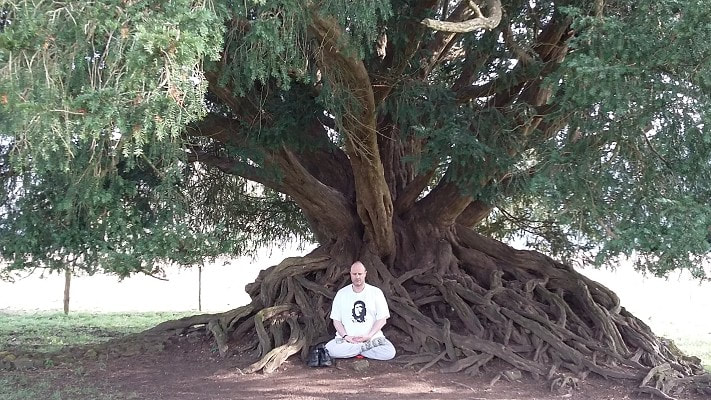
Since my initial realisation there had been a tension of sorts. This provided the inner power to continue the journey. An ‘inner potential’ built-up through right intention, and correct meditational effort. One day, I was sat meditating out-doors, as I found the open air conducive to expanding the mind’s awareness. Whilst ‘returning’ all sensation to the empty mind ground, a gentle breeze blew across my face and front of my body. At this exact moment (around August, 1992), my perception finally altered and I adopted the ‘host’ and ‘host in host’ position – an integration of stages ‘4’ and 5’ of the Caodong School. My awareness, which had been confined only to my head, suddenly ‘expanded’ to encompass the entire environment. The awareness penetrated through my body and united the sense organs with sensory stimulus and sense objects into a profound (and empty) oneness and was vibrant and diverse. Reality was both ‘empty’ and yet ‘full’, and there was no contradiction to this understanding. My mind finally ‘turned’ so that I now perceived the world directly through the mind’s eye (host), rather than through its reflection in the surface mind (guest). Around 8 years later (in summer, 2000), Richard Hunn confirmed this experience as being genuine and correct (although in the years between 1992 and 2000 I had travelled to Hong Kong and Mainland China to visit relatives and meet various Ch’an monastics and lay practitioners, all of whom issued the appropriate recognition). As the ‘guest’ became the enlightened function of the ‘host’, the delusive quality was transcended so that the ‘guest’ became the ‘host’, or reality was now comprised of ‘host in host’. The ‘form’ and ‘void’ were clearly distinguishable (hence ‘not one’), and yet the ‘form’ and ‘void’ exist simultaneously integrated without contradiction, boundary or limit (hence ‘not one’). Everything continued as it was before (with Richard Hunn becoming my friend), and yet my mind was permanently (and radically) altered.
 RSS Feed